Xieyi Painting and the "Spirit of the Brush"
|
The concept of "Spirit of the Brush," or bǐyì (筆意), is central to understanding the aesthetic goals of Xieyi painting. It refers to the unique expressive quality and energy that emanates from the brushstrokes themselves. The artist aims to capture the spirit of the brush as it moves across the paper. The brush is not simply a tool; it is a channel for conveying vital energy. 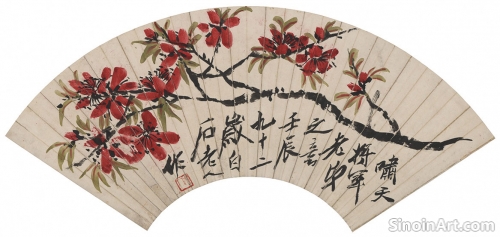 The "Spirit of the Brush" is not just about technical skill but also about conveying the artist's inner state of mind, emotions, and personal vision. Each brushstroke should be imbued with intention, feeling, and purpose. The goal is to make each brushstroke a reflection of the artist’s intent. 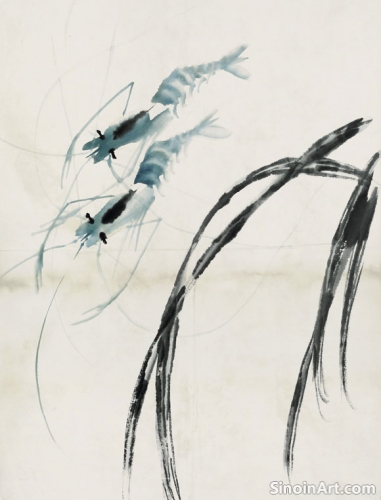 The brushstrokes themselves should possess a sense of life and vitality, moving with fluidity, rhythm, and a sense of spontaneity. The brushstrokes should have their own intrinsic beauty, and a connection to the creative intent of the artist. The feeling of the brush’s movement is a vital element of Xieyi. 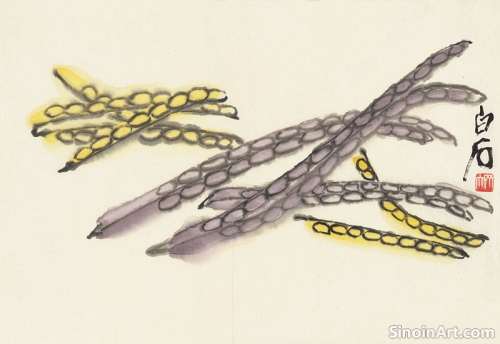 The pursuit of "Spirit of the Brush" requires both technical mastery and a deep connection with the materials, and with the subject being represented. The brush is not simply a tool; it is an extension of the artist’s mind and body. The physical and mental practice must come together in a seamless motion. Ultimately, bǐyì is about creating art that is not just beautiful to look at but also deeply expressive, imbued with a sense of energy, feeling, and the artist's unique personal voice. The expressive nature of the brush is what elevates the painting beyond mere representation. The goal is to infuse the artwork with life. |
Tag : Spirit of the brush, brushstroke energy, expressive art, Xieyi essence
Related information
- The Influence of the Seal Script on Xieyi
- The Essence of Xieyi: Capturing the Spirit
- Xieyi Painting and the Depiction of Landscapes
- Xieyi Painting and its Global Influence
- The Essence of Expression: An Introduction to Xieyi Painting
The Seal Script (zhuànshū) influences Xieyi painting through its emphasis on balance, flowing lines, symmetry, organic forms, and its use in artist's seals, inspiring the composition, line quality, and overall design, while also deepening the understanding of brush control, and ink application within the Xieyi tradition.
Xieyi, or freehand ink wash painting, emphasizes the expression of the artist's spirit through simplified forms and bold brushstrokes, using calligraphic techniques and negative space to convey the essence of a subject.
Xieyi landscapes (shānshuǐ) emphasize grandeur, depth, and qi, using negative space and suggestive brushstrokes to capture the essence, atmosphere, and inner vitality of the natural world, and expressing the artist’s connection to nature and understanding of the Tao.
Xieyi painting has influenced artists and art movements globally through its emphasis on spontaneity, expression, and suggestion, with its impact seen in abstract expressionism and many contemporary approaches to the application of ink, form, and the expressive potential of line, reflecting its enduring power and universal appeal.
This article introduces Xieyi painting, a freehand and expressive style of Chinese painting, emphasizing its focus on capturing the essence of a subject through bold brushwork and simplified forms.