The Essence of Xieyi: Capturing the Spirit
|
Xieyi, often translated as "freehand" or "sketching ideas," is a core technique in Chinese ink wash painting that emphasizes the expression of the artist's spirit and emotions over the accurate depiction of reality. Unlike the meticulous "gongbi" style, Xieyi embraces spontaneity and suggestion, using simplified forms and bold brushstrokes to convey the essence of a subject. This approach allows the artist to engage with the natural world and express a deep personal understanding through the language of ink and water. The results are often evocative and imbued with a sense of vitality. 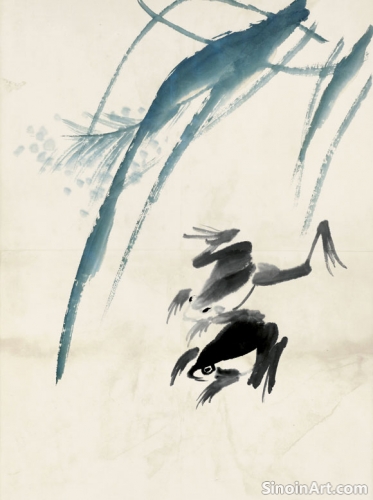 The beauty of Xieyi lies in its ability to distill a subject to its most fundamental elements. A few swift strokes of the brush can represent a bamboo grove swaying in the wind, the powerful form of a mountain, or the graceful movement of a bird. This economy of line and form demands a profound understanding of the subject, forcing the artist to look beyond the superficial and to connect with its inner life. It’s not about photorealism but about capturing the 'qi' or vital energy. 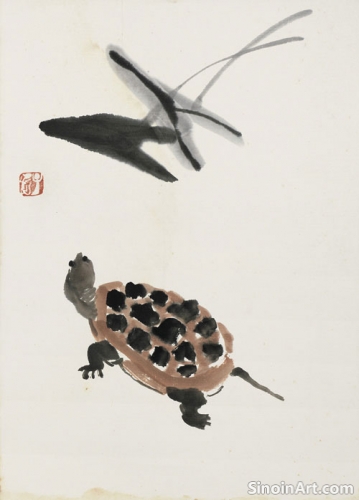 Central to the practice of Xieyi is the concept of "calligraphic brushwork." The same techniques used in writing Chinese characters are employed in painting, with variations in speed, pressure, and ink load creating a myriad of expressive effects. From the dry, scratchy strokes that evoke withered branches to the fluid, wet washes that suggest mist-shrouded landscapes, each mark carries a weight of meaning and contributes to the overall impact of the work.  The use of negative space is also paramount in Xieyi. The areas left blank are not empty; they are vital to the composition, suggesting atmosphere, distance, and movement. They contribute to the sense of dynamism and allow the viewer to actively engage with the artwork, filling in the gaps with their own imagination and experience. It's this interplay between ink and void that gives Xieyi its distinctive ethereal quality. Xieyi painting is more than just a visual art form; it's a spiritual practice. Through the process of creation, the artist seeks to understand the interconnectedness of all things and to harmonize with the rhythms of nature. The act of painting becomes a form of meditation, allowing the artist to express their inner landscape while simultaneously connecting to the broader universe. It’s a beautiful testament to the power of suggestion and the magic held in simplicity. |
Tag : Chinese Xieyi painting, freehand ink wash, calligraphic brushwork, spirit of art, Chinese art techniques
Related information
- Learning Xieyi Painting: A Path of Practice
- Xieyi Painting and the Expression of Emotion
- The Use of "Multiple Brushstrokes" in Xieyi
- Ink Wash Techniques in Xieyi: Shades of Meaning
- The Legacy of Xieyi: From Tradition to Innovation
Learning Xieyi painting involves mastering basic brushstrokes, observation of nature, studying old masters, developing a personal style, and cultivating patience and persistence. It is a process that blends technical skill with personal growth and understanding.
Xieyi painting is a powerful medium for expressing a wide range of emotions through brushstrokes, ink washes, subject matter, and the artist's state of mind, connecting with viewers on a deeply human and emotional level.
"Multiple Brushstrokes" (cūn fǎ) are essential in Xieyi landscape painting, offering a variety of textured strokes that create a sense of depth, form, and visual complexity, requiring skill and strategic layering to depict mountains, rocks, and trees, adding dynamism and guiding the viewer’s eye through the composition.
Ink wash, or shuimo (水墨), is a fundamental technique in Xieyi painting. It involves the skillful application of various shades of ink, diluted with water, to create depth, texture, and atmosphere. Mastery of ink wash is critical for achieving the desired expressive effects.
This article traces the legacy of Xieyi painting from its origins in the Song Dynasty to its continuous evolution through subsequent dynasties, exploring its transformation from a tradition to a vibrant contemporary practice.