Xieyi Painting and the Concept of "Ziran"
|
The concept of "Ziran" (自然), often translated as "naturalness" or "spontaneity," is a cornerstone of Xieyi painting, reflecting the art form's emphasis on aligning with the natural rhythms of the world and allowing the creative process to unfold organically. Ziran represents a conscious alignment with natural forces.  "Ziran" implies that the artist should strive for a sense of effortless ease, allowing their brushstrokes to flow naturally, without forcing or controlling the process. The goal is to let the process of creation unfold organically. It is a purposeful act that aims for an effortless appearance.  The rejection of artificiality, meticulous detail, and over-refinement is also part of the concept of “Ziran.” The artist should avoid the artificial, embracing the natural simplicity of a subject and working with the natural qualities of ink and paper. This embraces the inherent properties of the medium. 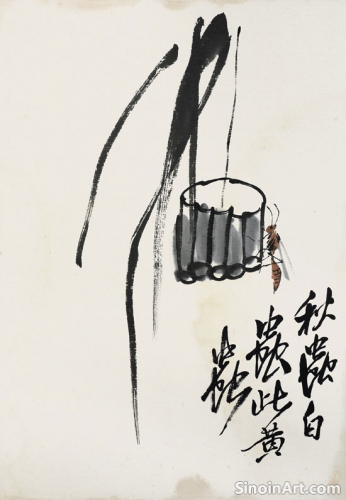 The pursuit of "Ziran" requires a deep understanding of the materials and a profound connection with the natural world. The artist aims to allow the natural world to guide the process, rather than imposing their will on it. It is about working with natural forces rather than against them. "Ziran" also implies a sense of authenticity and integrity. The artist aims to create works that are true to their own inner feelings and perceptions, without trying to impress or please others. It comes from a place of personal authenticity. It is about making an honest and authentic expression. |
Tag : naturalness in art, spontaneity, Chinese art ideals, organic art
Related information
- The Influence of Taoism on Xieyi Painting
- Materials and Tools for Xieyi Painting
- The Significance of the Seal in Xieyi
- The Use of "Reversed Brush" in Xieyi
- Xieyi Painting and the Concept of "Yun Wei"
Taoism, with its emphasis on living in harmony with nature, has significantly influenced the development of Xieyi painting. The Taoist concept of the Tao (道), the underlying principle of the universe, is reflected in the ways that Xieyi artists capture the flow of life.
The four treasures of the study - brushes, ink, paper, and inkstone – are crucial tools for Xieyi painting. Each tool, from brush construction to paper absorbency, affects the ink application and contributes to the unique character of the artwork.
The seal (yìn) is an essential component of Xieyi painting, serving as the artist's signature, authenticating the artwork, adding to its visual composition, and often expressing personal philosophy or tracing provenance, all within the context of Chinese artistic tradition.
The "Reversed Brush" (nìfēng) in Xieyi involves starting a stroke by moving the brush in the opposite direction, then reversing to create strong, textured, dynamic lines, conveying a sense of force, resistance, and visual interest, while requiring precise control and a deep understanding of brush responsiveness.
Yun Wei (charm, flavor, aftertaste) is a vital aesthetic quality in Xieyi painting, referring to the overall sense of feeling, emotion, and lingering impression that an artwork creates in the viewer, achieved through mastery of technique, subtle nuances, and the ability to express underlying meanings, creating a lasting impact.