The Use of "Reversed Brush" in Xieyi
|
The "Reversed Brush," or nìfēng (逆鋒), is a technique in Xieyi brushwork that involves starting a stroke by moving the brush in the opposite direction from the intended line of travel, then changing direction to create a strong, textured, and dynamic line. It is a deliberate and subtle application of force that adds expressive depth to the line. This technique results in strokes that are both powerful and subtly textured. 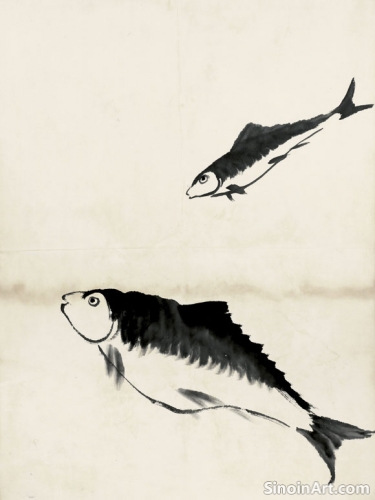 The nìfēng technique adds a sense of force, resistance, and inner strength to the lines, making them especially effective for depicting sharp angles, jagged rocks, and other elements that require a feeling of tension and power. It can give the impression of controlled energy. This technique conveys a sense of restrained power and energy. 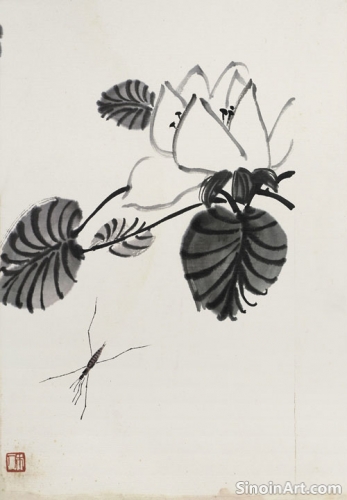 This technique also creates lines that have a rougher, more textured quality, adding visual interest and a sense of immediacy to the artwork. It provides an alternative to smooth strokes, offering a dynamic contrast. This contrast adds to the overall expressiveness of the art form. 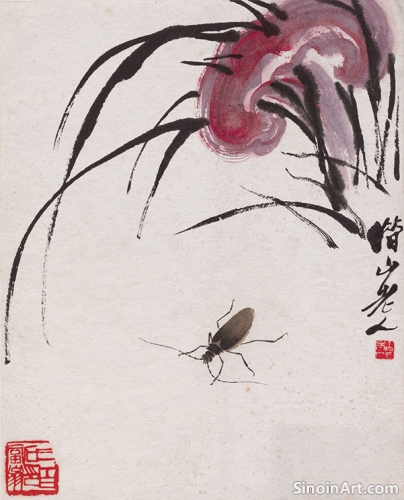 The application of the nìfēng requires precise control and a deep understanding of the brush’s responsiveness. It requires both technical skill and artistic intention. This seemingly simple technique requires a high level of skill and a subtle understanding of the interplay of ink and paper. Mastering the "Reversed Brush" technique allows the artist to expand their expressive range and to create lines that are both powerful and nuanced, adding depth and vitality to their Xieyi paintings. It is a technique that rewards diligent practice and refined skill. The subtle variations in each stroke create more dynamic and interesting works of art. |
Tag : Reverse brush, Nifeng, textured lines, Xieyi stroke, expressive art
Related information
- Xieyi Painting and the Depiction of Bamboo
- Xieyi Painting and the Use of "Contrasting Ink"
- Xieyi Painting and the Concept of "Yi Qian Bi Hou"
- The Use of "Side Brush" in Xieyi
- Ink Wash Techniques in Xieyi: Shades of Meaning
Bamboo is a popular subject in Xieyi painting, valued for its elegant form, resilience, and rich symbolic meaning, with artists using bold, fluid brushstrokes and calligraphic lines to capture its essence, its vital energy, and to express core values of integrity, resilience, and a meditative connection to nature.
"Contrasting Ink" (nóngdànmò) in Xieyi uses both dark and light ink strategically to create depth, volume, texture, and atmosphere through visual contrast, with dark ink creating boldness and light ink adding distance and subtlety, requiring skilled blending to create tonal gradations, expressive depth, and nuanced interplay of light and shadow.
"Yi Qian Bi Hou" (intention before the brush) is central to Xieyi, emphasizing the importance of having a clear vision and intention before painting, so that brushstrokes naturally express the artist's inner feelings and ideas, requiring thoughtful preparation, and guiding brushwork with creativity and personal vision.
The "Side Brush" (cèfēng) technique in Xieyi involves holding the brush at an angle to create strokes with distinct texture and varying width, allowing for greater expressiveness, dynamism, and effective depiction of textured surfaces and movement, a crucial skill for any Xieyi painter.
Ink wash, or shuimo (水墨), is a fundamental technique in Xieyi painting. It involves the skillful application of various shades of ink, diluted with water, to create depth, texture, and atmosphere. Mastery of ink wash is critical for achieving the desired expressive effects.