The Significance of Brushwork in Xieyi Painting
|
Brushwork is at the heart of Xieyi painting, serving as the primary means of artistic expression. The brush is not merely a tool; it is an extension of the artist’s hand and emotions. Mastery of the brush is essential to conveying the spirit and essence of a subject. 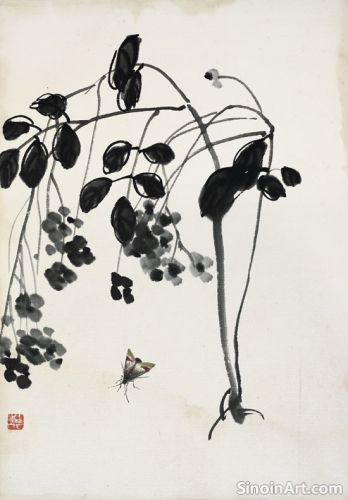 Xieyi brushstrokes are often characterized by their boldness, fluidity, and variation. Artists employ different types of brushstrokes, including dry brush, wet brush, side strokes, and centered strokes. Each stroke is meant to convey a different feeling and texture. 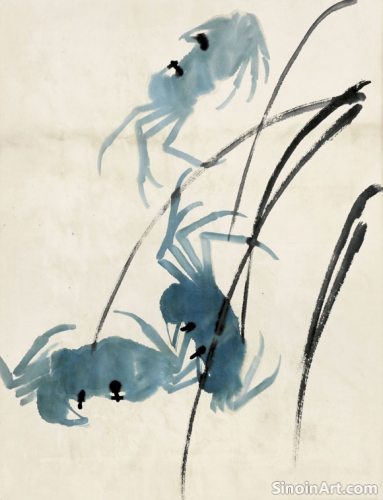 The spontaneity of the brushstrokes is a hallmark of Xieyi painting. The artist often works quickly, capturing the energy and vitality of the subject in a few swift strokes. This requires both technical skill and an intuitive understanding of the subject being painted. The relationship between brushstroke and meaning is a central concept in Xieyi. Each stroke has its own unique character and is carefully placed to express the artist's emotional response. The direction, weight, and texture of a stroke convey not only the appearance of an object, but also the artist’s personal interpretation. The importance of brushwork in Xieyi demonstrates the close link between calligraphy and painting. The brush is used to write with ink and create strokes that are both visually striking and emotionally resonant. |
Tag : Xieyi Brushwork, Chinese Ink Brush Techniques, Expressive Brushwork, Literati Painting Brushwork, Calligraphic Brush in Painting
Related information
- The Concept of "Shu Qie" in Xieyi
- Xieyi Painting and the Use of "Leaving the Brush"
- The Use of "Side Brush" in Xieyi
- The Use of Color in Xieyi Painting
- The Future of Xieyi Painting
"Shu Qie" (the written and the carved) emphasizes the connection between calligraphy and seal carving, influencing Xieyi through shared qualities of line, form, expression, and the use of seals, all of which combine to highlight the holistic nature of Chinese art, and inform the artistic process.
"Leaving the Brush" (cángfēng) in Xieyi involves concealing the brush tip when beginning and ending a stroke, creating lines with a subtle beginning and end, conveying inner strength, control, and intentionality, contrasting with the technique of "revealing the brush," and demonstrating the mastery of brush control.
The "Side Brush" (cèfēng) technique in Xieyi involves holding the brush at an angle to create strokes with distinct texture and varying width, allowing for greater expressiveness, dynamism, and effective depiction of textured surfaces and movement, a crucial skill for any Xieyi painter.
Color in Xieyi painting is used subtly and suggestively, often in light washes to create luminous effects, enhance meaning, evoke emotion, and accent specific areas of a composition, with colors often carrying symbolic connotations and adding depth to the artwork.
The future of Xieyi painting is bright, with contemporary artists expanding its boundaries, exploring new mediums, embracing social themes, and sharing their work globally, while the art form's ability to connect emotionally ensures its continued vitality and relevance.