Unveiling Ancient China: An Introduction to Chinese Bronze Ware
|
Chinese bronze ware represents a pinnacle of ancient artistry and technological achievement. These objects, crafted primarily during the Shang and Zhou dynasties, were not merely tools but rather powerful symbols of social status, ritualistic practice, and political authority. The study of these intricate objects provides invaluable insights into the complex world of early China, revealing the sophistication of its craftsmanship and the depth of its cultural values. From elaborate ritual vessels to formidable weapons, bronze ware offers a window into a bygone era. 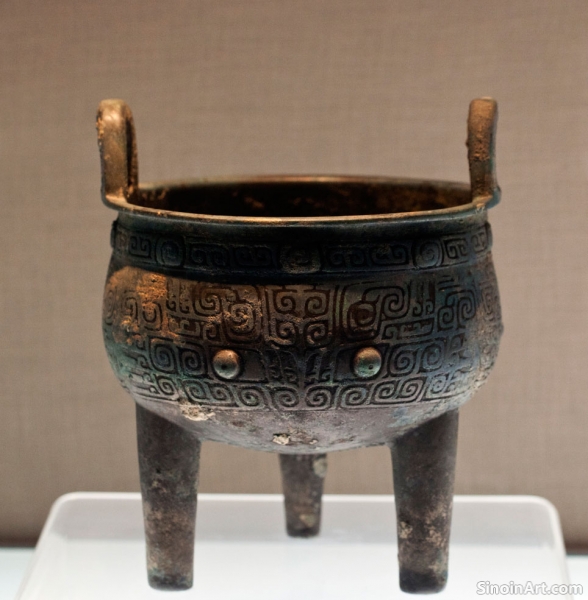 The production of Chinese bronze ware involved a complex and time-consuming process. Using the lost-wax casting method, craftsmen created intricate molds from clay, into which molten bronze would be poured. The bronze, an alloy of copper and tin (and sometimes lead), was carefully chosen and proportioned to create objects with desired properties. The resulting pieces were often decorated with elaborate designs, reflecting the advanced artistry and meticulous skill of the ancient bronze workers. This level of precision and control is a testament to the technical mastery of the era. 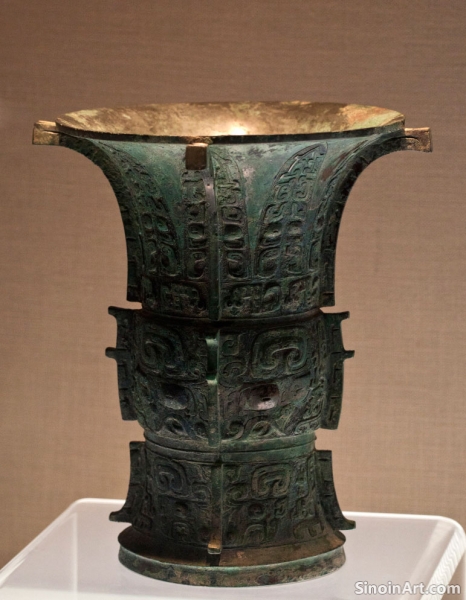 These bronze objects served a wide range of functions, reflecting the diverse needs of ancient Chinese society. Ritual vessels such as ding (鼎) and gui (簋) were used in ancestral rites and other important ceremonies, symbolizing power and authority. Weapons like ge (戈) and jian (剑) were symbols of military prowess and were often buried with nobles as grave goods. The significance and use of these objects highlight the importance of social hierarchy and ritual practice. 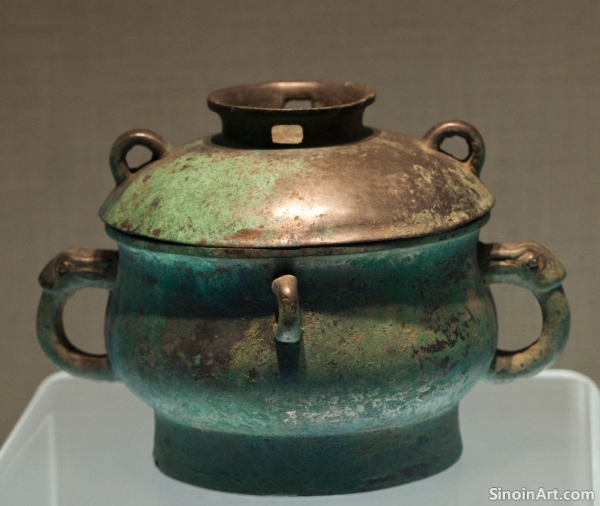 Beyond their practical functions, Chinese bronze ware also possessed deep cultural and symbolic meaning. The intricate designs, often featuring mythical beasts and geometric patterns, reflected the religious beliefs and worldview of the ancient Chinese. The taotie (饕餮) motif, for instance, was a common depiction of a mythical beast, often associated with power and protection. The symbolic language of the bronze ware offers invaluable insights into the spiritual beliefs of the time. The legacy of Chinese bronze ware continues to inspire awe and fascination. These objects, now housed in museums and private collections around the world, stand as testaments to the ingenuity and artistic brilliance of ancient Chinese civilization. They serve as a bridge connecting us to the distant past, reminding us of the rich and complex history of China. The preservation and study of these artifacts help us to further understand the history of the region and its people. |
Tag : Chinese bronze ware, ancient China, Shang Dynasty bronzes, Zhou Dynasty bronzes, bronze casting
Related information
- The Role of Bronze in Ancient Chinese Warfare: Strategies and Weapons
- The Art of Bronze Casting: Techniques and Innovations in Ancient China
- The Influence of Bronze Ware on Ancient Chinese Music Theory and Practice
- Bronze Ware and Ancient Chinese Mythology: Exploring the Interplay Between Myth, Art, and Ritual
- Bronze Ware and Ancient Chinese Astronomy: Decoding Celestial Patterns and Calendars
This article explores the role of bronze in ancient Chinese warfare, highlighting the types of weapons, armor, and chariot fittings, and examining the strategies and tactics employed, revealing the military power of the era.
This article explores the art of bronze casting in ancient China, highlighting the development of techniques like piece-mold casting and the lost-wax method, and emphasizing the control of alloys, temperature, and the innovations of ancient metalworkers.
This article explores the influence of bronze ware on ancient Chinese music theory and practice, highlighting the role of bronze instruments like bells and chimes in shaping musical scales, performance styles, and the spiritual aspects of music.
This article explores the use of mythological imagery on Chinese bronze ware, highlighting the depiction of dragons, phoenixes, and other creatures, and how these motifs reflected ancient beliefs and helped to connect the earthly world with the spiritual realms.
This article explores how bronze ware reflects ancient Chinese understandings of astronomy, highlighting the use of celestial patterns, depictions of constellations, and the connection between astronomical knowledge and ritual practices.