Common Subjects in Xieyi Painting
|
Xieyi painting draws inspiration from the natural world and the everyday life of the artist. Certain subjects are particularly common, each with its own symbolism and significance. These subjects are not simply depicted; they are imbued with the artist's personal interpretation and understanding of their inner essence. Exploring these subjects reveals not only the art of painting but also the philosophical depth of the tradition. 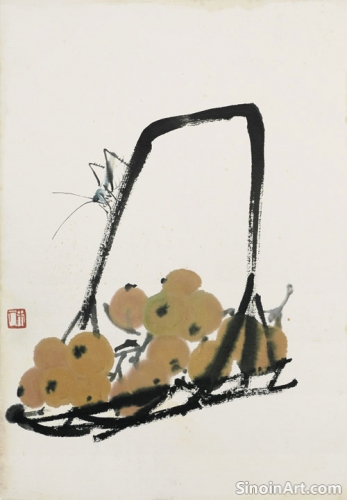 Bamboo is a recurring theme in Xieyi painting, symbolizing resilience, integrity, and moral uprightness. Its slender stalks and rustling leaves are often depicted with swift, calligraphic brushstrokes, capturing the plant's flexibility and vitality. Bamboo's ability to bend without breaking has made it an enduring symbol of strength. The simple elegance of the bamboo offers artists endless opportunities for variations in technique. 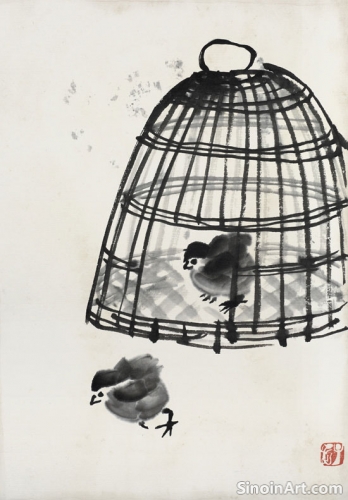 Plum blossoms are another popular subject, celebrated for their beauty and endurance, especially as they bloom in late winter. They represent courage, perseverance, and the fleeting nature of beauty. The delicate petals and gnarled branches offer a visual contrast that is both aesthetically pleasing and symbolically meaningful. Their ephemeral nature connects to broader philosophical concepts of impermanence. 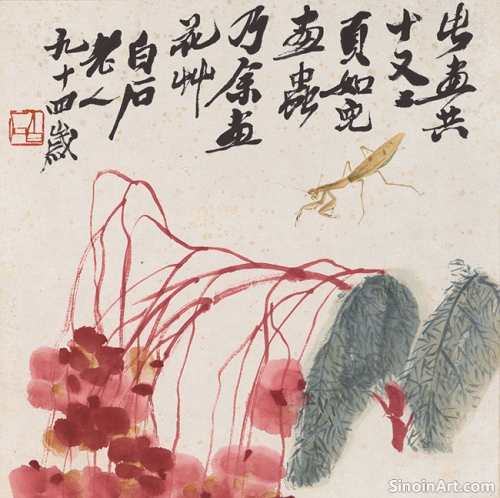 Landscapes, or "Shan Shui" (mountain-water) paintings, are a cornerstone of Chinese art, embodying the harmonious relationship between humanity and nature. In Xieyi landscape painting, the artist emphasizes the grandeur and energy of the natural world, using washes of ink to create a sense of atmosphere and depth. Mountains, rivers, and trees become conduits for the artist's inner journey. Birds and flowers are also frequent subjects, capturing the beauty and vitality of nature. From the soaring flight of eagles to the delicate beauty of orchids, these subjects are depicted with a sensitivity to their individual characteristics and a sense of wonder and appreciation. The careful observation of nature is paramount to translating this into the expressive language of Xieyi. Animals, often those encountered in daily life or folklore, also find their way into Xieyi painting. From playful kittens to powerful tigers, these subjects are depicted with an understanding of their essential nature and behavior. These depictions are rarely realistic; they are evocative. Often they act as metaphors for personal states or deeper symbolic meanings. |
Tag : Bamboo painting, plum blossom art, Shan Shui landscape, Chinese bird paintings, traditional subjects
Related information
- The Cultural Significance of Xieyi: Beyond Artistic Form
- The Significance of the Seal in Xieyi
- Xieyi Painting and the Depiction of Animals
- Xieyi Painting and the Use of "Contrasting Ink"
- Modern Interpretations and Contemporary Xieyi
This article explores the cultural significance of Xieyi painting, highlighting its connection to Daoist philosophy, Chinese values, artistic heritage, and its role in preserving and expressing Chinese cultural identity.
The seal (yìn) is an essential component of Xieyi painting, serving as the artist's signature, authenticating the artwork, adding to its visual composition, and often expressing personal philosophy or tracing provenance, all within the context of Chinese artistic tradition.
Animals are a common subject in Xieyi painting, used to express emotions, convey philosophical ideas, and capture the essence of the animal with simplified forms and spontaneous brushstrokes, relying on cultural symbolism and careful observation of the natural world, often as metaphors for the human condition.
"Contrasting Ink" (nóngdànmò) in Xieyi uses both dark and light ink strategically to create depth, volume, texture, and atmosphere through visual contrast, with dark ink creating boldness and light ink adding distance and subtlety, requiring skilled blending to create tonal gradations, expressive depth, and nuanced interplay of light and shadow.
Modern Xieyi painting is adapting to contemporary contexts through incorporating new techniques, subject matter, and philosophical ideas, while remaining grounded in the core principles of spontaneity, expression, and the pursuit of qi, and pushing its boundaries into the modern art world.