The Tools of the Trade: Essential Equipment for Seal Carving
|
The art of seal carving demands not only artistic talent but also a keen understanding and skillful use of specialized tools. The tools of the trade have evolved over centuries and are crucial for shaping and incising characters on the stone surface. Each tool is designed to perform a specific function, and mastery of these tools is essential for producing high-quality name seals. The tools are simple, but their manipulation requires years of practice. 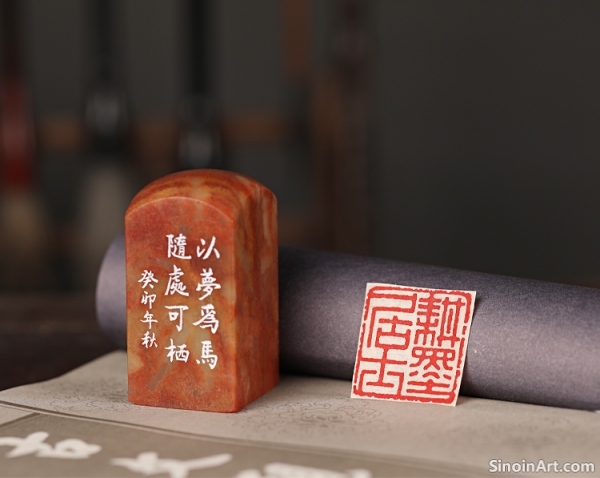 At the heart of seal carving are the carving chisels, or knives, known as zhuanke dao (篆刻刀). These are not the large chisels used in stone sculpture, but small, precisely made tools with sharp, angled blades. Carvers use a variety of chisels, each with different blade sizes and shapes, to create various stroke thicknesses and detail levels. The chisels are traditionally made of high-quality steel, and regularly need sharpening to ensure clean cuts.  The process of seal carving also requires a variety of other tools. A grinding stone or mòshí (磨石) is used to sharpen the chisels, while a polishing stone or pàogāngshí (拋光石) is used to smooth and polish the surface of the stone before carving. The stones come in a variety of fineness, for different stages of polishing and shaping of the stone, and the chisels. A seal holder or yìnchuáng (印床) is used to securely hold the stone in place during the carving process. Often made of wood, these holders come in a variety of forms, often adjustable. Other tools include rulers, markers, brushes, and carving boards which assist in the carving process. These tools, though seemingly simple, are all essential for the precision and detail required in seal carving. The selection and maintenance of carving tools are just as important as the carving itself. A well-maintained set of tools allows the seal carver to work efficiently and precisely, achieving clean lines and smooth surfaces. The longevity and accuracy of the carving tools are a reflection of the carver's care and their level of dedication to their craft. The mastery of the tools in seal carving is often the result of years of practice. A skilled carver knows how to select the right tool for each step of the process, and how to control the tool to create the desired aesthetic effects. The precision and control offered by the tools are integral to the art of zhuanke, the art of carving name seals. |
Tag : Seal Carving Tools, Chinese Carving Chisels, Seal Engraving Equipment, Zhuanke Tools, Stone Carving Tools
Related information
- The Use of Leisure Seals in Contemporary Art and Design
- Famous Collectors and Their Seal Collections: A Legacy of Connoisseurship
- The Contemporary Relevance of Seal Carving: A Living Tradition
- The Historical Evolution of Leisure Seals: From Early Forms to Modern Interpretations
- The Use of Studio Seals in Art Collecting and Authentication
This article explores how leisure seals are being incorporated into contemporary art and design, discussing their modern relevance and the ways in which artists are reinterpreting this ancient tradition.
This article highlights the collections of famous Chinese art collectors throughout history and their use of collector's seals, exploring the impact of their patronage and connoisseurship on the art world.
This article explores the contemporary relevance of Chinese seal carving, highlighting how modern artists are incorporating new themes, materials, technologies, and embracing globalization, all while remaining true to the traditions of the art form.
This article traces the historical development of leisure seals, from their early origins to their contemporary forms, highlighting key changes in design, usage, and cultural significance.
This article explores the practical and cultural significance of studio seals within the context of art collecting, particularly for authentication, provenance, and the cultural status of the collector.