The Symbolic Significance of Bronze in Ancient Chinese Power Structures: Ritual, Authority, and Legitimacy
|
Bronze ware in ancient China served not only practical and artistic purposes but also played a central role in the assertion and maintenance of power, serving as a potent symbol of ritual authority, social status, and political legitimacy. The control over the production and use of these objects was key to defining political power. The possession of bronze and the power associated with it helped to shape social and political structures in ancient China. 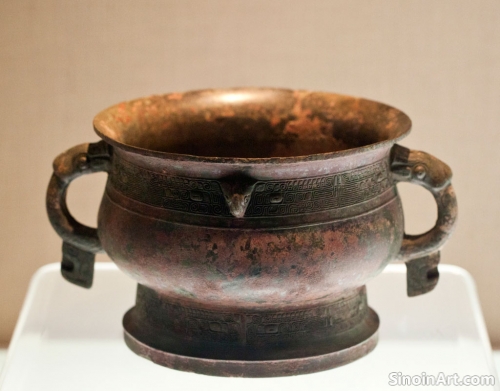 The use of bronze in ritual ceremonies was closely tied to the authority of the ruler and the ruling class, as they were seen as having a divine right to communicate with the ancestors and the heavens through the medium of these sacred objects. The possession and management of these artifacts was a powerful symbol of their connection to both the earthly and spiritual realms. The use of these objects in ritual performance helped to emphasize the importance of the social and political structure. 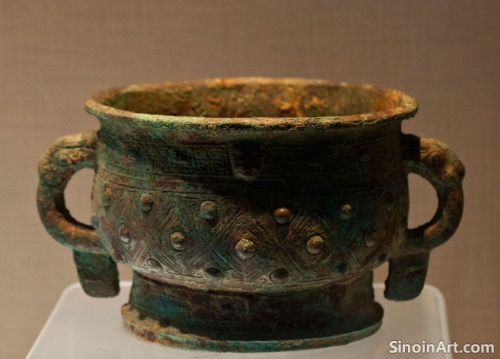 The elaborate decorations and inscriptions on bronze vessels often served to reinforce the legitimacy of the ruling dynasty, conveying messages of power, prosperity, and divine mandate. These objects were carefully designed to communicate specific messages to the viewing audience. The possession of these finely crafted and powerfully symbolic objects also helped to underscore the power and status of their owners.  Bronze weapons, while used in warfare, also served as symbols of military might and the authority to command, further solidifying the power of rulers and warriors. These powerful objects were used as symbols of both military prowess and also status and political authority. The power associated with bronze weapons helped to solidify the ruling power structure. The study of bronze ware in relation to ancient Chinese power structures highlights the complex interplay between material culture, political ideology, and the desire to legitimize authority. The power of both visual presentation and also ritual performance were key elements in the ancient Chinese understanding of the political order. |
Tag : bronze power, ancient Chinese authority, ritual legitimacy, social structure, political symbolism
Related information
- The Role of Animal Motifs in Chinese Bronze Ware: Symbolic Creatures of Power and Mystery
- The Use of Bronze in Ancient Chinese Household Items: Beyond Ritual and Warfare
- Bronze Ware and Ancient Chinese Astronomy: Calendars, Timekeeping, and Ritual Observances
- The Taotie Motif: Unraveling the Mystery of the Shang Bronze Beast
- Bronze Ware and the Development of Ancient Chinese Scientific Thought: Experimentation, Observation, and Knowledge
This article explores the animal motifs found on Chinese bronze ware, highlighting the symbolism of creatures like the taotie, dragons, phoenixes, and tigers, revealing their use in conveying power, spirituality, and connections to the natural world.
This article explores the use of bronze in ancient Chinese household items, highlighting objects like mirrors, lamps, braziers, tools, and containers, and demonstrating how bronze enriched everyday life beyond ritual and warfare.
This article explores the role of bronze ware in the development of ancient Chinese calendars, highlighting its use in creating timekeeping devices, marking ritual cycles, and reflecting the connection between astronomy, time, and religious observances.
This article explores the taotie motif found on Shang Dynasty bronzes, discussing its composite features, the various interpretations of its symbolic meaning, its evolution over time, and its significance in understanding the Shang worldview.
This article explores how bronze ware played a role in the development of ancient Chinese scientific thought, highlighting its use in experimentation, observation, the creation of scientific instruments, and the preservation of knowledge, underscoring the connection between technology and the scientific understanding of the world.