Bronze Ware and the Development of Ancient Chinese Scientific Thought: Experimentation, Observation, and Knowledge
|
While often celebrated for their artistic and practical uses, bronze objects also played a role in the development of ancient Chinese scientific thought, providing opportunities for experimentation, observation, and the codification of knowledge. The interplay between artistic creation and scientific understanding helped to shape the development of technology and also the general understanding of the natural world. 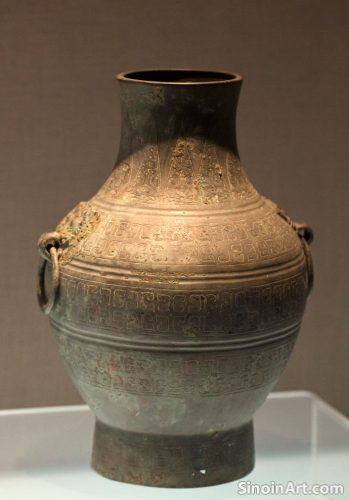 The creation of bronze objects required a sophisticated understanding of metallurgy, alloys, and casting techniques, and ancient bronze workers developed a systematic approach to experimentation and innovation in their work. The complex techniques that were developed for working with bronze helped to lay the foundation for the study of materials science. 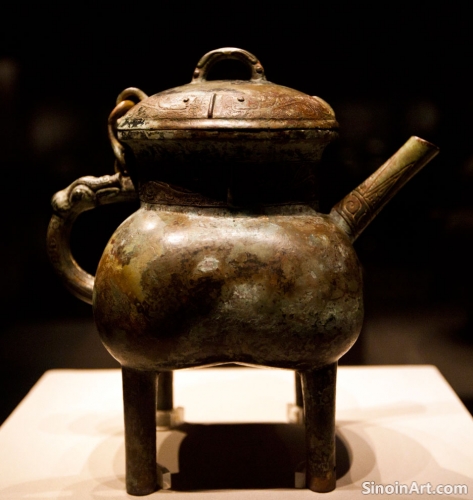 Bronze tools and instruments, such as astronomical devices, measuring instruments, and medical implements, also facilitated the collection of data and the development of theories about the natural world. The practical uses of bronze helped to shape the overall understanding of the universe that developed in ancient China.  The documentation and preservation of knowledge, often through inscriptions on bronze objects, helped to create a body of knowledge that was transmitted to future generations, highlighting the importance of observation, experimentation, and the creation of reliable and testable information. The use of bronze as a recording medium helped to create a system that was both durable and reliable. |
Tag : bronze science, Chinese experimentation, ancient knowledge, metalworking, scientific instruments
Related information
- The Use of Bronze in Ancient Chinese Warfare Technology: Beyond Weapons
- Bronze Ware and the Transmission of Ancient Chinese Technical Knowledge: Tools, Techniques, and Innovation
- Bronze Ware and Ancient Chinese Astronomy: Celestial Symbols and Interpretations
- The Social and Political Significance of Bronze Mirrors in Ancient China: Status, Reflection, and Self-Presentation
- The Use of Bronze in Ancient Chinese Water Control: Dams, Canals, and Irrigation Systems
This article explores the use of bronze in ancient Chinese warfare technology beyond weapons, highlighting its role in creating chariot fittings, siege engine components, and protective armor, showcasing the technological sophistication of the era.
This article explores the transmission of technical knowledge through the production of bronze ware in ancient China, highlighting the process of apprenticeship, the mastery of materials, the development of techniques, and how this knowledge shaped other forms of technical and artistic innovation.
This article explores the connection between bronze ware and ancient Chinese astronomy, highlighting the use of celestial symbols, the representation of astronomical phenomena, and the use of bronze in astronomical instruments, showcasing the interplay between art and science.
This article explores the social and political significance of bronze mirrors in ancient China, highlighting how they were used to express status, manage self-presentation, and reflect the complex interplay of individual identity and social hierarchies.
This article explores the use of bronze in ancient Chinese water control systems, highlighting its role in creating durable components for dams, canals, and irrigation networks, and demonstrating its importance for agricultural development and water management.