The Concept of "Shu Qie" in Xieyi
|
"Shu Qie" (書契), often translated as "the written and the carved," is a concept in Chinese art that underscores the connection between calligraphy and seal carving, also having a profound impact on the practice of Xieyi painting. It emphasizes the shared qualities of line, form, and the expressive potential of these two art forms, also linking them to the greater tradition of Chinese art. It speaks to the unified nature of the expressive arts in China. 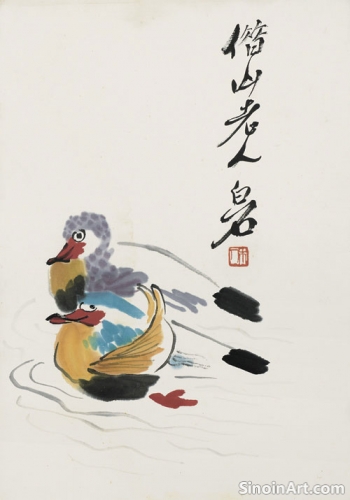 The study of both calligraphy and seal carving can deepen an artist’s understanding of brush control, line quality, and the power of the carved or written word. This understanding then informs the artist’s approach to Xieyi. Both forms require a mastery of the use of line as an expressive tool. 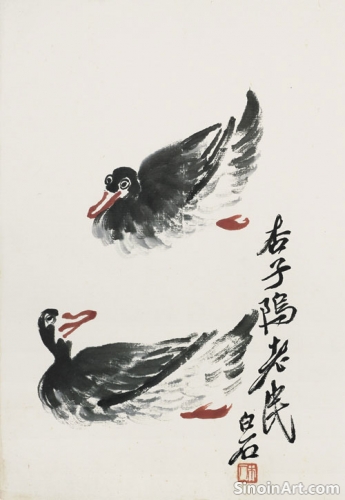 The techniques of calligraphy and seal carving, particularly the variations in line, the use of negative space, and the control of ink and carving tools, can all be seen in the expressive qualities of Xieyi brushwork. The underlying principles of both forms inform the aesthetic qualities of the Xieyi painting. 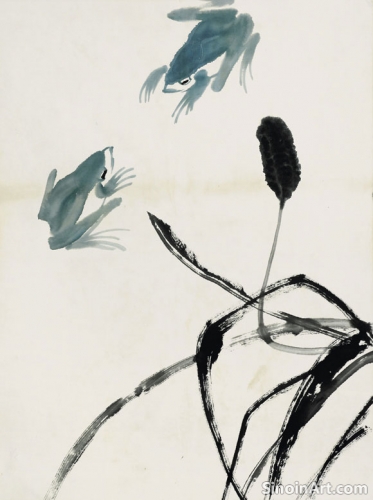 The application of a seal to a Xieyi painting is not just a signature but also an expression of artistic intent, often with the seal design and calligraphy acting as a miniature work of art in itself, adding an extra dimension to the artwork. The seals often contain calligraphic elements that enhance the overall quality of the painting. Understanding the connection between "the written and the carved" helps to appreciate the holistic nature of Chinese art, where the various art forms are intertwined and mutually enriching, all informing one another within the overall traditions. The understanding of this underlying connection informs a deeper understanding of the arts. |
Tag : Shu Qie, written and carved, calligraphy seals, Chinese art links, art tradition
Related information
- The Spiritual and Philosophical Dimensions of Xieyi
- Xieyi Painting and the Concept of "Yun Wei"
- Xieyi Painting and the Concept of 'Yi'
- Xieyi Painting and the Depiction of Trees
- The Enduring Significance of Xieyi Painting
Xieyi painting is deeply rooted in Chinese philosophy, particularly Daoism and Chan Buddhism, emphasizing the importance of spontaneity, mindfulness, the pursuit of qi or vital energy, and the spiritual significance of emptiness in art.
Yun Wei (charm, flavor, aftertaste) is a vital aesthetic quality in Xieyi painting, referring to the overall sense of feeling, emotion, and lingering impression that an artwork creates in the viewer, achieved through mastery of technique, subtle nuances, and the ability to express underlying meanings, creating a lasting impact.
'Yi' is a central concept in Xieyi painting, referring to the inner intent, meaning, and spirit that the artist aims to convey, emphasizing intuitive expression, suggestive imagery, and the viewer's active participation in interpreting the artwork.
Trees are a powerful subject in Xieyi painting, depicted through expressive brushwork and washes to capture their unique forms, textures, and symbolic representations of longevity, growth, resilience, and the connection between the human and natural realms, conveying both beauty and a profound appreciation for the cycles of life.
Xieyi painting's enduring significance lies in its rich history, philosophical depth, and emphasis on personal expression, spontaneity, and the pursuit of essence, connecting with audiences through its timeless aesthetic, connection to nature, and human spirit, while contemporary artists ensure its continued practice, evolution, and relevance in the world of art.