The Legacy of Xieyi: From Tradition to Innovation
|
Xieyi painting, while deeply rooted in ancient Chinese traditions, has continuously evolved over centuries, adapting to changing cultural contexts and artistic sensibilities. Its legacy is one of resilience and dynamism, reflecting a constant interplay between the respect for tradition and the drive for innovation. From its origins in scholar painting to its contemporary manifestations, Xieyi continues to be a vital force in Chinese art.  The origins of Xieyi painting can be traced to the literati artists of the Song Dynasty (960-1279 CE), known as scholar-painters. These artists, who were often government officials, intellectuals, and poets, sought to express their personal feelings and philosophies through their art. They moved away from the rigid formality of court painting and embraced a more spontaneous and expressive style. This period laid the foundation for the future development of Xieyi. 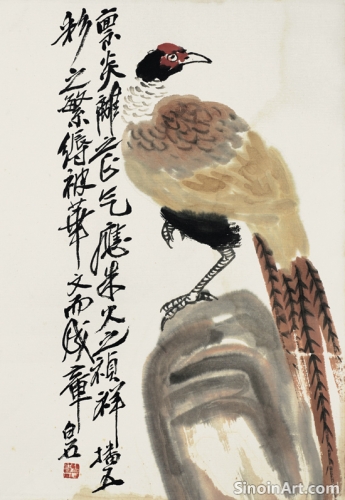 During the Yuan Dynasty (1271-1368), the Xieyi style continued to evolve, with artists emphasizing the use of bold brushstrokes and simplified forms to convey the spirit of their subjects. The influence of Chan (Zen) Buddhism, with its emphasis on spontaneity and inner truth, further enriched the expressive language of Xieyi painting during this time, and continued to influence it. This created a natural freedom in style. 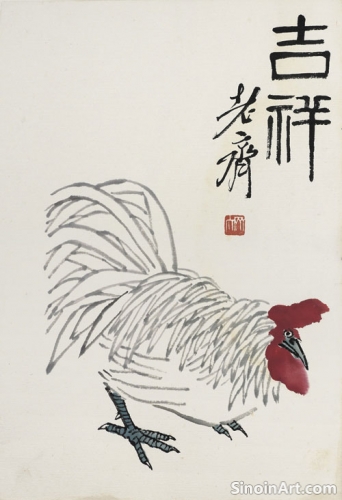 Throughout subsequent dynasties, such as the Ming and Qing, Xieyi painting continued to develop, with artists exploring new themes and techniques while remaining true to the core principles of freehand brushwork and expressive ink. During the Qing Dynasty there was further experimentation and evolution, but it still remained true to traditional core principals. In the modern era, Xieyi painting has witnessed a renewed vitality, with artists pushing the boundaries of tradition and exploring contemporary themes and abstract forms. Contemporary artists are now experimenting with mixed media, digital techniques, and other elements that add new interpretations to the form. The versatility of Xieyi allows for continued evolution and growth. The enduring legacy of Xieyi painting lies in its ability to transcend time and culture. It is a testament to the human desire for expression, an ongoing conversation between the past and the present. The art form continues to inspire artists and audiences around the globe with its expressive power, freedom and creativity. It’s a reminder that art is always in a state of becoming. |
Tag : Xieyi Painting History, Chinese Art Evolution, Literati Painting, Song Dynasty Art, Modern Xieyi
Related information
- Xieyi Landscape Painting: Capturing the Spirit of Nature
- The Brushstrokes of Xieyi: Mastering Spontaneity
- The Use of "Broken Ink" in Xieyi
- The Spirit of Xieyi: An Introduction to Chinese Literati Painting
- The Influence of the "Four Gentlemen" on Xieyi Subjects
Landscape painting (山水画, shanshuihua) is a major theme in Xieyi, reflecting a deep reverence for nature. Artists seek not to replicate realistic views, but to capture the essence and spirit of the natural world. They aim to evoke a feeling of vastness, serenity, and harmony.
This article delves into the various brushstrokes and techniques used in Xieyi painting, emphasizing the importance of mastering spontaneity and ink control to convey the spirit of the subject.
"Broken Ink" (pòmò) is a key technique in Xieyi painting, involving layering wet ink to create rich and varied tones, depth, atmosphere, and a sense of spontaneity, reflecting a controlled approach to the unpredictable nature of ink and water, adding visual texture and depth.
Xieyi, often translated as sketching thoughts or freehand style, is a significant genre within Chinese painting. It is characterized by its emphasis on capturing the essence and spirit of a subject rather than its exact appearance. This expressive, spontaneous approach prioritizes the artist's personal emotions and inner vision.
The "Four Gentlemen" (sìjūnzǐ) – plum blossom, orchid, bamboo, and chrysanthemum – are highly revered subjects in Xieyi, each embodying distinct virtues like resilience, refinement, integrity, and longevity, serving as a rich source of inspiration for artists expressing a range of emotions and philosophical ideas.