The Spirit of Xieyi: An Introduction to Chinese Literati Painting
|
Xieyi, often translated as "sketching thoughts" or "freehand style," is a significant genre within Chinese painting. It is characterized by its emphasis on capturing the essence and spirit of a subject rather than its exact appearance. This expressive, spontaneous approach prioritizes the artist's personal emotions and inner vision.  Unlike the meticulously detailed Gongbi style, Xieyi embraces freedom and simplicity. The brushwork is typically bold and fluid, often using varying shades of ink to create a sense of depth and movement. The goal is not to replicate reality but to evoke it through suggestion and abstraction. 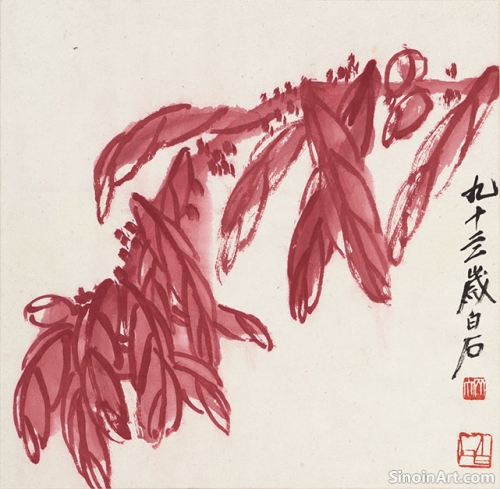 The development of Xieyi painting is closely linked to the literati class in China, who viewed painting not merely as a skill but as a form of self-cultivation. They sought to express their intellectual and spiritual insights through their art, focusing on the inherent energy and vitality of nature. 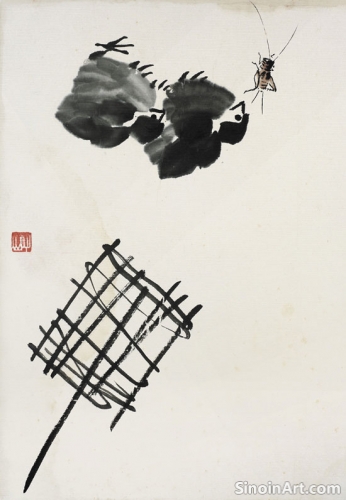 Xieyi painting often incorporates elements of calligraphy, which are seen as an extension of personal expression. The brushstrokes themselves are considered artistic elements, and the way ink and water interact is a core part of the artistic experience. Understanding Xieyi requires appreciating the interplay between spontaneity and control, between representation and abstraction. It’s an art form that invites viewers to engage not just with the image on the surface, but with the artist’s inner world. |
Tag : Xieyi Painting, Chinese Literati Painting, Ink Wash Painting, Expressive Brushwork, Chinese Scholar Painting
Related information
- The Concept of "Yi Bi Cheng Qiao" in Xieyi
- Xieyi Painting and the Use of "Splash Ink"
- Xieyi Painting and the Appreciation of Imperfection
- Xieyi Figures: Capturing the Essence of Humanity
- The Influence of Chan (Zen) Buddhism on Xieyi
"Yi Bi Cheng Qiao" (skill achieved in one brushstroke) is a key concept in Xieyi, emphasizing precision, confidence, and spontaneity in each brushstroke, aiming for efficiency, expressiveness, and a seemingly effortless display of skill, acquired through dedicated training and a deep connection with the art form.
"Splash Ink" (pōmò) is a bold and expressive Xieyi technique, involving the free and spontaneous application of ink to create large washes and evoke movement and dynamism, emphasizing the unpredictable nature of ink and water and strategically used to create balance, depth, and vitality.
Xieyi painting embraces imperfection as a source of beauty and reflects the spontaneity of the natural world, valuing the unpredictable nature of ink and brushstrokes, the unique hand of the artist, and the philosophy of Daoism, inviting viewers to appreciate the process and the authentic human element within the artwork.
While less common than landscapes and flowers/birds, figure painting (人物画, renwuhua) also has a place within the Xieyi tradition. These works often focus on capturing the character and spirit of the individual rather than simply portraying a likeness. The focus is on expression and inner qualities.
Chan (Zen) Buddhism profoundly influences Xieyi painting, emphasizing intuition, direct experience, mindfulness, and the concept of emptiness, aligning with the art form's focus on spontaneity, self-expression, and the pursuit of truth through art.