Gongbi Painting and the Use of "Boneless" Technique
|
While the "gougou" method (outlining) is a defining characteristic of Gongbi painting, some artists also incorporate the "boneless" technique (没骨法, mogu fa), where forms are created using color washes alone, without preliminary outlines. This technique adds a softness and fluidity to the artwork, demonstrating the artist’s versatility and expanding the expressive possibilities of the art form. The ability to work with or without outlines shows an understanding of the broad range of techniques.  The “boneless” technique requires a high degree of control and a deep understanding of color layering. The artist must be able to use the washes of color to create forms, suggest volume, and blend seamlessly without the aid of outlines. The application of colors in layers to create the forms requires mastery of the techniques. 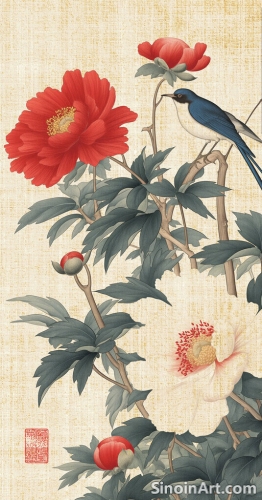 The application of color washes in the “boneless” technique creates a soft and fluid effect that contrasts with the precise linework that is often seen in Gongbi paintings. The blending of the colors in layers creates depth and a unique aesthetic. This technique allows for a softer and more atmospheric approach to the subject.  The use of “boneless” techniques can also help to create a sense of atmospheric perspective, blending forms and tones to suggest distance and depth. The lack of hard outlines creates an atmospheric quality that is often found in natural scenes. The incorporation of “boneless” techniques in Gongbi painting demonstrates the artist's willingness to experiment and challenge the boundaries of the traditional style. The inclusion of these techniques expands the expressive range of the art form. The artist's willingness to experiment showcases both technical skills and creative vision. The “boneless” technique adds an additional method of expression to the art form, showcasing the flexibility and versatility of Gongbi painting, and demonstrating that the traditional approaches can be blended with new ideas and techniques. The inclusion of the technique helps to broaden both the visual and expressive language of the art form. |
Tag : Boneless technique, Mogu Fa, Chinese painting techniques, color washing, Gongbi innovation
Related information
- Gongbi and the Depiction of Architecture
- Gongbi vs. Xieyi: Contrasting Styles in Chinese Art
- Gongbi and the Court: Patronage and Artistic Standards in Imperial China
- Gongbi Painting and Storytelling: Narrative Through Detail
- The Role of Line in Gongbi: The Foundation of Precision
This article explores the depiction of architecture in Gongbi painting, highlighting the meticulous detail, historical accuracy, use of perspective, and interplay of light and shadow, showcasing how this art form captures both the physical appearance and cultural significance of buildings.
A comparison of Gongbi and Xieyi painting styles, highlighting their contrasting techniques, philosophies, and artistic intentions.
The history of Gongbi painting is intrinsically linked to the imperial courts of China, where it flourished under the patronage of emperors and the elite classes. The demand for highly detailed and realistic depictions of the natural world and court life led to the development of the meticulous techniques and refined aesthetic characteristic of the Gongbi tradition. This patronage significantly shaped the evolution and preservation of this distinctive style.
Explores the narrative power of Gongbi painting, highlighting its ability to tell stories through detail, symbolism, and historical or mythological depictions.
Explores the critical role of line in Gongbi painting, detailing different types of lines and their contribution to the precision and expressiveness of the art.