The Influence of Taoism and Confucianism on Gongbi
|
The philosophical underpinnings of Chinese culture have significantly influenced the development and expression of Gongbi painting. Both Taoism and Confucianism have contributed to the aesthetic values, the themes explored, and the overall approach to artistic creation in this meticulous art form. Understanding these influences provides insight into the deeper meaning and purpose of Gongbi. 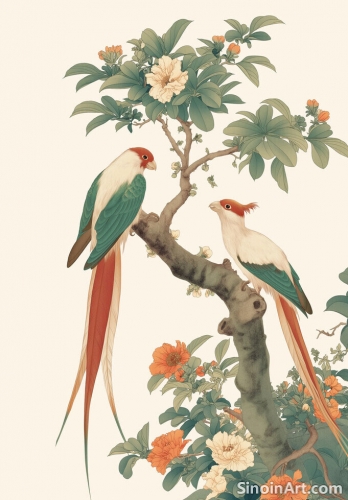 Taoism's emphasis on harmony with nature is evident in the detailed depiction of natural elements in Gongbi paintings. The meticulous rendering of flowers, birds, and landscapes reflects a profound appreciation for the natural world and the interconnectedness of all things. The attention to detail is not simply about visual accuracy but also about understanding and respecting the underlying principles of nature, in alignment with Taoist thought.  Confucianism's focus on order, precision, and moral values is reflected in the meticulous techniques and the themes often explored in Gongbi. The discipline required to create these detailed works is consistent with Confucian ideals. The depiction of historical figures and scenes of court life reflects the Confucian emphasis on tradition, ritual, and social order. The care and attention to detail align with these cultural values. 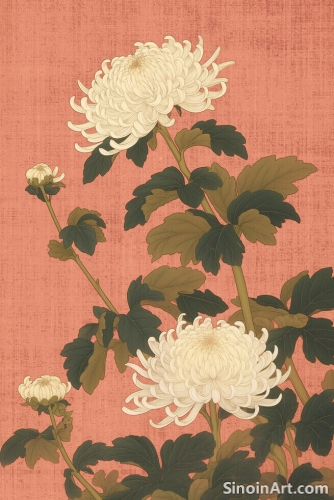 The concept of qi (vital energy) plays a crucial role in both Taoist and Confucian thought and is implicitly present in the creation and appreciation of Gongbi paintings. While the style is more structured than freehand painting, qi is evident in the energy flow within the composition and the precision of the brushwork. The artist’s mastery of technique allows their own internal qi to flow onto the page. The balance and harmony that are characteristic of Gongbi paintings also reflect the Confucian emphasis on order and the Taoist pursuit of natural balance. The meticulous detail and careful composition are not merely artistic devices but also represent a deeper understanding of the principles governing the universe. These paintings seek to convey both technical skill and an understanding of Chinese philosophy. The influence of both Taoism and Confucianism is woven into the fabric of Gongbi painting, shaping its artistic principles, thematic content, and cultural significance. This combination of artistic skill and philosophical underpinning has made Gongbi more than just an art form, but a vehicle for expressing important Chinese cultural and philosophical ideals. It is through this deeper understanding that we can truly appreciate the complexity of the art form. |
Tag : Taoism and Gongbi, Confucianism and Gongbi, Chinese philosophy and art, traditional Chinese thought, influence of philosophy on art
Related information
- The Materials of Gongbi: A Palette of Tradition
- Gongbi and the Depiction of Mythological Figures
- The Future of Gongbi: Digital Tools and Traditional Techniques
- Techniques and Tools: Unveiling the Secrets of Gongbi
- The Influence of Western Art on Contemporary Gongbi Painting
This article explores the essential materials used in Gongbi painting, focusing on the unique characteristics of brushes, silk, xuan paper, mineral pigments, and other tools.
This article explores the depiction of mythological figures in Gongbi painting, highlighting the symbolic attributes, use of color, intricate narratives, and how this art form brings to life the gods, immortals, and heroes of Chinese folklore.
This article explores the future of Gongbi painting, highlighting the use of digital tools to aid in the creative process, facilitate sharing, and expand the art form’s reach, while emphasizing the importance of maintaining traditional techniques.
An in-depth look at the techniques and tools used in Gongbi painting, covering brushes, ink, pigments, and painting surfaces.
This article explores the influence of Western art on contemporary Gongbi painting, highlighting the adoption of new perspectives, compositions, materials, techniques, and themes, and how these influences have created a unique hybrid style.