The Influence of Ancient Chinese Bronze Ware on Later Japanese Art and Design
|
The impact of Chinese bronze ware extended far beyond the borders of China, significantly influencing the development of art and design in Japan, where the adoption and adaptation of Chinese styles resulted in a unique and rich artistic tradition. The influence of China on Japan helped to shape the artistic traditions of the region. The blending of Chinese forms with local sensibilities helped to produce uniquely Japanese styles of art. 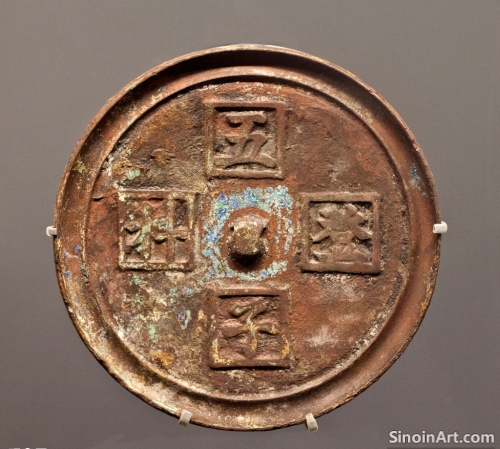 Japanese artists and craftsmen were deeply inspired by Chinese bronze ware, adopting many of their forms, motifs, and decorative techniques, while also incorporating their own cultural preferences. The Japanese artists were able to both replicate and also transform the original designs, bringing their own unique cultural sensibility to the work.  Bronze vessels, mirrors, and other objects with Chinese stylistic origins can be found in Japanese art and architecture, demonstrating the lasting influence of the designs and techniques used in ancient China. The Chinese bronze designs were a central influence on many of the Japanese artistic forms that followed.  The study of bronze objects in Japan reveals the complex process of cultural exchange, adaptation, and innovation, highlighting the way that different cultures can interact and transform one another over time. The cross-cultural exchange helped to generate new and interesting approaches to the creation of art and to further enhance the overall artistic landscape of both cultures. The influence of ancient Chinese bronze ware on Japanese art serves as a reminder that artistic styles are constantly evolving, and that cross-cultural influences are a valuable source of creative energy. The ability of different cultures to share ideas helps to create a more vibrant and dynamic artistic landscape. The impact of the ancient Chinese styles continues to be felt even today. |
Tag : Japanese bronze art, Chinese influence, cross-cultural exchange, artistic styles, shodo
Related information
- The Role of Bronze in Ancient Chinese Funerary Practices: Preparing the Deceased for the Afterlife
- The Influence of Tang Dynasty Aesthetics on Later Bronze Ware Design
- The Use of Bronze in Ancient Chinese Water Control: Dams, Canals, and Irrigation Systems
- The Future of Bronze Ware Studies: New Research Methods and Technologies
- The Preservation of Bronze Ware Collections: Challenges, Strategies, and Long-Term Care
This article explores the role of bronze in ancient Chinese funerary practices, highlighting the inclusion of ritual vessels, weapons, mirrors and other objects, and how these items reveal beliefs about the afterlife and the preparation of the deceased for their journey.
This article explores the influence of Tang Dynasty aesthetics on later bronze ware design, highlighting the shift toward more refined forms, delicate decorations, naturalistic motifs, and how these changes reflected a broader change in cultural tastes.
This article explores the use of bronze in ancient Chinese water control systems, highlighting its role in creating durable components for dams, canals, and irrigation networks, and demonstrating its importance for agricultural development and water management.
This article explores the future of Chinese bronze ware studies, highlighting the use of new research methods and technologies, including advanced imaging, 3D modeling, isotopic analysis, and interdisciplinary approaches, which promise to enhance our understanding of these artifacts.
This article explores the challenges and strategies involved in preserving bronze ware collections, highlighting the importance of conservation, specialized techniques, environmental controls, and museums as stewards of these cultural treasures.