The Future of Bronze Ware Studies: New Research Methods and Technologies
|
The field of Chinese bronze ware studies is a dynamic one, constantly evolving thanks to the application of new research methods and technologies. These new tools are helping to unlock more details about the creation, use, and history of these artifacts. New methods of research are helping to reshape the study of ancient Chinese art and culture.  The use of advanced imaging techniques, such as X-ray fluorescence (XRF) and computed tomography (CT) scans, allows for the analysis of bronze objects in greater detail, revealing information about their composition, casting methods, and surface decorations. The use of digital tools for imaging and analysis allows for a more complete and thorough approach to artifact analysis. The increased detail helps to enhance our understanding of the materials and processes used. 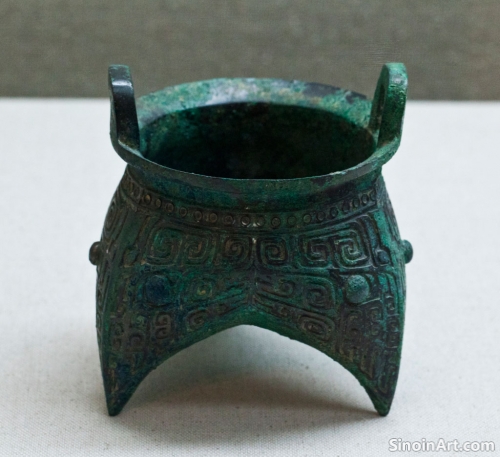 3D modeling and printing technologies are also being used to create virtual reconstructions of bronze objects, and to explore their original forms and functions. The use of these technologies allows for new ways to engage with the forms and functions of these ancient artifacts.  The use of isotopic analysis and other scientific techniques helps to further refine the dating of bronze objects and identify the source of the materials used in their creation, further enhancing our understanding of trade and cultural exchange. The careful dating and analysis of the material composition of the artifacts helps to create a fuller picture of their history and provenance. The application of new interdisciplinary approaches, combining archaeology, art history, and materials science, is further enriching the study of Chinese bronze ware, allowing for new interpretations and insights into these remarkable objects. The combination of different areas of study allows for a deeper and more thorough understanding of the art form. The interplay between the arts and sciences is helping to reveal more about the culture of ancient China. |
Tag : bronze research methods, archaeological science, artifact analysis, digital modeling, scientific techniques
Related information
- Bronze Ware and the Transmission of Ancient Chinese Knowledge: Libraries, Archives, and Scholarship
- The Role of Bronze in Ancient Chinese Storytelling: Depictions of Myths and Legends
- Bronze Ware and the Representation of Authority: Imperial Symbols and Power
- The Enduring Power of Chinese Bronze Ware: A Timeless Legacy of Art, Culture, and History
- The Evolution of Bronze Vessel Forms in Ancient China: From Simplicity to Complexity and Back Again
This article explores how bronze ware was used in the transmission of knowledge in ancient China, highlighting its role in creating records, tablets, archive labels, and other objects that helped to document, preserve, and disseminate information for future generations.
This article explores the role of bronze ware in ancient Chinese storytelling, highlighting how bronze objects depicted myths, legends, and heroic figures, and how they helped to preserve and transmit cultural narratives through a visual medium.
This article explores the representation of authority in Chinese bronze ware, highlighting the use of symbols, emblems, weapons, and other objects to demonstrate imperial and elite power, and the connections between material culture, political ideology, and the assertion of control.
This article reflects on the enduring power of Chinese bronze ware, emphasizing its timeless beauty, technical mastery, cultural significance, and its continuing ability to inspire awe and curiosity around the world.
This article explores the evolution of bronze vessel forms in ancient China, highlighting the shift from simple early shapes to more complex and ornate designs, and then later, a move back to simpler forms, reflecting changes in technology, aesthetics, and cultural practices.