The Importance of "Qi" in Xieyi Brushwork
|
"Qi" (氣), often translated as "vital energy," "life force," or "breath," is a fundamental concept in Chinese philosophy and art, particularly crucial in understanding the expressive qualities of Xieyi brushwork. It's the intangible energy that should be present in every brushstroke. The brushwork should reflect the living spirit and creative intent of the artist. 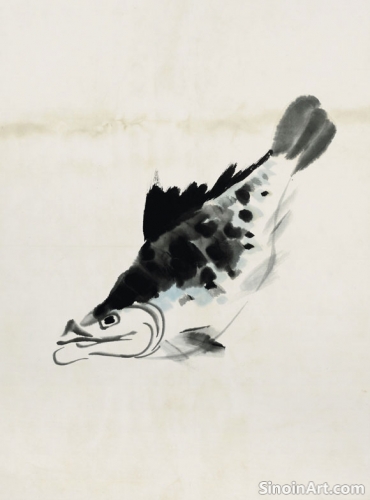 The artist's goal is not just to create lines but to imbue those lines with qi, a sense of vitality, movement, and expressive energy. Each stroke is a manifestation of this internal and external energy. The brushstrokes should reflect the life force that should flow through the artist, the brush, and the artwork. 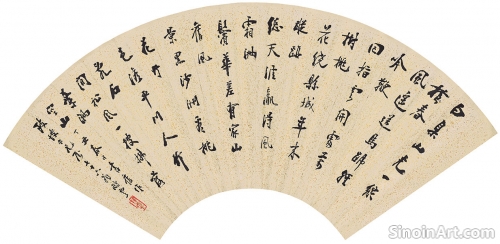 The artist's own qi is crucial to achieving this, requiring that they maintain a state of balance, focus, and inner harmony. The artist has to be centered and grounded, so their inner energy can be effectively channeled through the brushwork. The mental and physical state of the artist directly influences the quality of the artwork. 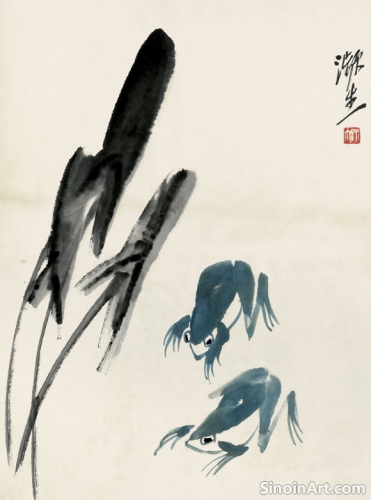 The concept of qi is often related to the principle of spontaneity, as the artist seeks to allow their brushstrokes to flow freely, capturing the energy of the moment, rather than attempting to force or control their movement. The spontaneous application of ink is aligned with the natural flow of energy that is an essential aspect of qi. Ultimately, qi in brushwork is about creating art that is not just visually appealing but also deeply alive, expressing the vitality of the natural world and the artist’s inner spirit. It should feel as if it is imbued with its own unique life force and creative intent. The goal is to create something that truly resonates with the soul. |
Tag : Qi in art, vital energy, life force, brushstroke energy, Chinese aesthetics
Related information
- Xieyi Painting and the Use of "Light Ink"
- The Use of "Broken Ink" in Xieyi
- The Enduring Appeal of Xieyi Painting
- The Influence of Folk Art on Xieyi Painting
- Xieyi Figures: Capturing the Essence of Humanity
"Light Ink" (dànmò) is essential in Xieyi painting, using diluted ink to create subtle tones, soft washes, atmosphere, depth, and delicate transitions, requiring a mastery of brush control, ink dilution, layering, and a delicate touch to convey a sense of quiet beauty.
"Broken Ink" (pòmò) is a key technique in Xieyi painting, involving layering wet ink to create rich and varied tones, depth, atmosphere, and a sense of spontaneity, reflecting a controlled approach to the unpredictable nature of ink and water, adding visual texture and depth.
The enduring appeal of Xieyi painting stems from its emotional and intuitive power, achieved through personal expression, spontaneity, suggestive imagery, and the pursuit of essence, connecting with viewers across cultures, and inspiring contemplation, tradition, and a deep understanding of the human experience.
Xieyi painting is also influenced by Chinese folk art, through its emphasis on boldness, simplicity, vibrant colors, directness, and storytelling, enriching the art form with expressive forms, a more accessible feel, and narratives that connect it to everyday life, history, and folklore.
While less common than landscapes and flowers/birds, figure painting (人物画, renwuhua) also has a place within the Xieyi tradition. These works often focus on capturing the character and spirit of the individual rather than simply portraying a likeness. The focus is on expression and inner qualities.