The Future of Gongbi: Innovation and Tradition
|
The future of Gongbi painting rests on the delicate balance between honoring its rich traditions and embracing innovation. As this art form moves into the 21st century, artists are faced with the challenge of preserving its integrity while exploring new avenues of expression. This requires both deep respect for the old and a brave willingness to innovate.  One of the key areas of development is the exploration of new materials and techniques. Contemporary artists are experimenting with alternative pigments, different types of paper, and new methods of layering and texturing, seeking to expand the expressive potential of Gongbi. This is not a rejection of the old ways, but a development and a refinement of existing methods. 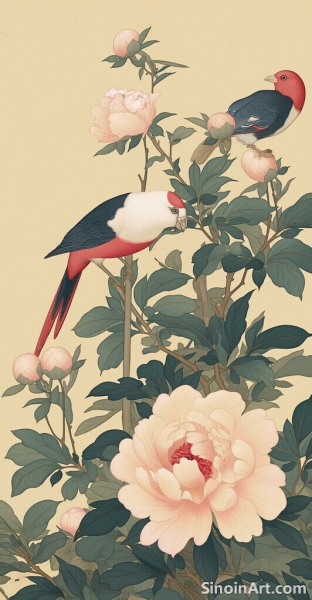 Technology is also playing an increasingly important role in the evolution of Gongbi. Digital tools and printing techniques are being used by some artists to create new forms of artwork that incorporate the aesthetics of Gongbi, while also reaching a wider audience. These tools allow artists to experiment with different visual styles and concepts.  The preservation of traditional skills and techniques is also of utmost importance. Passing down knowledge and expertise to younger generations of artists ensures that the essence of Gongbi is not lost. Education is vital to ensuring that the artform will live on. It needs to be taught, appreciated, and then developed by future artists. The future of Gongbi lies in the hands of those who practice it. With a respect for the past and an openness to the future, this ancient art form will continue to evolve, captivate, and inspire. The balance between tradition and innovation will ensure the style's relevance for many generations to come. The future is bright for this delicate and beautiful artform. |
Tag : Future of Gongbi, innovation in Chinese art, traditional art evolution, digital art and Gongbi, art preservation
Related information
- Collecting Gongbi Art: Appreciation and Investment
- The Use of Texture in Gongbi Painting
- Unveiling the Techniques of Gongbi: A Step-by-Step Guide
- The Delicate Dance of the Brush: An Introduction to Gongbi
- The Role of Line in Gongbi: Structure and Expression
Provides guidance on collecting Gongbi art, emphasizing aspects such as material quality, artist reputation, personal appreciation, and the investment value of collecting.
This article explores the use of texture in Gongbi painting, highlighting the techniques of layering color washes, varying ink density, and using specific brushstrokes to simulate the appearance of different surfaces and enhance the overall visual realism of the artwork.
This article provides a step-by-step guide to the techniques involved in creating a Gongbi painting, covering the sketching, outlining, layering, shading, and final detailing stages.
This article introduces Gongbi painting, a meticulous Chinese art form characterized by its detailed and realistic depictions, outlining its history, techniques, and contemporary relevance.
This article focuses on the importance of line in Gongbi painting, detailing the "gougou" outlining method, the variation in line weight, and the use of lines to convey structure and expression in the artwork.