The Dawn of Celadon Splendor
|
The Tang Dynasty (618-907 AD) represents a crucial period in the history of Chinese ceramics, particularly in the development and refinement of celadon wares. While not as dramatically innovative as the later Song dynasty, the Tang era saw a significant leap in kiln technology, material preparation, and artistic understanding that laid the groundwork for future ceramic masterpieces. Celadon, with its subtle green hues reminiscent of jade, enjoyed immense popularity, favored by both the imperial court and the burgeoning merchant class. Tang celadon wasn't just about mimicking jade; it was about capturing the essence of natural beauty and the philosophical ideals of the time.  The distinguishing feature of Tang celadon was the improvement in glaze composition. By experimenting with different clay and iron oxide ratios, potters achieved a richer, more consistent green glaze than their predecessors. The glaze was typically thick and had a glossy, almost jade-like texture. The forms were diverse, ranging from simple bowls and dishes to more elaborate ewers and vases. The earlier Tang celadons, influenced by the preceding dynasties, often featured simpler, more robust forms. Over time, however, a greater sense of elegance and sophistication became apparent in the shapes and decorative elements.  Decoration on Tang celadon was generally restrained, emphasizing the beauty of the glaze itself. Incised or carved designs, often depicting floral motifs or simple geometric patterns, were employed to add subtle textural depth. Unlike the later Song dynasty, where meticulous craftsmanship and minimal surface decoration became the hallmark of celadon, Tang potters were still exploring the balance between form and ornamentation. This experimentation led to a wide variety of styles and techniques, contributing to the rich tapestry of Tang ceramic art. 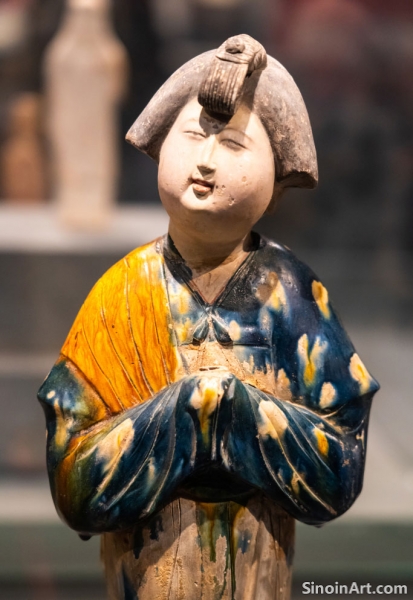 The importance of Tang celadon extended beyond its aesthetic appeal. It served as a valuable commodity for trade along the Silk Road, carrying the artistry of Tang China to distant lands. Fragments of Tang celadon have been unearthed in various parts of Asia and even the Middle East, testifying to its widespread popularity and influence. This global distribution of Tang ceramics not only highlights their value as trade goods but also speaks to the sophisticated tastes of the era. The legacy of Tang Dynasty celadon continues to inspire contemporary ceramic artists. Its harmonious balance of form, glaze, and subtle decoration serves as a timeless example of ceramic artistry at its finest. The developments during the Tang era paved the way for the golden age of Chinese porcelain in subsequent dynasties, demonstrating the fundamental importance of this period in the long and celebrated history of Chinese ceramics. |
Tag : Tang Dynasty celadon, Chinese celadon, green glaze porcelain, ancient Chinese ceramics, Silk Road pottery
Related information
- Burial Goods and the Afterlife in Tang Ceramics
- The Economic Importance of Tang Ceramic Production
- The Influence of Foreign Cultures on Tang Ceramics
- Technological Advances in Tang Kilns
- The Influence of the Silk Road on Tang Ceramics
The Tang Dynasty saw the flourishing of an elaborate burial culture, with ceramics playing a central role in equipping the deceased for the afterlife. These funerary wares, from everyday objects to elaborate figurines, offer a fascinating glimpse into Tang beliefs about death, the spirit world, and the continuation of earthly life in another realm. These burial goods were not just functional; they were imbued with symbolic meaning and designed to ensure the comfort and prosperity of the deceased.
Tang Dynasty ceramic production was economically significant, providing employment, fostering trade both domestically and internationally, and contributing significantly to the empire’s wealth, thereby stimulating economic growth.
The Tang Dynasty’s openness to international exchange significantly influenced its ceramics, evident in the adoption of foreign patterns, vessel forms, and decorative techniques, reflecting the cosmopolitan spirit of the era.
Tang Dynasty advancements in kiln technology, such as high-firing kilns and lead glaze control, enabled potters to produce a greater variety of higher-quality ceramics, significantly influencing later ceramic traditions.
The Tang Dynasty was a period of unprecedented prosperity and cultural exchange, largely due to the flourishing of the Silk Road. This network of trade routes not only facilitated the exchange of goods but also ideas and artistic styles. The influence of the Silk Road on Tang ceramics is undeniable, introducing new techniques, materials, and decorative motifs that transformed the landscape of Chinese pottery. The interaction between different cultures created a vibrant and cosmopolitan atmosphere reflected in the artistic output of the time.