Maintaining Your Teaware: Cleaning and Care Tips
|
Proper cleaning and care of Chinese teaware are essential for maintaining its beauty, functionality, and overall quality. Different materials require different care methods. Regular maintenance will ensure that these items remain a part of your tea drinking routine for years to come. 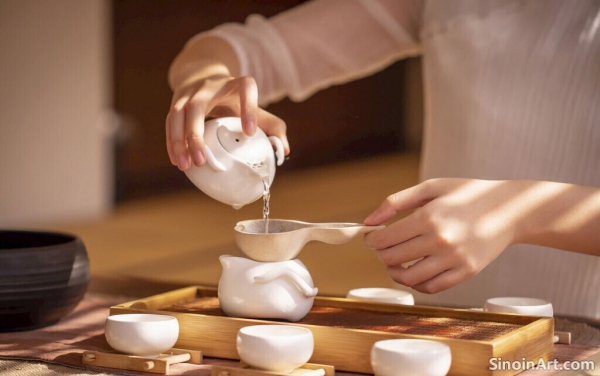 Yixing clay teapots should not be washed with soap or detergent, as these can be absorbed by the porous clay. Instead, simply rinse with hot water and allow to air dry. The natural patina that develops on these pots is part of their value, and should be preserved. Proper care of Yixing clay teapots is essential to their value.  Porcelain, glass, and stoneware teaware can generally be washed with mild soap and water, but it’s important to rinse thoroughly to remove any soap residue. These items should also be allowed to air dry fully before storing, to prevent mold or mildew. Regular cleaning will help to maintain their clarity, as well as their overall quality. 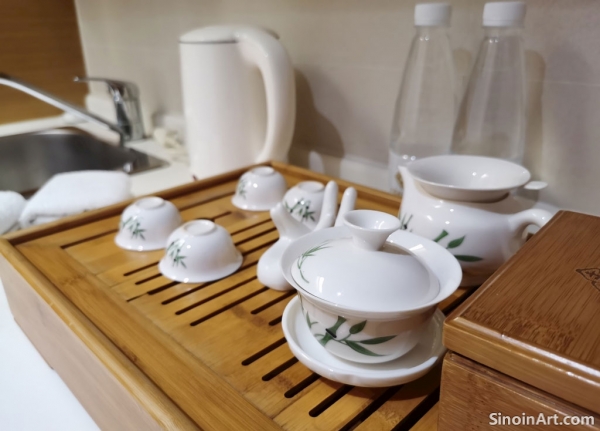 Avoid using abrasive cleaners, brushes, or cloths on any teaware as they can scratch or damage the surface. Soft cloths and gentle cleaning methods are essential for keeping your teaware looking its best. Harsh chemicals can damage the finish, and abrasive materials can scratch the surface of teaware. Handle teaware with care, avoiding sudden changes in temperature, which can cause cracking or damage. Sudden changes in temperature, from hot to cold, can cause thermal shock, leading to breakage, or damage to the teaware. Extreme temperatures should always be avoided. By following these basic guidelines, you can ensure that your Chinese teaware remains both beautiful and functional for years to come, allowing you to continue to enjoy the ancient art of tea. Regular and gentle care will help to preserve the value, and quality of your teaware for the future. |
Tag : Teaware Cleaning, Teaware Care, Teapot Maintenance, Tea Cup Cleaning, Teaware Longevity
Related information
- The Essentials of Chinese Teaware: An Introduction
- The Tea Tray: Organization and Presentation
- The Bold Flavors of Black Tea: Exploring Hong Cha
- The Variety of Chinese Teas: A Journey Through Flavors and Regions
- The Delicacy of White Tea: Minimal Processing, Maximum Flavor
This article provides a comprehensive introduction to the essential types of Chinese teaware, exploring their functions, materials, and historical significance within Chinese tea culture.
This article examines the importance of the tea tray in Chinese tea ceremonies, discussing its various forms, materials, and the role it plays in the organization and presentation of tea sets.
This article explores the world of Chinese black tea (Hong Cha), examining its history, unique characteristics, and popular varieties, and offering brewing suggestions.
Embark on a journey through the vast world of Chinese tea varieties, exploring the unique characteristics of green, black, oolong, white, and dark teas, and the regions where they originate.
This article focuses on white tea, highlighting its minimal processing, the subtlety of its flavors, and its delicate aroma, along with tips on brewing and enjoying this unique tea.