Gongbi Painting and the Depiction of Historical Events
|
Gongbi painting has played a significant role in documenting and interpreting historical events throughout Chinese history. With its meticulous detail and precise rendering, Gongbi has been used to capture important scenes, figures, and moments in history, offering both visual records and cultural perspectives on the past. These works serve not only as art, but as visual records of history.  Gongbi paintings depicting historical events often showcase meticulous attention to detail, accurately portraying the clothing, architecture, and cultural context of the time. The artists often based their works on meticulous research and careful study of historical artifacts. These works capture both the important aspects of the events and the historical context. 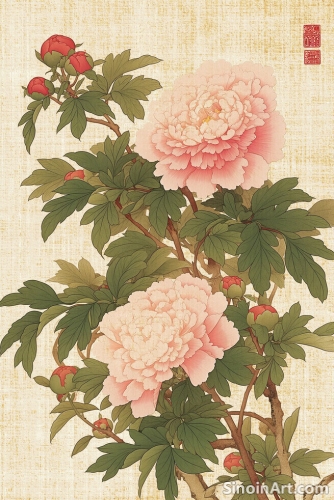 The depiction of historical figures in Gongbi paintings aims not only to capture their likeness but also to convey their power, status, and character. The artists carefully choose clothing, accessories, and poses that reflect the historical role and significance of each figure. The careful use of symbolism further reinforces the identity of the figures.  The use of color also plays a crucial role in conveying the mood, atmosphere, and symbolic significance of the historical event being depicted. Colors are chosen to evoke specific emotions and associations, helping to tell the story and enhance the overall impact of the artwork. Color use helps to guide the interpretation of the event. Gongbi paintings depicting historical events not only document the past but also offer interpretations and perspectives that reflect the cultural values and beliefs of the time the artwork was created. The artists often selected specific details that reinforced specific cultural or political messages. These works serve not only as records, but as cultural interpretations. Gongbi paintings have served as a powerful medium for understanding Chinese history. The artwork is not simply an objective record of the past; it also adds a layer of artistic and cultural interpretation to these historical events. These works serve as a visual record and a piece of cultural expression. |
Tag : Gongbi history, historical painting, Chinese historical art, documentary painting, historical events in art
Related information
- The Symbolic Language of Gongbi: Unveiling Hidden Meanings
- Gongbi in the Modern Age: Contemporary Artists and Innovations
- Gongbi and the Depiction of Everyday Life
- Gongbi Painting and the Depiction of Clouds and Mist
- The Symbolic Language of Gongbi: Exploring Motifs and Meanings
An exploration of the symbolic language used in Gongbi painting, focusing on the meanings of common motifs like flowers, animals, and colors.
This article explores the evolution of Gongbi painting in the modern era, highlighting the innovative approaches of contemporary artists, the incorporation of new themes and techniques, and the use of technology, while maintaining the core principles of the tradition.
This article explores the use of Gongbi painting in depicting scenes from everyday life, highlighting its meticulous detail, portrayal of common activities, and how these works serve as visual records of daily existence and a particular time and place.
This article explores the depiction of clouds and mist in Gongbi painting, highlighting the techniques used to create a sense of depth, luminosity, and atmosphere, and how the subtle variations in color and tone evoke a sense of mystery and serenity.
This article explores the rich symbolism embedded in Gongbi paintings, focusing on the meanings of flowers, animals, landscapes, and colors, and explaining how these symbols enhance the narrative and cultural significance of the artwork.