Gongbi in the Modern Age: Contemporary Artists and Innovations
|
While deeply rooted in tradition, Gongbi painting has continued to evolve in the modern era. Contemporary artists are both honoring the historical techniques and pushing the boundaries of the art form. They are incorporating new themes, perspectives, and materials, ensuring that Gongbi remains a relevant and vibrant art form for contemporary audiences. This dynamic tension between tradition and innovation is at the heart of the contemporary Gongbi movement. 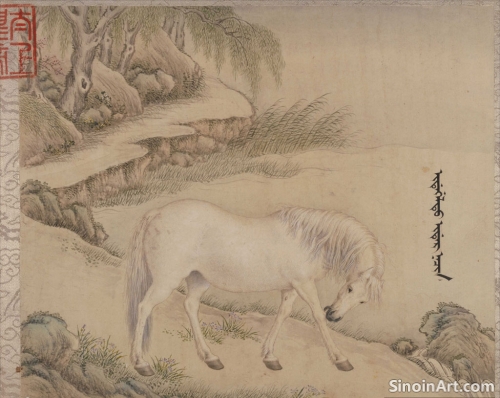 One of the significant developments in contemporary Gongbi is the exploration of new subject matter. While traditional themes of birds, flowers, and historical narratives are still popular, many artists are incorporating modern subjects and perspectives. Contemporary artists are using the detailed precision of Gongbi to address social and political issues, as well as exploring personal narratives. This shift towards contemporary themes is broadening the appeal of Gongbi to a new generation. 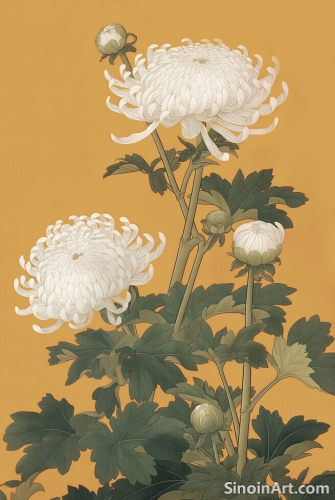 Contemporary Gongbi artists are also experimenting with new techniques and materials. Some are incorporating Western artistic elements, while others are exploring innovative approaches to color application and composition. The use of non-traditional pigments, the introduction of new layering techniques, and the incorporation of abstract elements are all contributing to the evolution of the art form. These innovations are not discarding the past, but rather building upon it, creating new avenues of artistic expression. 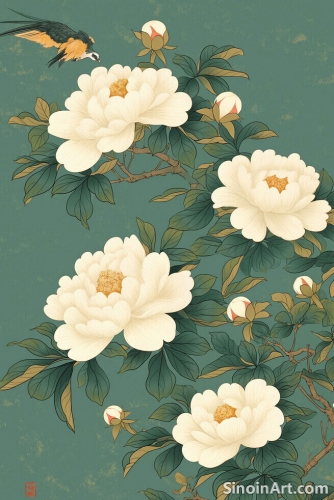 Technology has also begun to play a role in contemporary Gongbi. Digital tools and techniques are being used by some artists to create underdrawings or enhance the painting process. However, the core principles of Gongbi, including meticulous brushwork and careful layering of colors, still remain central. This careful blend of tradition and technology is keeping the spirit of Gongbi alive in the modern age. The enduring appeal of Gongbi lies in its ability to capture both the minute details of the world and its underlying essence. Contemporary artists are demonstrating that this traditional art form is capable of reflecting the complexities of the modern world. Their innovative work showcases the enduring relevance and beauty of Gongbi, ensuring its continued place in the world of contemporary art. |
Tag : Contemporary Gongbi, modern Chinese painting, Gongbi innovation, Gongbi artists, Chinese art trends
Related information
- Gongbi Painting and the Art of Observation
- The Role of Line in Gongbi: Structure and Expression
- Gongbi Painting and its Relationship to Calligraphy
- Gongbi Painting and the Influence of Taoist Philosophy
- Gongbi Painting Throughout History: From Courts to Modern Studios
Explores the significance of observation in Gongbi painting, highlighting its role in capturing detailed forms and understanding the subject's essence.
This article focuses on the importance of line in Gongbi painting, detailing the "gougou" outlining method, the variation in line weight, and the use of lines to convey structure and expression in the artwork.
This article examines the interconnected relationship between Gongbi painting and Chinese calligraphy, highlighting their shared techniques, the importance of line and ink, the concept of qi, and how the study of calligraphy can enhance the skills of a Gongbi artist.
This article explores the influence of Taoist philosophy on Gongbi painting, highlighting how the art form reflects Taoist ideals of harmony with nature, balance, mindfulness, and simplicity, adding a deeper layer of spiritual and philosophical significance to the artworks.
A historical overview of Gongbi painting, tracing its development from the Han dynasty to the present day, highlighting key periods and artists.