Bronze Weapons of Ancient China: A Glimpse into Warfare and Power
|
Bronze was not just used for ritual purposes in ancient China; it was also a vital material for crafting powerful weapons. Bronze weapons, such as swords, spears, axes, and daggers, played a crucial role in the warfare and military dominance of the Shang and Zhou dynasties. The forms, materials, and purposes of these objects highlight the military aspects of early Chinese culture.  Bronze weapons were not merely functional tools; they were also symbols of power and authority. They were often intricately decorated and held by high-ranking warriors and nobles as markers of their social and military status. The aesthetic elements of these weapons often enhanced the status and perceived power of the warriors who carried them. 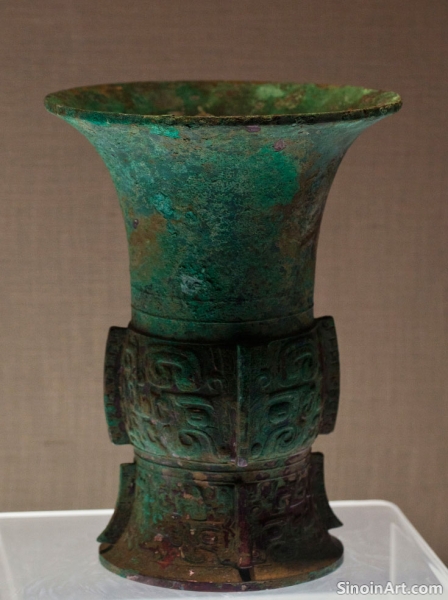 The most common bronze weapons included the ge (戈), a dagger-axe with a distinctive blade attached to a long handle, and the jian (剑), a double-edged sword. These weapons, along with other implements of war, were used in battles and ceremonies, showcasing the martial culture of the time. The forms and uses of these weapons tell us much about the military strategies and tactics used at the time.  The technical expertise required to cast bronze weapons was significant. Bronze workers needed a deep understanding of metallurgy and casting techniques to create weapons that were both strong and durable. The craftsmanship required to create these objects is extremely notable. The legacy of Chinese bronze weapons remains a testament to the military might and technological prowess of ancient China. The study of these objects provides valuable insights into the warfare and society of early China, highlighting the skill and technical abilities of its people. They are a powerful reminder of both the artistic and military capabilities of the ancient Chinese. |
Tag : Chinese bronze weapons, ge, jian, ancient warfare, Shang Dynasty military
Related information
- The Role of Animal Motifs in Chinese Bronze Ware: Symbolic Creatures of Power and Mystery
- The Preservation of Bronze Ware Collections: Challenges, Strategies, and Long-Term Care
- The Evolution of Bronze Decoration: From Simple Lines to Complex Narratives
- Bronze Ware and the Transmission of Ancient Chinese Technical Knowledge: Tools, Techniques, and Innovation
- Regional Styles of Bronze Ware: Exploring the Diversity of Ancient China
This article explores the animal motifs found on Chinese bronze ware, highlighting the symbolism of creatures like the taotie, dragons, phoenixes, and tigers, revealing their use in conveying power, spirituality, and connections to the natural world.
This article explores the challenges and strategies involved in preserving bronze ware collections, highlighting the importance of conservation, specialized techniques, environmental controls, and museums as stewards of these cultural treasures.
This article explores the evolution of bronze decoration, highlighting the shift from simple geometric patterns to more complex motifs and narratives, showcasing the technical and artistic development of ancient Chinese bronze workers.
This article explores the transmission of technical knowledge through the production of bronze ware in ancient China, highlighting the process of apprenticeship, the mastery of materials, the development of techniques, and how this knowledge shaped other forms of technical and artistic innovation.
This article explores regional styles of bronze ware in ancient China, highlighting the distinct forms, designs, and techniques found in different areas, including the Central Plains, the Yangtze Valley, and the northern regions, revealing the diversity of ancient Chinese culture.