Bronze Ware and the Development of Ancient Chinese Writing: Scripts, Inscriptions, and the Communication of Ideas
|
The development of ancient Chinese writing systems was deeply intertwined with the production and use of bronze ware, with many of the earliest forms of writing appearing as inscriptions on these objects. This interrelation highlights the importance of both writing and bronze in communicating information, preserving knowledge, and shaping the cultural landscape of ancient China. The use of bronze as a recording medium helped to shape the way that written Chinese evolved over time. The study of bronze ware and the written language that is often present on it helps to create a fuller and more complete picture of ancient Chinese culture. 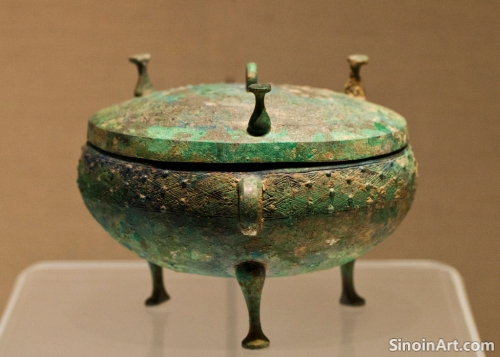 The earliest bronze inscriptions, known as jinwen (金文), utilized stylized characters that reflected the techniques used in metal carving. The forms and designs of the early written word were profoundly influenced by their use in the bronze medium. The care that went into their design is a testament to the importance that was placed on written communication and its lasting influence. 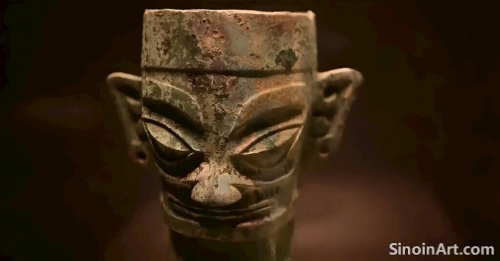 The evolution of different script styles over time can be clearly traced through bronze inscriptions, from the archaic forms of the Shang Dynasty to the more regularized forms of the Zhou and later periods. The study of the inscriptions on these objects provides valuable information about the development of the written word over time. The changes in the styles of writing reflect an important component of the overall changes in Chinese culture. 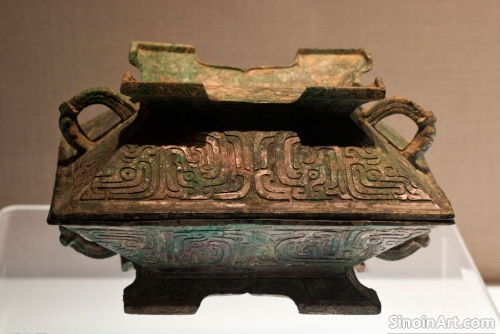 Bronze inscriptions were used to record historical events, ritual practices, and legal codes, establishing the importance of writing as a means of preserving and transmitting information for posterity. The use of written language on these artifacts also helped to underscore their importance and also the importance of accurate record keeping in ancient China. The study of writing on bronze objects helps to reveal the complex interplay between language, power, and culture in ancient China, highlighting the role of bronze in the development and transmission of ancient Chinese knowledge. The careful study of the inscriptions helps to better illuminate both the artistic and technical aspects of their creation, and also provides a link to the people who created and used them. |
Tag : bronze inscriptions, Chinese writing, ancient scripts, jinwen, language development
Related information
- The Discovery and Interpretation of New Bronze Ware Sites: Unveiling the Secrets of the Past
- Bronze Ware and Ancient Chinese Understanding of Astronomy: Maps of the Sky and the Measurement of Time
- The Evolution of Bronze Mirror Design: From Early Simplicity to Ornate Patterns and Narrative Scenes
- Bronze Mirrors and Ancient Chinese Beliefs About the Soul: Reflection and Transformation
- Bronze Ware and Ancient Chinese Communication Systems: Signals, Markers, and the Transmission of Information
This article explores the ongoing discovery and interpretation of new bronze ware sites in China, highlighting the importance of archaeological excavations, new technologies for analysis, and the way these new insights are reshaping our understanding of the past.
This article explores the connection between bronze ware and ancient Chinese understandings of astronomy, highlighting the use of celestial motifs, the depiction of astronomical phenomena, and the creation of instruments that aided in understanding the universe.
This article explores the evolution of bronze mirror design in ancient China, highlighting the shift from simple forms to more complex designs, including the use of intricate patterns, symbolic imagery, and narrative scenes, demonstrating the interplay between art, technology, and cultural change.
This article explores the connection between bronze mirrors and ancient Chinese beliefs about the soul, highlighting their role as guides in the afterlife, their association with spiritual transformation, and the belief that they could capture and preserve the soul's essence.
This article explores the use of bronze in ancient Chinese communication systems, highlighting its role in creating signaling devices, markers, and other tools for transmitting messages, ensuring that both visual and auditory forms of communication were implemented across large distances.