Bronze Ware and the Development of Ancient Chinese Cartography: Surveying Tools and Geographic Understanding
|
While the emphasis in cartography is often placed on paper maps, bronze played a crucial role in ancient Chinese mapmaking, used to create tools for surveying, measuring, and constructing models, and highlighting the complex interplay of both scientific and practical knowledge. The creation of these instruments highlights the sophistication of both the scientific and also the technological approaches of the time.  Bronze was used to create precision surveying instruments, such as compasses, sighting devices, and graduated scales, which were essential for mapping the land and measuring distances accurately. The durability and reliability of bronze instruments helped to make large scale mapping projects both more practical and also more accurate.  Bronze was also used to create molds and templates for creating models of the land, often used for planning building projects, or for understanding the relationship between different geographical features. The careful application of scientific principles allowed for the creation of more detailed and accurate maps of the landscape. 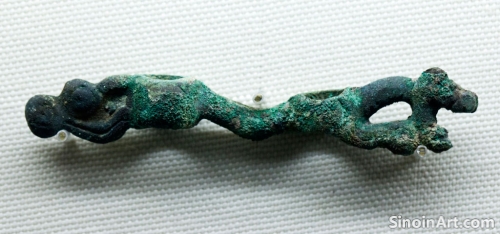 The use of bronze in cartography demonstrates the value that the ancient Chinese placed on accurate measurement and understanding of the natural world, and also reflects a commitment to both technological innovation and scientific study. The use of bronze in the tools and processes of cartography helps to reveal its importance in the culture of the time. The study of bronze in relation to ancient Chinese cartography helps us to appreciate the complex ways in which technology, mathematics, and practical application were used to shape our understanding of the world. The combination of different areas of knowledge is a hallmark of the ingenuity of ancient Chinese thought. |
Tag : bronze cartography, ancient Chinese maps, surveying tools, geographic understanding, measurement instruments
Related information
- The Use of Bronze in Ancient Chinese Medicine: Exploring the Relationship Between Materials and Healing
- Bronze Ware and the Transmission of Ancient Chinese Technical Knowledge: Tools, Techniques, and Innovation
- The Use of Bronze in Ancient Chinese Astronomical Instruments: Innovation and Precision
- The Legacy of Chinese Bronze Ware: Its Influence on Later Art Forms
- Bronze Ware and the Development of Ancient Chinese Writing Systems
This article explores the use of bronze in ancient Chinese medicine, highlighting the belief that the material itself possessed healing properties, and how it was used in creating vessels for preparing remedies, and in some therapeutic practices.
This article explores the transmission of technical knowledge through the production of bronze ware in ancient China, highlighting the process of apprenticeship, the mastery of materials, the development of techniques, and how this knowledge shaped other forms of technical and artistic innovation.
This article explores the use of bronze in ancient Chinese astronomical instruments, highlighting its role in creating armillary spheres, sundials, and other tools used for observation and measurement, and demonstrating the ingenuity and precision of ancient Chinese scientific thought.
This article explores the enduring legacy of Chinese bronze ware, highlighting its influence on later forms of Chinese art, including ceramics, painting, and sculpture, with particular emphasis on the enduring impact of bronze forms, motifs, and aesthetic principles.
This article explores the relationship between bronze ware and the development of ancient Chinese writing systems, highlighting the earliest forms of writing on bronze, the evolution of script styles, and the importance of these inscriptions in understanding early Chinese language.