The Use of Perspective and Space in Gongbi Painting
|
While traditional Chinese painting often prioritizes a flat compositional style, the use of perspective and the manipulation of space have become important considerations in contemporary Gongbi painting. Contemporary artists have begun to blend traditional techniques with modern styles. 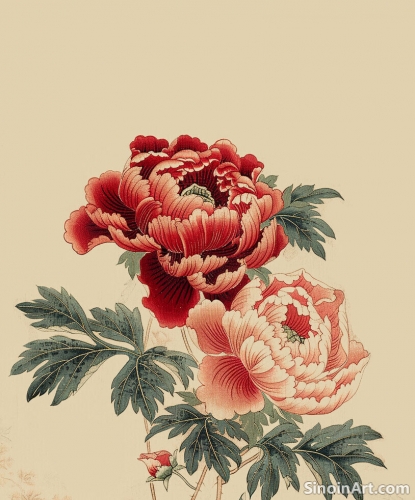 The exploration of perspective in Gongbi often involves the use of overlapping elements, atmospheric perspective, and other techniques to create a sense of depth and distance. This has allowed artists to blend Western methods with traditional approaches. The incorporation of techniques that were traditionally used in the West has expanded the visual language of Gongbi. 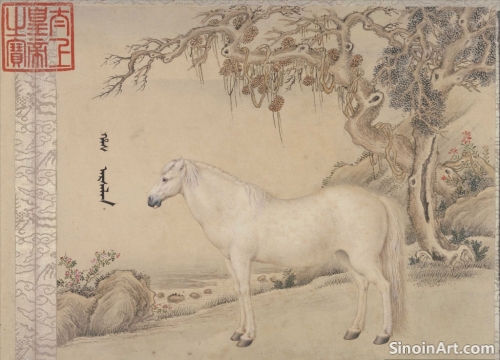 The use of negative space is also important in creating a sense of depth and atmosphere. By intentionally leaving areas of the composition blank, artists can suggest a sense of open space that draws the viewer into the artwork. The use of negative space is important to balance the complexity of the highly detailed work. 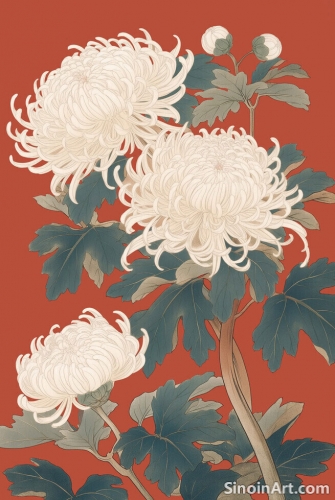 Traditional Chinese painting often uses a "floating perspective," where elements are arranged to emphasize different points of view rather than adhering to a single vanishing point. This approach is often still seen in contemporary works of Gongbi, where the point of view is varied and multiple perspectives are used. The use of layers is also used to create a sense of depth. By overlapping elements, color washes, and details, the artist can create a layered visual space. These techniques allow the artist to both layer space and perspective. The blending of traditional Chinese approaches to space with techniques adapted from Western traditions has added a new dimension to contemporary Gongbi painting. This fusion of different styles and techniques expands the boundaries of the art form and creates new and exciting visual possibilities. |
Tag : Perspective in Gongbi, Chinese art space, visual layering, composition techniques, art viewpoint
Related information
- Gongbi and the Use of Stippling and Pointillism Techniques
- Gongbi in the Modern Age: Contemporary Artists and Innovations
- The Emotional Impact of Gongbi Painting
- The Role of the Artist's Seal in Gongbi Painting
- Famous Gongbi Artists: Masters of the Meticulous Brush
This article explores the use of stippling and pointillism techniques in Gongbi painting, highlighting how the careful application of dots or points of color creates unique textures, visual effects, and expands the range of expression within this traditional art form.
This article explores the evolution of Gongbi painting in the modern era, highlighting the innovative approaches of contemporary artists, the incorporation of new themes and techniques, and the use of technology, while maintaining the core principles of the tradition.
This article explores the emotional impact of Gongbi painting, highlighting how meticulous detail, color palettes, subject matter, and symbolism all contribute to the artworks’ ability to evoke a range of feelings, such as peace, reverence, empathy, and cultural pride.
This article discusses the role of the artist's seal in Gongbi painting, highlighting its function as a signature, a visual element, a statement of ownership, and its contribution to the cultural significance and authenticity of the artwork.
This article highlights the contributions of famous Gongbi artists throughout history, including Emperor Huizong, Li Tang, Qiu Ying, and Chen Hongshou, discussing their unique styles and influence on the tradition.