The Use of Bronze in Ancient Chinese Water Management Systems: Irrigation and Hydraulic Engineering
|
Beyond the more commonly recognized uses of bronze, it also played a role in ancient Chinese water management systems, used to create irrigation devices, hydraulic engineering components, and other implements designed to control and manage water resources. The use of bronze for these purposes highlights the sophistication of ancient Chinese hydraulic technology. The careful management of water was an essential element of the economic life of ancient China. 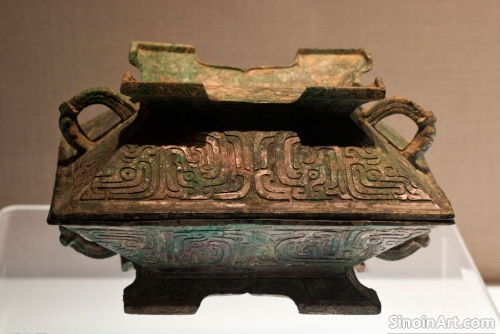 Bronze was used to create valves, pipes, and other fittings in irrigation canals and reservoirs, helping to regulate the flow of water and ensure a reliable supply for agriculture. These bronze components helped to create more efficient and more reliable water distribution systems. These improvements in technology helped to further expand agricultural production.  Bronze was also used to make the tools and implements used in the construction of dams, canals, and other water management projects. The use of bronze tools made for better and more durable tools for large scale construction projects. The careful management of resources, both human and material, was a key element of ancient Chinese civilization. 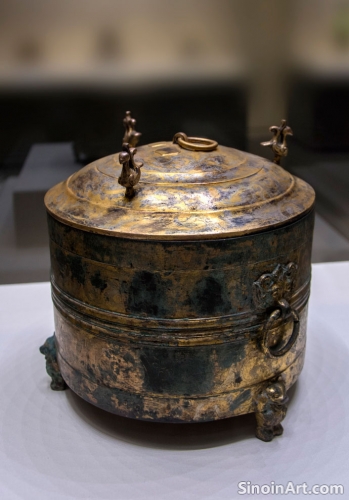 The creation of these systems played a central role in the agricultural productivity of ancient China, allowing for the large-scale cultivation of crops and the sustained population growth of the region. The innovations in irrigation helped to create a food surplus that could sustain a larger, more populous, and more complex society. The use of bronze in water management reflects the importance that was placed on technological innovation and resource management in ancient Chinese society. The study of these hydraulic systems helps to illuminate the scientific and engineering knowledge of the time. The combination of science and technology helped to shape both the economy and the culture of ancient China. |
Tag : bronze water management, ancient irrigation, Chinese hydraulic engineering, agricultural technology, water resources
Related information
- The Ritual Use of Bronze Mirrors in Ancient China: Connecting Worlds and Warding Off Evil
- Bronze Vessels and Music Performance in Ancient China: A Multi-Sensory Experience
- Bronze Ware and the Development of Ancient Chinese Mathematics: Measurement and Calculation
- The Evolution of Bronze Casting Techniques: From Early Molds to Complex Vessels
- Bronze Ware and the Development of Ancient Chinese Writing Systems: From Script to Art
This article explores the ritual use of bronze mirrors in ancient China, highlighting their role in guiding souls in the afterlife, in divination practices, in warding off evil, and demonstrating the powerful spiritual beliefs associated with these reflective objects.
This article explores the combination of bronze vessels and music in ancient Chinese ritual performance, highlighting how these combined to create a multi-sensory experience that engaged both visual and auditory senses, and enhanced the power of ritualistic ceremonies.
This article explores the use of bronze in ancient Chinese mathematics, highlighting its role in creating measuring instruments, illustrating mathematical principles, and revealing the connections between bronze, technology, and mathematical understanding.
This article explores the evolution of bronze casting techniques in China, from simple molds to the piece-mold and lost-wax methods, highlighting the technological innovation and artistic mastery of ancient Chinese metalworkers.
This article explores the relationship between bronze ware and the development of ancient Chinese writing, highlighting how the medium of bronze influenced the forms and styles of writing, and how it helped to establish the importance of writing in ancient Chinese culture.