The Ritual Use of Bronze Mirrors in Ancient China: Connecting Worlds and Warding Off Evil
|
Beyond personal grooming, bronze mirrors held a significant place in ancient Chinese rituals, used for both practical and symbolic purposes, ranging from divination and communication with spirits to repelling evil forces and ensuring prosperity. The spiritual significance of these objects went beyond their everyday use. The complex symbolism of these mirrors helped to make them powerful ritualistic tools. 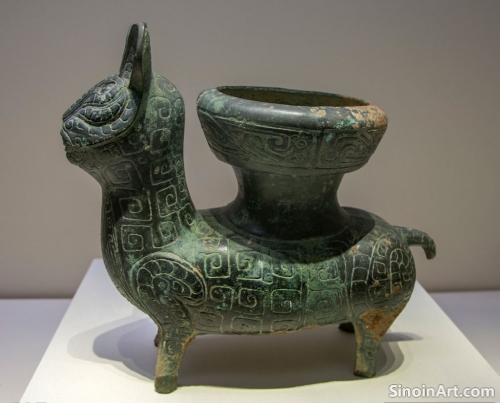 Bronze mirrors were often used in funerary rituals, placed in tombs with the belief that they would help guide the soul of the deceased to the spirit world, as well as to provide protection against malign forces. The mirrors were seen as objects that could act as portals to another world. The use of mirrors in burials helped to protect and guide the departed on their journey into the afterlife. 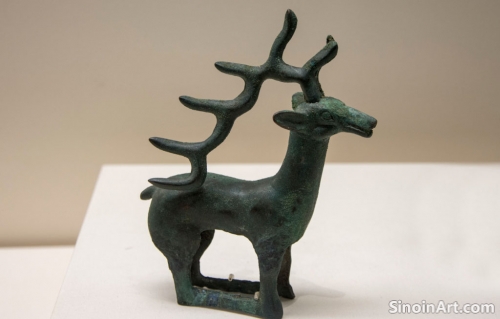 Mirrors were used in various divination practices, reflecting light onto surfaces and believed to reveal messages, omens, or prophecies from the heavens. The reflective surface was thought to have the ability to perceive forces beyond the material world. The careful use of mirrors could be used to gain new understanding of the spirit world.  Bronze mirrors were also sometimes used in rituals to purify spaces, ward off evil spirits, and attract positive energy, used to create a sense of balance and protection, bringing good fortune and prosperity. The mirrors were seen as having power over the forces of the spirit world. The study of bronze mirrors and their use in rituals reveals the interconnectedness of the material world with the spiritual realm in ancient Chinese culture, highlighting the belief that objects possessed inherent power and symbolic meaning. The careful study of these objects reveals much about the rituals, beliefs, and traditions of ancient China. The blending of the spiritual and the material is an essential element in Chinese ritual practice. |
Tag : ritual bronze mirrors, Chinese divination, spirit world, mirror magic, protective objects
Related information
- Bronze Ware and the Development of Ancient Chinese Agriculture: Water Management and Irrigation Systems
- Bronze Ware and Ancient Chinese Communication Systems: Signals, Markers, and the Transmission of Information
- Bronze Mirrors and the Concept of "Face" in Ancient Chinese Society: Identity and Social Status
- Bronze Ware and the Development of Ancient Chinese Maritime Trade: Ship Fittings and Navigation Tools
- The Future of Bronze Ware Studies: New Research Methods and Technologies
This article explores the use of bronze in ancient Chinese agriculture, highlighting its role in creating water management systems, irrigation components, and other implements that were essential for increasing agricultural productivity and supporting a growing population.
This article explores the use of bronze in ancient Chinese communication systems, highlighting its role in creating signaling devices, markers, and other tools for transmitting messages, ensuring that both visual and auditory forms of communication were implemented across large distances.
This article explores the connection between bronze mirrors and the concept of "face" (mianzi) in ancient China, highlighting how mirrors were used to manage social image, convey respect, and reflect the importance of social status both in life and after death.
This article explores the use of bronze in ancient Chinese maritime trade, highlighting its role in creating ship fittings, navigational instruments, and its impact on the development of long-distance trade routes and exploration.
This article explores the future of Chinese bronze ware studies, highlighting the use of new research methods and technologies, including advanced imaging, 3D modeling, isotopic analysis, and interdisciplinary approaches, which promise to enhance our understanding of these artifacts.