The Significance of Jade Inlays on Bronze: Combining Materials and Symbolic Meanings
|
The integration of jade inlays into Chinese bronze ware was a deliberate and powerful artistic choice, highlighting the symbolic importance of both materials and their combined impact. The combination of these materials served both artistic and symbolic purposes, and helped to enhance the status and spiritual power of the resulting works. The fusion of different materials helped to create some of the most beautiful pieces of ancient Chinese art.  Jade, with its smooth texture, rich color, and perceived spiritual properties, was highly valued in ancient China, representing virtue, purity, and immortality. The addition of jade to bronze objects enhanced their symbolic potency and highlighted their connection to the spiritual realm. The careful blending of these materials was not an accident, but rather a conscious and considered artistic decision. The careful selection and shaping of jade inlays, combined with their precise placement on bronze objects, highlights the technical and artistic skill of the ancient craftsmen. The crafting of these objects required a high degree of expertise in both metalworking and also in the shaping of stone. The ability to work with both jade and bronze reveals a high level of both artistic and technical skill. 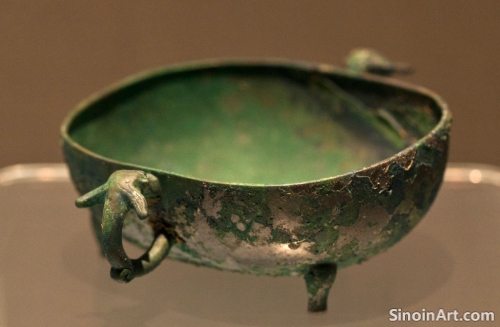 The interplay of jade and bronze created a visual and symbolic dialogue between the two materials, with the warm hues of bronze and the cool tones of jade complementing each other. The contrast between the two materials helps to highlight both their differences and also their complementary qualities. The combination of these materials helps to add both depth and a heightened symbolic power. The study of jade inlays on bronze artifacts reveals the complex interaction between different materials, and the symbolism that is associated with them. These objects help to reveal the depth and breadth of ancient Chinese artistic understanding. The combination of these materials helps to further connect us with the world of the past. |
Tag : bronze jade inlay, Chinese materials, ancient symbolism, decorative arts, composite objects
Related information
- The Influence of Nomadic Cultures on Chinese Bronze Ware: Cross-Cultural Exchanges
- The Relationship Between Bronze Vessels and Food Culture in Ancient China
- Bronze Ware and the Development of Ancient Chinese Trade Routes: Pathways for Exchange and Innovation
- The Use of Bronze in Ancient Chinese Transportation: Chariots and Fittings
- Bronze Ware and Ancient Chinese Medical Practices: The Use of Instruments in Surgery and Healing
This article explores the influence of nomadic cultures on Chinese bronze ware, highlighting the adoption of new forms, styles, and techniques, the influence of animal motifs, and the role of trade and diplomacy in the transmission of cultural ideas.
This article explores the connection between bronze vessels and food culture in ancient China, highlighting their use in the preparation, presentation, and consumption of meals, and emphasizing the importance of food in both daily life and ancestral rites.
This article explores the relationship between bronze ware and ancient Chinese trade routes, highlighting how the movement of objects and raw materials fostered cultural exchange, innovation, and the development of complex economic networks.
This article explores the use of bronze in ancient Chinese transportation, particularly in the construction and decoration of chariots, emphasizing its role in enhancing strength, durability, visual appeal, and as a symbol of power and status.
This article explores the use of bronze in ancient Chinese surgical and medical practices, highlighting the creation of scalpels, needles, forceps, and other tools, and revealing the sophistication of ancient Chinese medical techniques.