The Role of Bronze in Ancient Chinese Communication: Inscriptions, Messages, and Records
|
Beyond their artistic and ritualistic applications, bronze objects in ancient China served as important media for recording and communicating messages, stories, laws, and other forms of written information. The use of bronze as a medium for conveying information highlights the importance placed on written communication during this period. The combination of form, inscription, and visual design helped to emphasize the importance of the information being communicated. 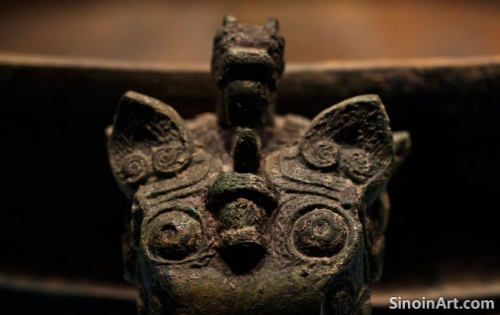 Bronze inscriptions were used to record historical events, royal decrees, treaties, and other important documents, preserving information and conveying a sense of authority, power, and permanence. The durability of bronze, and the permanence of the written form, helped to elevate the status of the information that it was intended to transmit. The integration of writing onto these objects was a way to both transmit and to immortalize information. 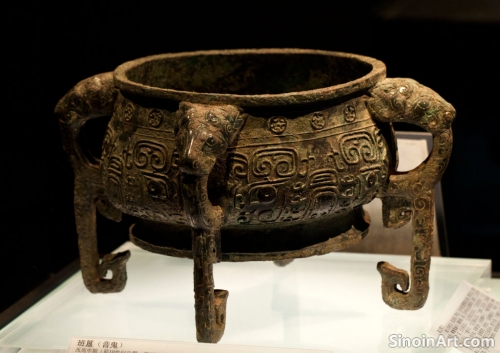 The act of inscribing messages on bronze also suggests a belief in the power of language, its importance in communication, and its ability to create enduring records that would last for generations. The care taken in the production of the inscriptions shows the value that was placed on accurate and well formed communication. 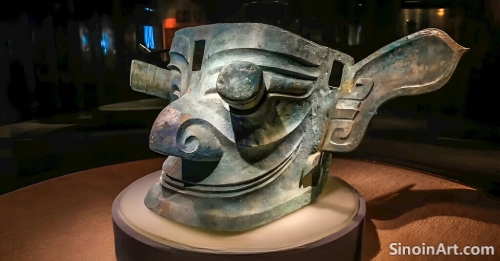 The distribution of bronze objects bearing inscriptions also served as a means of disseminating knowledge and power, helping to establish and reinforce social and political systems across ancient China. The wide dissemination of this information helped to create a more cohesive political and social system. The portability of the objects helped to extend the reach of this form of communication. The study of bronze inscriptions reveals the diverse purposes of ancient Chinese writing, highlighting the way that material objects were used to record and transmit information, and to shape both political and cultural life. The use of these objects for communication helps to demonstrate the vital importance of the written word in the ancient Chinese world. |
Tag : bronze inscriptions, ancient Chinese writing, communication media, historical records, inscribed messages
Related information
- A Guide to Further Study: Navigating the World of Chinese Bronze Ware Resources
- The Social and Political Symbolism of Bronze Weapons: Power, Authority, and Military Might
- The Influence of Bronze Ware on the Development of Chinese Seal Carving
- The Impact of Bronze Ware on Ancient Chinese Society: A Social Perspective
- The Use of Bronze in Ancient Chinese Agriculture: Tools and Innovations
This article provides a guide to further study on Chinese bronze ware, highlighting academic journals, museum websites, online collections, and books, and providing a roadmap for continued exploration and research into this fascinating area of art and culture.
This article explores the social and political symbolism of bronze weapons in ancient China, highlighting their connection to power, authority, and military might, and demonstrating how the possession and display of these objects reflected status and leadership.
This article explores the influence of bronze ware on the development of Chinese seal carving, highlighting the shared techniques, the stylistic similarities, the transmission of decorative motifs, and the interconnectedness of these two art forms.
This article examines the impact of bronze ware on ancient Chinese society, exploring its role in shaping social structures, political power, and religious beliefs, and demonstrating its profound influence on various aspects of ancient life.
This article explores the use of bronze in ancient Chinese agriculture, highlighting the types of tools and implements used, its role in enhancing agricultural productivity, and its impact on the development of ancient Chinese society.