The Rise of Blue and White Porcelain in the Yuan Dynasty
|
The Yuan Dynasty marks a pivotal moment in the history of Chinese ceramics, primarily due to the emergence and rapid development of blue and white porcelain. While blue and white wares had appeared in earlier periods, it was during the Yuan that these pieces, decorated with cobalt blue under a clear glaze, rose to prominence and became a defining feature of Chinese porcelain. The Yuan dynasty represents the beginning of a new approach to ceramic design, and the influence of Yuan blue and white porcelain can still be seen in pottery traditions today.  The use of cobalt, a mineral that provided the blue color, was imported from Persia, highlighting the extensive trade networks of the Yuan Dynasty. The unique combination of cobalt and a clear glaze created a new visual style that would become a defining element of future Chinese pottery. The import of this colourant from far away lands also highlights the global interconnectedness of cultures and the importance of international trade.  Yuan blue and white porcelain is characterized by its large, bold designs, which often include scrolling floral patterns, dragons, phoenixes, and other auspicious motifs. The designs were often expansive and intricate, created using freehand brush techniques that also emphasized the artistic skills of Yuan potters. 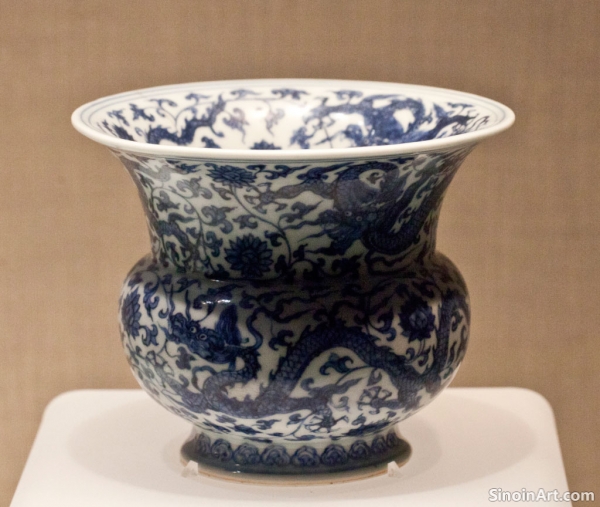 The technical innovations during the Yuan period allowed for higher firing temperatures, which resulted in a harder, more durable porcelain that was ideal for both domestic use and export. The creation of extremely high quality porcelain made this a highly desirable product both within China and beyond. The impact of Yuan blue and white porcelain on subsequent ceramic traditions, both in China and around the world, is undeniable. Its enduring popularity and influence underscore its position as a major achievement in ceramic history. The widespread global popularity of this type of porcelain makes it one of the best-known examples of Chinese pottery. |
Tag : Yuan blue and white porcelain, Chinese blue and white, cobalt blue pottery, Yuan dynasty ceramics, porcelain history
Related information
- Yuan Dynasty Porcelain and the Development of Korean Celadon Wares: A Symbiotic Relationship
- The Grand Scale of Yuan Dynasty Porcelain
- Yuan Dynasty Porcelain and the Development of Underglaze Technology
- The Influence of the Mongol Empire on Yuan Ceramics
- Yuan Ceramics and the Influence of Islamic Art
This article explores the symbiotic relationship between Yuan Dynasty porcelain and Korean Celadon wares, examining how Yuan innovations influenced Celadon development while acknowledging the reciprocal influence of Korean techniques on certain aspects of Chinese ceramics.
One of the defining characteristics of Yuan Dynasty ceramics is their large scale. Many pieces, particularly those produced for export or for use in large public settings, were made in impressive sizes that were much larger than those of the preceding Song Dynasty. The larger pieces show a different approach to production and a change in aesthetic sensibility.
This article examines the critical role of the Yuan Dynasty in the development of underglaze technology, focusing on the mastery of cobalt blue painting and the experimental use of copper red, which paved the way for later ceramic innovations.
The Yuan Dynasty was established by the Mongol Empire, and this period of Mongol rule had a subtle yet significant impact on the development of Chinese ceramics, particularly in terms of its trade networks and the cultural exchange that occurred during this period, and the influence of the Mongol Empire is visible in various aspects of the production and design of Yuan pottery.
The influence of Islamic art, particularly that of Persia, can be seen in some aspects of Yuan Dynasty ceramics, especially in the decorative motifs and use of certain colors, and the contact between different cultures via trade routes at this time is a key element in the overall design and appearance of some Yuan period ceramics.