The Influence of Gongbi on Other Art Forms
|
While Gongbi painting is a significant art form in its own right, its influence extends beyond the realm of traditional painting. Its emphasis on meticulous detail, precise linework, and vibrant colors has inspired artists and designers in a variety of other fields, from decorative arts to digital media. This influence demonstrates the power and enduring appeal of the Gongbi aesthetic.  In the decorative arts, such as porcelain and lacquerware, elements of Gongbi design are often incorporated. Intricate floral and bird patterns, with their precise details, are used to embellish these objects, adding a touch of elegance and sophistication. This transfer of design and technique brings the artistic language of painting into the decorative arts.  In the field of illustration and animation, the precise linework and detailed rendering characteristic of Gongbi are often adapted to create stylized characters and detailed scenes. The influence of Gongbi can be seen in character design, background illustrations, and overall aesthetic sensibility. The controlled and detailed approach can be translated to different digital formats. 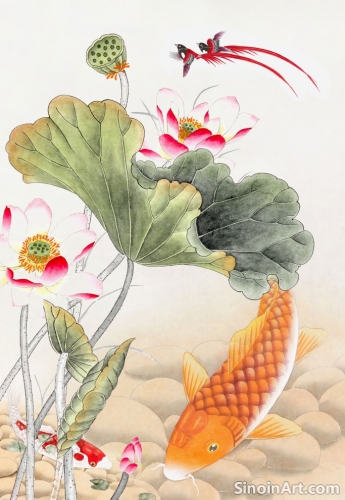 Textile and fashion designers are also drawing inspiration from the patterns and motifs found in Gongbi painting. Floral designs, geometric patterns, and detailed linework from Gongbi are being adapted and translated onto fabrics, creating unique and visually striking garments. The visual language of painting provides inspiration for fashion design. Even in contemporary digital art, the detailed rendering and intricate compositions of Gongbi are influencing a new generation of artists. The principles of layering, color mixing, and fine brushwork are being adapted to create digital works that are both technically masterful and visually stunning. The traditional art form has had a strong influence on digital aesthetics. The influence of Gongbi on other art forms demonstrates its enduring appeal and its capacity to transcend the boundaries of traditional painting. The aesthetic principles and technical mastery of Gongbi continue to inspire creative innovation across various fields. This ability to influence different mediums is a testament to the power of the art form. |
Tag : Gongbi influence, art inspiration, cross-disciplinary art, design elements, art crossover
Related information
- The Depiction of Flowers and Birds in Gongbi: A Symbolism Unveiled
- The Symbolic Language of Gongbi: Exploring Motifs and Meanings
- The Role of the Artist's Seal in Gongbi Painting
- Gongbi and the Use of Bird Motifs: Symbolism and Beauty
- Gongbi Painting and Storytelling: Narrative Through Detail
This article explores the depiction of flowers and birds in Gongbi painting, focusing on their symbolic meanings, the techniques used in their rendering, and their role in conveying both beauty and cultural narratives.
This article explores the rich symbolism embedded in Gongbi paintings, focusing on the meanings of flowers, animals, landscapes, and colors, and explaining how these symbols enhance the narrative and cultural significance of the artwork.
This article discusses the role of the artist's seal in Gongbi painting, highlighting its function as a signature, a visual element, a statement of ownership, and its contribution to the cultural significance and authenticity of the artwork.
The depiction of birds is a prominent theme in Chinese Gongbi painting, often serving as a means to explore the beauty, freedom, and symbolic richness of the natural world. Artists often render a diverse array of birds, from majestic eagles and phoenixes to the more humble songbirds, imbuing them with specific cultural meanings and stylistic characteristics. The birds add a vibrant and often symbolic element to these pieces.
Explores the narrative power of Gongbi painting, highlighting its ability to tell stories through detail, symbolism, and historical or mythological depictions.