The Influence of Confucianism on Xieyi
|
While Daoism and Chan Buddhism are often cited as the main influences on Xieyi, Confucianism also plays a more subtle, yet important, role in the development and values of the art form. Confucianism, with its emphasis on social harmony, ethical conduct, and the cultivation of character, has shaped the cultural context in which Xieyi painting emerged.  Confucianism values the idea of self-cultivation, urging individuals to strive for moral and intellectual excellence. This ideal resonates with the pursuit of mastery and personal development that is central to the practice of Xieyi. The process of learning is viewed as a process of personal growth.  The Confucian emphasis on social harmony and order can be seen in the appreciation of balance and composition in Xieyi paintings. Artists often seek to create works that are both aesthetically pleasing and ethically sound, reflecting the values of the society in which they live. It should be pleasing to the eye, but should also have inner meaning. 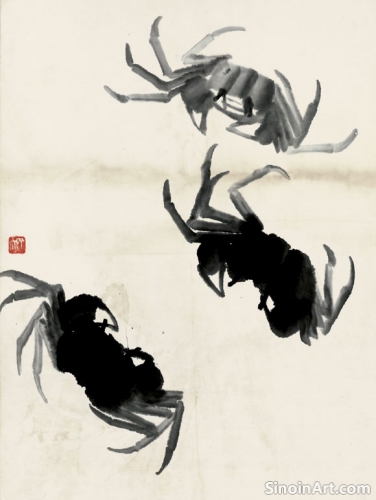 The Confucian ideal of the gentleman scholar, a person of both moral integrity and artistic talent, has shaped the role of the literati artist in China. Xieyi painters often see themselves as both artists and scholars, striving to create works that are both beautiful and meaningful. The artists act as cultural and social leaders. The Confucian concept of "Li" (禮), or ritual propriety, can also be seen in the traditional practices and protocols associated with Xieyi, from the careful preparation of materials to the respectful handling of the finished artwork. The rituals that surround the art form contribute to its overall significance. |
Tag : Confucianism in art, Chinese ethics, social harmony, self-cultivation, literati values
Related information
- The Essence of Expression: An Introduction to Xieyi Painting
- Modern Interpretations and Contemporary Xieyi
- Xieyi Painting and its Global Influence
- The Concept of "Yi" in Xieyi Aesthetics
- The Role of the Inkstone in Xieyi
This article introduces Xieyi painting, a freehand and expressive style of Chinese painting, emphasizing its focus on capturing the essence of a subject through bold brushwork and simplified forms.
Modern Xieyi painting is adapting to contemporary contexts through incorporating new techniques, subject matter, and philosophical ideas, while remaining grounded in the core principles of spontaneity, expression, and the pursuit of qi, and pushing its boundaries into the modern art world.
Xieyi painting has influenced artists and art movements globally through its emphasis on spontaneity, expression, and suggestion, with its impact seen in abstract expressionism and many contemporary approaches to the application of ink, form, and the expressive potential of line, reflecting its enduring power and universal appeal.
"Yi" (untrammeled) is a highly valued aesthetic in Xieyi painting, referring to effortless freedom, spontaneity, a lack of artifice, and a sense of naturalness, achieved by letting go of rigid rules, allowing intuition to guide the brush, and creating artworks that are both expressive and simple.
The inkstone (yàn) is a vital part of Xieyi painting, influencing the quality and texture of ink, and serving as an object of both practical use and beauty, representing a key part of the ritual of painting and connecting the artist to tradition.