The Cultural Significance of Chinese Seals: More Than a Signature
|
In Chinese culture, seals are much more than just signatures. They hold a significant place in art, history, and personal identity. The use of seals goes back thousands of years, and their meaning has evolved over time. They are used to authenticate documents, mark ownership, and imbue artwork with cultural and artistic weight. Understanding their significance offers a deeper insight into Chinese culture.  Historically, seals served as a form of identification and authorization. Imperial seals, made of jade or precious materials, were held by the emperor and his officials. These seals were used to validate official edicts and documents. They were a symbol of power and authority. Private seals also existed and served as proof of ownership or agreement. The existence of seals meant that individuals were bound to their commitments.  In the world of art, seals are an indispensable component. They appear on paintings, calligraphies, and other art forms as a way for artists to express their identity and add another layer to their work. The presence of a seal enhances the historical and aesthetic value of a piece, and it can be used to identify the artwork with the artist. Collectors also use seals to indicate that a piece is in their possession. 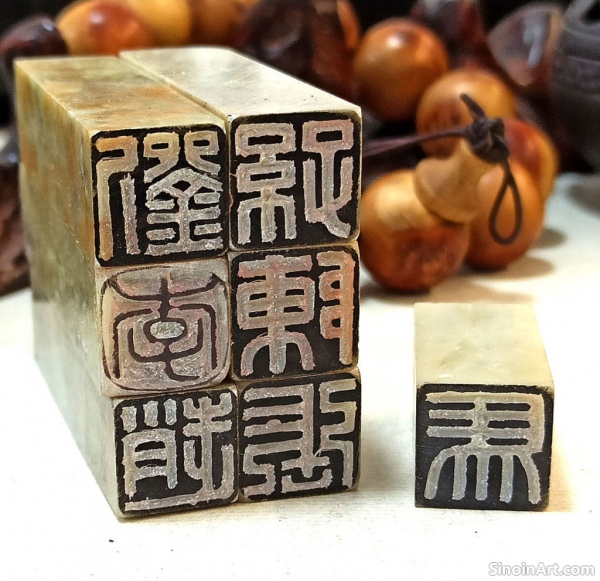 Beyond functionality, seals have a symbolic meaning. They can represent an individual's character, aspirations, or even their connection to the cosmos. The choice of characters and symbols on a seal often reflects the person's values and beliefs. The artistry of the seal, from the calligraphic style to the carving techniques, adds to the individual's persona. The enduring cultural significance of Chinese seals highlights their enduring appeal. They are a connection to history, an expression of artistry, and a deeply personal form of identification. The use of seals reflects the Chinese tradition of valuing lineage, craftsmanship, and the connection of the past to the present. |
Tag : cultural significance of seals, Chinese seals, seal authentication, history of Chinese seals, art seals
Related information
- The Historical Evolution of Studio Seals: From Early Beginnings to Modern Use
- The Use of Seals in Chinese Culture: Beyond Identification
- The Symbolism of Name Seals: Beyond Personal Identification
- The Mark of the Collector
- The Art of the Name Seal: An Introduction to Chinese Personal Seals
This article traces the historical development of studio seals in China, from their origins to their contemporary use, exploring how they have evolved and adapted to changing cultural and artistic contexts.
This article explores the various functions of Chinese seals (yinzhang) in Chinese culture, beyond mere identification, highlighting their use in government, business, art, and personal expression.
This article explores the rich symbolism associated with Chinese name seals, discussing the cultural and personal meanings embedded in the chosen characters, their styles, and the seal’s material.
Collector's seals, or shoucang yinzhang, are distinctive marks of ownership and connoisseurship used by collectors of art, books, and other valuable objects in China. These seals are more than just ownership markers; they are also expressions of personal taste, aesthetic values, and engagement with the piece being marked. The seals help to identify who has collected the object, and what they thought of its merit.
This article introduces the concept of Chinese name seals, exploring their history, cultural significance, and the basic techniques involved in their creation.