The Challenge of Authenticating Ancient Chinese Bronze Ware: Forgeries and Expertise
|
The authentication of ancient Chinese bronze ware is a complex process that requires expertise in a variety of fields, including archaeology, art history, and metallurgy. Due to their value and historical significance, bronze objects are often subject to forgery, making careful analysis crucial for collectors and scholars alike. The careful study and analysis of these objects are essential for determining both their authenticity and their history.  Identifying authentic ancient Chinese bronze ware requires a combination of visual inspection, scientific testing, and a deep understanding of stylistic variations and historical trends. The process of analysis is complex and it involves multiple different approaches. The combined methods are required to properly evaluate these ancient artworks.  Visual analysis often focuses on examining the patina, style of decoration, casting techniques, and the overall form of the object. The experience gained from looking at many examples of the work is a critical part of the authentication process. This helps the researcher gain a visual understanding of the techniques used. 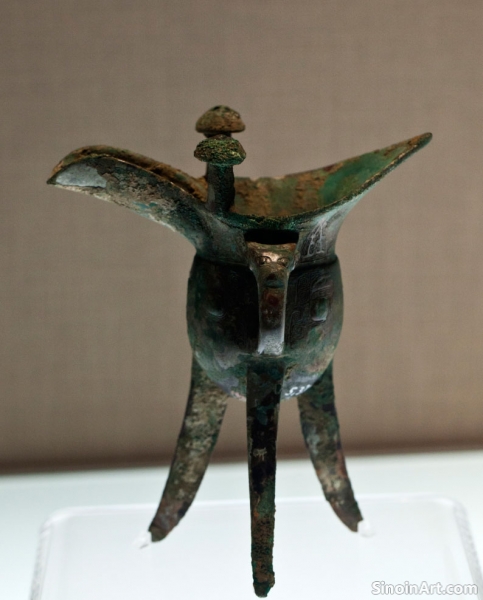 Scientific testing can involve the use of X-ray fluorescence (XRF), carbon dating, and other methods to analyze the chemical composition of the bronze, its age, and its manufacturing techniques. Modern technological analysis helps to determine the actual age and composition of the work. This data is valuable for comparison and authentication purposes. The ongoing efforts to combat the production of forgeries highlight the need for rigorous and scientific methods of authentication, ensuring that only authentic objects are recognized and valued. The care taken to examine and evaluate these objects is a key component in their preservation. |
Tag : bronze authentication, Chinese bronze forgeries, artifact analysis, art history, archaeological science
Related information
- The Evolution of Bronze Decoration: From Simple Lines to Complex Narratives
- The Preservation of Bronze Ware: Balancing Scientific Methods with Artistic Understanding
- Bronze Ware and Ancient Chinese Textile Production: Spindle Whorls, Weaving Tools, and Textile Art
- Bronze Ware and Ancient Chinese Concepts of Harmony: Balance, Symmetry, and the Cosmos
- The Use of Bronze in Ancient Chinese Medicine: A Focus on Acupuncture and Related Instruments
This article explores the evolution of bronze decoration, highlighting the shift from simple geometric patterns to more complex motifs and narratives, showcasing the technical and artistic development of ancient Chinese bronze workers.
This article explores the preservation of Chinese bronze ware, highlighting the balancing act between scientific analysis and artistic understanding, the need for specialized techniques and ethical considerations, and also the need to provide access and ensure their long-term care.
This article explores the use of bronze in ancient Chinese textile production, highlighting its role in creating spindle whorls, weaving tools, decorative elements, and the interplay between metalworking and textile crafts.
This article explores the influence of ancient Chinese concepts of harmony on bronze ware, highlighting the importance of balance, symmetry, precise proportions, and the connection of these principles to a wider understanding of the cosmos.
This article explores the use of bronze in ancient Chinese acupuncture, highlighting the creation of needles, probes, and other tools used in this practice, and demonstrating how bronze was instrumental in the development of traditional medicine.