Form and Design of Leisure Seals: Embracing Freedom and Creativity
|
The form and design of xiánzhāng are characterized by their freedom and creativity. Unlike the more standardized shapes of name seals and studio seals, leisure seals can take on a wide variety of forms, reflecting the individual tastes and artistic sensibilities of their owners. This wide degree of freedom allows for endless innovation and stylistic variety. 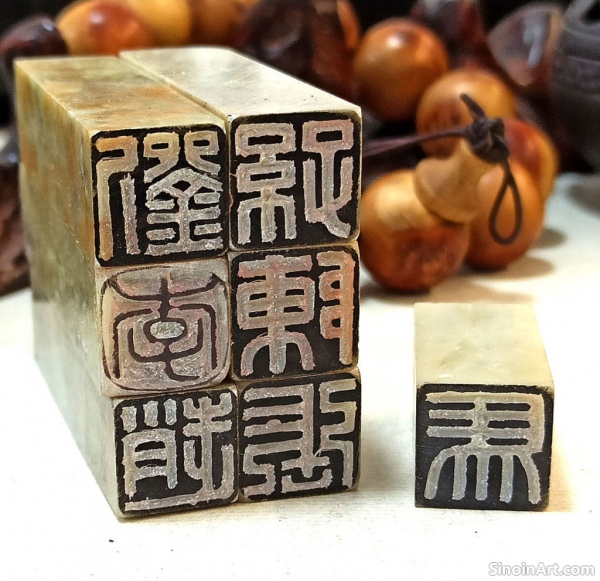 Leisure seals can be round, oval, rectangular, or even irregular in shape, challenging traditional expectations and allowing for greater design flexibility. The unconventional shapes are often chosen to fit the inscriptions, or to express personal tastes. The shapes themselves add to the overall aesthetic appeal of the seals.  The use of borders and patterns on leisure seals is often less rigid than on other types of seals, allowing for more experimentation with visual elements. The borders may be asymmetrical, broken, or completely absent, adding a sense of dynamism and informality to the composition. The patterns and borders are also highly variable, contributing to the unique aesthetic quality of each seal.  Leisure seals also often incorporate pictorial elements, such as animals, plants, or abstract forms, adding a personal and evocative dimension to the composition. The imagery is chosen for symbolic meaning, and adds to the overall character of the seal. The images often serve to underscore the meaning of the inscription. The negative space on leisure seals can be as important as the characters themselves. Carvers often use negative space to create visual interest, highlight particular elements, and guide the viewer's eye through the composition. The use of negative space is essential to creating a visual balance. The form and design of leisure seals reflect their purpose: to provide a canvas for artistic self-expression, free from the constraints of more formal types of seals. They demonstrate the diversity and creativity within Chinese seal carving and continue to evolve as new carvers bring their unique ideas to the tradition. |
Tag : Leisure Seal Design, Xian Zhang Form, Seal Shapes, Free Seal Art, Seal Aesthetics
Related information
- The Composition of a Seal: Design Principles in Zhuanke
- The Use of Seals in Chinese Culture: Beyond Identification
- Materials for Collector's Seals: Reflecting Status and Artistic Value
- Comparing Studio Seals and Name Seals: Similarities and Differences
- The Materials of Seal Carving: From Stone to Ink
This article explores the key design principles involved in creating the composition of a Chinese seal, focusing on the arrangement of characters, use of negative space, shape, border, and overall harmony.
This article explores the various functions of Chinese seals (yinzhang) in Chinese culture, beyond mere identification, highlighting their use in government, business, art, and personal expression.
This article explores the various materials used in the creation of collector's seals, discussing how they reflect the collector's status, aesthetic preferences, and their approach to art collecting.
This article explores the similarities and differences between studio seals and personal name seals, highlighting their unique functions, characteristics, and cultural significance within the tradition of Chinese seal carving.
This article explores the various materials used in Chinese seal carving, including the different types of stones, inks, seal pastes, and other supplies that contribute to the art form.