The Composition of a Seal: Design Principles in Zhuanke
|
The composition of a Chinese seal is a critical aspect of its artistic value, involving a complex interplay of characters, design elements, and the artist's creative vision. More than just a collection of characters, a well-designed seal is a harmonious composition, reflecting the artist's understanding of balance, proportion, and visual flow. The seal is a complex design puzzle that requires careful consideration. The layout requires an understanding of balance, flow, and overall harmony. 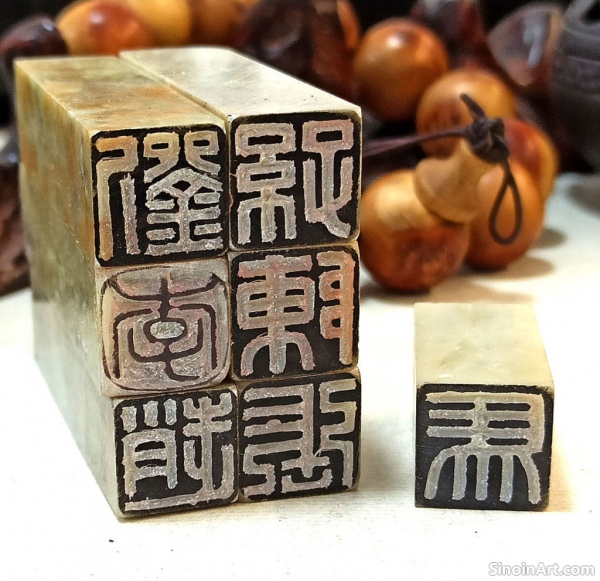 The arrangement of characters in a seal is a crucial element of its composition. The characters, typically from the seal script, must be arranged in a way that is both balanced and harmonious. The characters often are not just placed in a linear form, but rather in a balanced pattern that suits the overall visual goals. The relationship between the characters is important to ensure that the seal is both legible and artistically appealing.  The use of negative space, or the uncarved area of the stone, is equally important to the composition of a seal. The negative space creates contrast and highlights the carved characters. It is as important as the carved elements in creating a balanced and interesting design. The artist must carefully balance the positive and negative space to create an aesthetically pleasing whole.  The shape and size of the seal also play a crucial role in its overall composition. Seals can be circular, square, rectangular, or other shapes. The shape must complement the design and the characters. The size of the seal also affects the overall visual impact of the work. Each of these elements must be carefully chosen in relation to each other. The border of the seal is a subtle but important element of its composition. The border can be a simple line or an elaborate design, adding depth and texture to the overall artwork. The border can be used to frame the characters and create a defined space. The details of the border are also an important part of the seal. The overall composition of a seal should not be viewed as a collection of individual elements, but rather as a unified whole. Each element is carefully balanced and arranged to create a visually appealing artwork that is both functional and aesthetically pleasing. The ultimate goal is to create a harmonious composition that expresses the artist’s unique vision and style. |
Tag : Seal Composition, Zhuanke Design, Chinese Seal Layout, Seal Art Principles, Composition Techniques
Related information
- The Seal Script: A Calligraphic Foundation of Seal Carving
- Learning Seal Carving: A Journey of Patience and Skill
- The History of Seal Carving: From Function to Art
- Collecting Leisure Seals: Understanding Artistic and Cultural Value
- The Significance of Studio Seals: An Introduction to Zhaiguan Yinzhang
This article delves into the significance of the seal script (zhuanshu), a form of Chinese calligraphy that serves as the foundation for seal carving, exploring its history, forms, and artistic principles.
This article provides an overview of the different avenues for aspiring seal carvers, including private instruction, formal education, online resources, and the importance of consistent practice.
This article traces the history of Chinese seal carving, from its functional origins in ancient China to its evolution into a refined art form, highlighting its development across different dynasties.
This article offers a guide to collecting leisure seals, with insights on assessing artistic value, understanding the importance of provenance, and navigating the market for these unique objects.
This article introduces the concept of Chinese studio seals, exploring their historical context, cultural significance, and how they differ from personal name seals.