Bronze Ware and the Representation of Women in Ancient China: Social Roles and Power Dynamics
|
While bronze objects are often associated with male figures and activities, a closer examination reveals a more nuanced picture of the roles of women in ancient Chinese society, with some bronze artifacts depicting or reflecting the presence of women, their social status, and their complex interactions within the social and cultural system. These often overlooked depictions help us to better understand the place of women in the culture of the time. 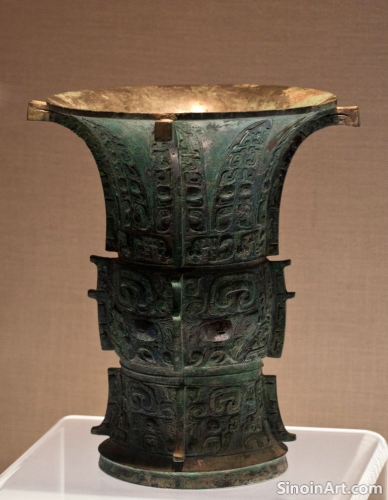 Some bronze objects, particularly mirrors and personal ornaments, were explicitly associated with women, reflecting their importance in both domestic and ritual life, and also demonstrating their status within the family structure. The depiction of women in artwork and on personal items provides a valuable insight into their roles within society.  The depiction of women on bronze artifacts, while not as common as male figures, also reveals the ways in which they were portrayed in ancient Chinese culture, sometimes shown as powerful figures, sometimes as mothers, and sometimes as symbols of beauty and domesticity. These varying depictions help to illuminate the complexities of women's roles within ancient Chinese society.  Bronze inscriptions, though less often associated with women, sometimes mention their roles in religious practices, or as members of powerful families, highlighting both their power and their place within the social order. The careful examination of all available artifacts helps to produce a more nuanced understanding of women's lives in the ancient world. The study of bronze ware in relation to women provides valuable insights into the complex social and gender dynamics of ancient China, demonstrating the range of roles and the variety of different ways in which women were understood and portrayed within this ancient culture. The inclusion of these details in artistic representations help to emphasize the varied role that women held in ancient Chinese culture. |
Tag : bronze and women, ancient Chinese society, gender roles, female representation, cultural history
Related information
- Bronze Ware and Ancient Chinese Astronomy: Celestial Motifs and Interpretations
- The Preservation of Bronze Ware: The Impact of Environmental Factors and Storage Conditions
- Bronze Ware and the Development of Ancient Chinese Writing: Scripts, Inscriptions, and the Communication of Ideas
- Bronze Ware and Ancient Chinese Astronomy: Celestial Symbols and Interpretations
- The Development of Bronze Mirrors in the Han Dynasty: New Styles and Social Significance
This article explores the connection between bronze ware and ancient Chinese astronomy, highlighting the presence of celestial motifs, the creation of astronomical instruments in bronze, and how this interrelation reveals insights into ancient Chinese worldview and their understanding of the universe.
This article explores the impact of environmental factors and storage conditions on the preservation of Chinese bronze ware, highlighting the causes of corrosion, the role of humidity and pollutants, and the need for careful management of storage environments.
This article explores the connection between bronze ware and the development of ancient Chinese writing, highlighting the evolution of script styles through inscriptions, the importance of writing as a medium for record-keeping and communication, and the role of bronze in shaping the development of written language.
This article explores the connection between bronze ware and ancient Chinese astronomy, highlighting the use of celestial symbols, the representation of astronomical phenomena, and the use of bronze in astronomical instruments, showcasing the interplay between art and science.
This article explores the development of bronze mirrors in the Han Dynasty, highlighting new styles, complex designs, their incorporation of cosmology, their role as status symbols, and the insights they offer into Han society.