Bronze Ware and the Development of Ancient Chinese Cartography: Maps and Measurement
|
While not as directly associated with maps as some other materials, bronze played a role in the development of ancient Chinese cartography, used in the creation of surveying tools, measuring instruments, and devices used to create accurate maps of the land. The use of bronze in these instances highlights the interplay between material science, mathematical understanding, and the techniques used in mapmaking. 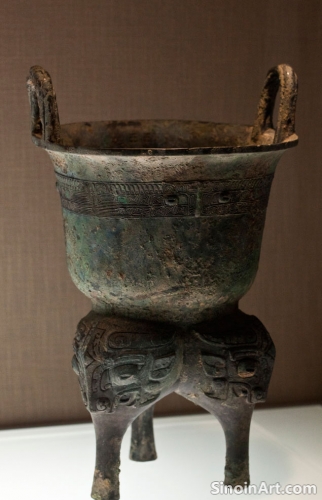 Bronze was used to create surveying tools, such as compasses, sighting devices, and measuring rods, which were essential for mapping the terrain accurately and for calculating distances and angles. The use of bronze helped to create instruments that were both durable and accurate, and this allowed for reliable data gathering. 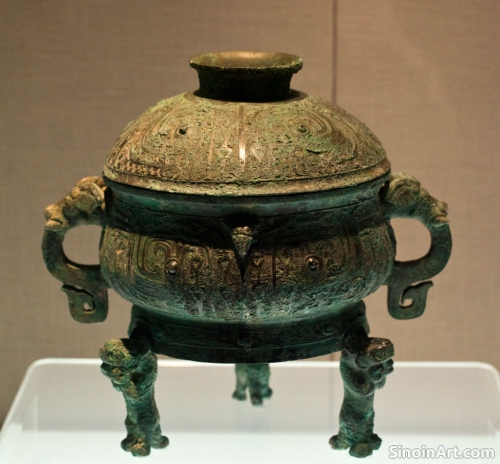 Bronze was also used to create weights and measures that were essential for mapmaking, allowing cartographers to create scale maps, plan routes, and record geographical features with greater precision. The standardization of weights and measures was essential for creating accurate maps and to promote reliable surveying practices. 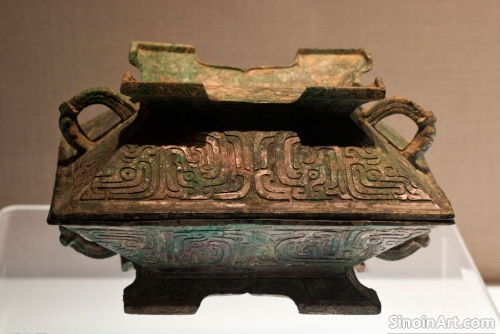 The precise craftsmanship and durability of bronze made it a suitable material for creating both scientific and practical tools, and to help facilitate the creation of detailed and accurate maps of the Chinese landscape. These maps were used not only for military and political purposes, but also for the purposes of trade, travel, and resource management. The use of bronze in cartography helped to create a better understanding of both the land and the heavens. |
Tag : bronze cartography, ancient maps, Chinese surveying, mapping tools, measurement instruments
Related information
- Bronze Ware and the Development of Ancient Chinese Trade Practices: Routes, Markets, and Exchange
- The Use of Bronze in Ancient Chinese Maritime Navigation: Compass Design and Directional Tools
- The Impact of Bronze Ware on Ancient Chinese Burial Customs: Ritual Objects and the Afterlife Journey
- The Influence of Bronze Ware on the Development of Chinese Seal Carving
- Bronze Ware and the Power of Inscriptions: Communicating History, Lineage, and Identity
This article explores the role of bronze ware in the development of ancient Chinese trade practices, highlighting the emergence of trade routes, markets, and systems of exchange, and revealing its economic, social, and cultural impact.
This article explores the use of bronze in ancient Chinese maritime navigation, highlighting its role in creating compasses, sighting devices, and other instruments, and demonstrating how these tools were used to facilitate long-distance sea travel.
This article explores the impact of bronze ware on ancient Chinese burial customs, highlighting their role as grave goods, their connection to beliefs about the afterlife, and how they reflect the status and spiritual needs of the deceased.
This article explores the influence of bronze ware on the development of Chinese seal carving, highlighting the shared techniques, the stylistic similarities, the transmission of decorative motifs, and the interconnectedness of these two art forms.
This article explores the power of inscriptions on Chinese bronze ware, highlighting how they communicated historical events, established lineage ties, asserted social identities, and provided invaluable insights into the history and culture of ancient China.