Yuan Ceramics and the Production of "Shufu" Wares
|
"Shufu" wares, produced in Jingdezhen during the Yuan Dynasty, are known for their delicate white porcelain, often with subtle underglaze decorations in a pale blue or creamy white. These pieces were often made for the Imperial court or for other high-ranking officials and scholars and they demonstrate the continued importance of high quality white porcelain. 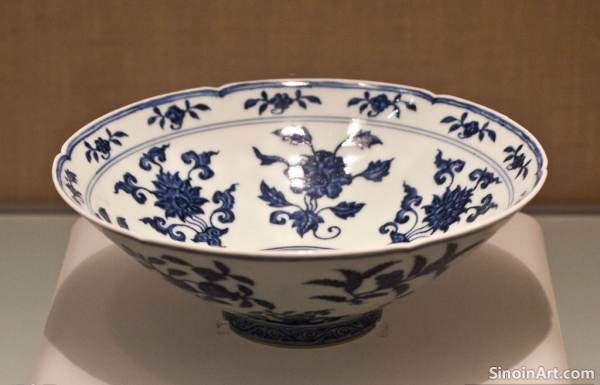 The name "Shufu" (樞府) refers to the Privy Council, highlighting the connection of these pieces to the Yuan court, and this connection between pottery production and government patronage demonstrates the importance of the imperial court during the Yuan era.  "Shufu" wares were often decorated with subtle underglaze patterns, such as floral motifs or auspicious symbols, which were created using fine brushwork and carefully selected materials. These pieces are prized both for the quality of the clay that was used and also for their beauty and the artistry of the designs.  The smooth, translucent glaze on Shufu wares enhances the delicate texture and pure white color of the porcelain, creating a sense of refinement and sophistication. The delicacy of the glaze was designed to emphasize the overall beauty of the piece. "Shufu" wares represent an important and distinct style of Yuan Dynasty porcelain, reflecting the refined tastes of the Yuan elite. These pieces are important elements of the overall study of pottery production at the time, and are a testament to the skill and dedication of Tang artisans. |
Tag : Yuan Shufu ware, Chinese white porcelain, Jingdezhen pottery, subtle decoration, porcelain history
Related information
- The Rise of Blue and White: Yuan Dynasty Porcelain's Groundbreaking Innovation
- Yuan Ceramics and the Influence of the Southern Song Dynasty
- Yuan Dynasty Ceramics and the Global Trade Network
- Exploring the Regional Variations in Yuan Dynasty Porcelain Production
- Yuan Dynasty Porcelain and the Development of Underglaze Technology
The Yuan Dynasty (1271-1368) witnessed the groundbreaking introduction of blue and white porcelain. This article explores its robust forms, innovative designs, and lasting global impact, highlighting its revolutionary significance in the history of ceramics.
Although the Yuan Dynasty conquered the Southern Song, the artistic traditions and ceramic techniques of the Southern Song had a lingering influence on the production of Yuan ceramics, and some Song styles, forms and techniques were adapted and incorporated into Yuan period pottery production.
Yuan Dynasty ceramics were widely exported globally, playing a major role in trade networks and disseminating Chinese culture, art, and innovation, while simultaneously influencing overseas markets and prompting ceramic innovation.
This article delves into the regional variations in Yuan Dynasty porcelain production beyond Jingdezhen, exploring the characteristics of celadon wares from Fujian and Zhejiang, and the distinct styles of white and blue and white wares from northern kilns.
This article examines the critical role of the Yuan Dynasty in the development of underglaze technology, focusing on the mastery of cobalt blue painting and the experimental use of copper red, which paved the way for later ceramic innovations.