The Symbolism in Seals: Decoding Meaning Through Design
|
Chinese seals are more than just a signature or a stamp; they are often imbued with symbolic meaning, reflecting the values, beliefs, and aspirations of the artists and owners. Understanding the symbolism within seal carving can add a deeper dimension to the appreciation of this traditional art form. The symbolism often reflects personal beliefs and cultural values. The messages embedded in the design require careful interpretation and understanding. 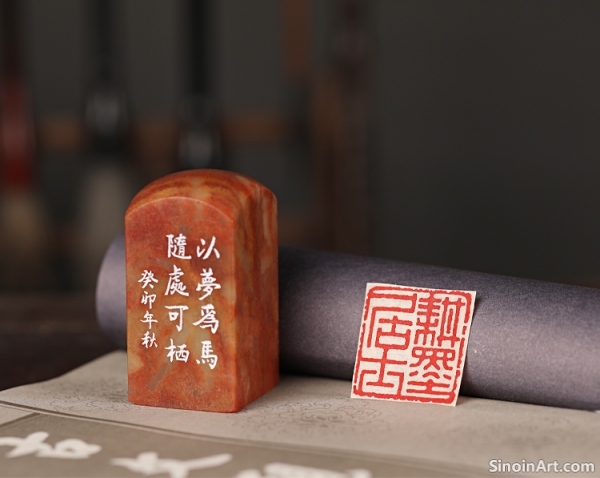 The characters used in seal carving are often chosen for their symbolic meaning. For instance, characters representing longevity, prosperity, or good fortune are frequently used on seals. Certain characters are often associated with luck and prosperity. This selection of characters reflects common values.  The use of specific imagery is common on seals, with different motifs carrying different symbolic significance. Dragons, for example, represent power and authority, while phoenixes symbolize rebirth and good fortune. These visual elements are also key to understanding the message of the work. Their incorporation is an indication of the message.  The way characters are arranged on the seal can also be symbolic. The use of symmetry or asymmetry, the use of positive and negative space, and the use of particular design elements can all contribute to the symbolic meaning of the seal. The structure of the seal can be as important as the characters themselves. The color of the ink used for impressions can also carry symbolic meaning. Vermilion, the traditional red color used for Chinese seals, represents joy, prosperity, and good fortune. Color choices can alter the overall impact and message. The material from which the seal is made may also be symbolic. Jade, for instance, has long been associated with power, purity, and spiritual significance, while other materials like wood or soapstone may carry different connotations. The choice of material can be as significant as the design. In essence, the symbolism found in Chinese seals is a rich and complex language, reflecting the depth of Chinese culture and artistic expression. Understanding these symbolic elements allows viewers to appreciate the seals not only as works of art, but also as profound expressions of meaning and cultural values. |
Tag : Seal Symbolism, Chinese Art Meaning, Symbolic Motifs, Seal Design, Cultural Interpretation
Related information
- Design Elements of Collector's Seals: Composition and Visual Language
- Collecting Collector's Seals: A Journey Through Art History and Connoisseurship
- The Composition of a Seal: Design Principles in Zhuanke
- Notable Studio Seal Carvers and Their Contributions
- Collecting Name Seals: Understanding Value, Rarity, and Provenance
This article discusses the design elements of collector's seals, exploring how composition, borders, patterns, and pictorial elements contribute to the seal's visual language and its overall artistic impact.
This article explores the personal journey of those who collect collector’s seals, emphasizing the blend of artistic appreciation, historical research, and personal engagement with Chinese art and culture.
This article explores the key design principles involved in creating the composition of a Chinese seal, focusing on the arrangement of characters, use of negative space, shape, border, and overall harmony.
This article highlights the achievements of notable studio seal carvers throughout history, discussing their unique styles, techniques, and the lasting impact they had on the tradition of zhāiguǎn yìnzhāng.
This article provides a guide to collecting Chinese name seals, discussing how to assess their value, understand their rarity, and research their provenance, with tips on how to avoid forgeries.