Gongbi Painting and the Concept of "Qi Yun Sheng Dong"
|
While often associated with freehand painting (Xieyi), the concept of "Qi Yun Sheng Dong" (气韵生动), often translated as "spirit resonance and lifelike movement," also holds significance in understanding the aesthetic principles of Gongbi. Although Gongbi focuses on meticulous detail, a master artist seeks to infuse the artwork with a sense of vitality and inner energy, aiming to capture not just a visual likeness but also the underlying spirit of the subject.  The “Qi Yun” or “spirit resonance” element refers to the sense of vitality, energy, and life force that a work of art should possess. In Gongbi painting, this is not just about creating a technically perfect depiction of the subject matter; it is also about capturing the essence or inner spirit. Even within the constraints of the detailed technique, the artist seeks to imbue their work with a living energy. 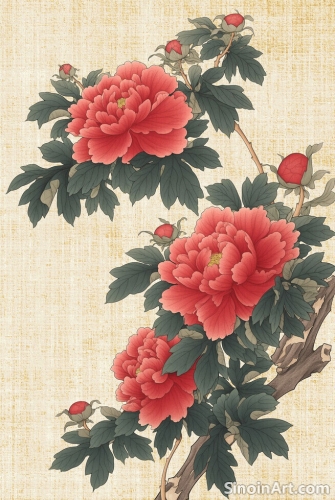 The “Sheng Dong” or “lifelike movement” element reflects the artist’s ability to create a sense of dynamism and vitality within the static image. This can be achieved through subtle variations in line, color, and form, creating a sense of movement and life. The artist's ability to imbue the work with dynamism and energy is one of the markers of a masterpiece. 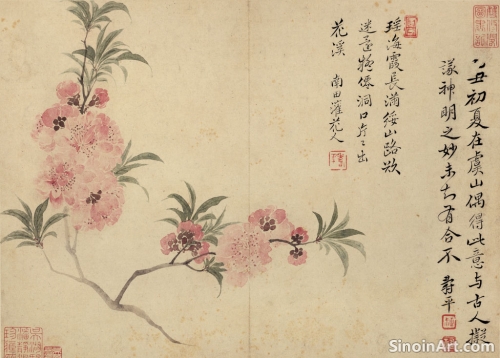 The pursuit of “Qi Yun Sheng Dong” in Gongbi painting requires a deep understanding of the subject matter, as well as a mastery of technical skills. The artist must be able to translate not only the visual appearance of the subject, but also its inner essence and the flow of its inner energy. This involves both technique and artistic vision. The pursuit of this principle is not just about creating a beautiful work of art; it is also about connecting with the vital energy of the universe. The goal is not merely to create a replica, but to infuse the painting with the artist’s own personal energy and understanding. The works of master painters are both beautifully detailed and deeply resonant. The concept of “Qi Yun Sheng Dong” provides a deeper understanding of the artistic and philosophical aims of Gongbi painting, reminding us that art is not just about technical skill but also about capturing the essence and energy of the world. The pursuit of this principle elevates the art form beyond the technical to the truly sublime. |
Tag : Qi Yun Sheng Dong, spirit resonance, lifelike movement, Chinese art theory, aesthetics of Gongbi
Related information
- Learning Gongbi: Resources and Pathways for Aspiring Artists
- The Challenge of Large-Scale Gongbi Painting
- Collecting Gongbi: Insights and Considerations for Art Enthusiasts
- Gongbi Color Techniques: Layering and Luminosity
- The Use of Gold Leaf and Other Embellishments in Gongbi
This article provides an overview of resources and pathways for aspiring Gongbi artists, including formal education, online resources, private instruction, and the importance of consistent practice.
This article explores the unique challenges of creating large-scale Gongbi paintings, including maintaining precision, acquiring specialized materials, managing composition, and the time-consuming process of layering colors and details.
This article provides insights for art enthusiasts interested in collecting Gongbi paintings, focusing on the importance of brushwork quality, authenticity, subject matter, composition, and proper care for these delicate artworks.
Color, while carefully controlled, plays a vital role in creating the refined beauty of Gongbi painting. Unlike the spontaneous use of color in Xieyi, Gongbi artists employ a meticulous approach, building up their colors through numerous thin layers, and creating a sense of depth, luminosity, and subtle gradations of tone. This approach is a hallmark of the Gongbi style and contributes to the richness of its visual effects.
This article explores the use of gold leaf and other embellishments in Gongbi painting, detailing their application, symbolic significance, and contribution to the visual richness and overall aesthetic of the artwork.