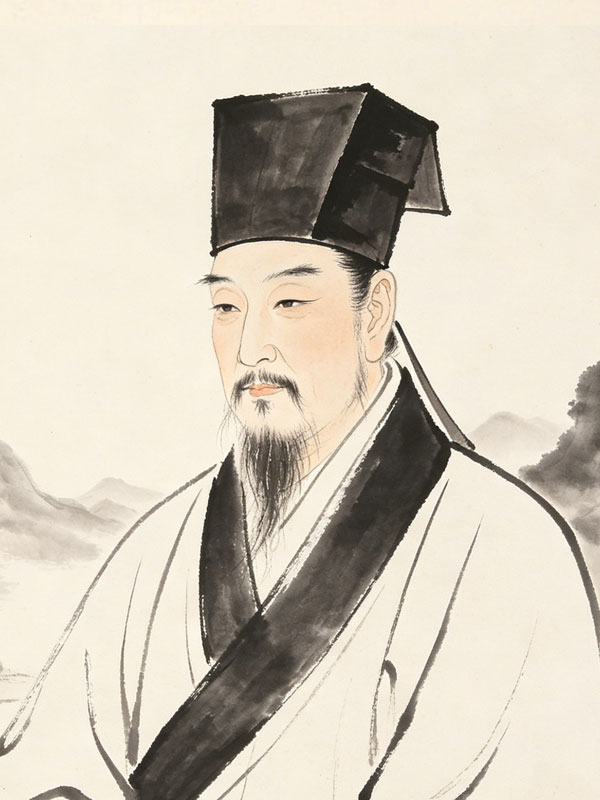
Yan Hui (颜辉): Master of the Supernatural and Religious Painting
Yan Hui (late 13th – early 14th century), courtesy name Qiuyue (秋月), was a preeminent professional painter of the late Southern Song and early Yuan Dynasty. Unlike many of his contemporaries who focused on literati landscapes, Yan Hui achieved immortality through his haunting and powerful depictions of Buddhist and Taoist figures, ghosts, and legendary immortals.
1. Specialist in Religious and Supernatural Subjects
Yan Hui is best known for his mastery of Dao-shi renwu (Taoist and Buddhist figure painting). He specialized in portraying eccentric, transcendent, and sometimes grotesque characters from the spiritual realm. His most famous subjects include the Eight Immortals (particularly Li Tieguai) and the legendary Zen eccentrics Hanshan and Shide. His ability to capture the "otherworldly" essence of these figures set him apart from the more grounded academic styles of the era.
2. Artistic Style and "Demonic" Expression
Yan Hui’s style is characterized by its vigorous brushwork and dramatic use of ink wash. He often utilized:
- Iron-wire lines: Precise, firm, and continuous outlines that gave his figures a sculptural quality.
- Chiaroscuro-like effects: He used heavy ink washes to create deep shadows and a sense of three-dimensional volume, a technique that was relatively rare in traditional Chinese painting and contributed to the eerie, nocturnal atmosphere of his works.
- Facial Expression: He was a master of psychological intensity, often giving his subjects bulging eyes, wild hair, and vivid, sometimes frightening facial expressions that conveyed a sense of supernatural power.
3. The Professional vs. Literati Divide
During the Yuan Dynasty, the Literati (Wenren) movement dominated the art world, favoring amateur expression and subtle landscapes. As a professional painter (huagong), Yan Hui’s work was sometimes marginalized by Chinese scholar-critics who found his style too "refined" or "representational." However, his technical brilliance and the raw energy of his compositions ensured his lasting legacy among collectors and the imperial court.
4. Impact on Japanese Art (The Zen Influence)
Yan Hui had a profound and disproportionate influence on Japanese art, particularly during the Muromachi period. His paintings were highly prized by Japanese monks and shoguns, significantly shaping the Zenga (Zen painting) tradition and the works of Japanese masters like Sesson Shukei. Many of his finest surviving works are currently preserved in Japanese collections, such as the Tokyo National Museum and the Chion-ji Temple.
5. Notable Masterpieces
His surviving oeuvre includes the iconic "Li Tieguai" and "The Immortals Hanshan and Shide" (now in the Tokyo National Museum). These scrolls demonstrate his unique ability to blend grotesque realism with spiritual gravitas, depicting the immortals not as polished deities, but as weather-beaten, spiritually profound recluses.
— ALL MASTERPIECES LOADED —