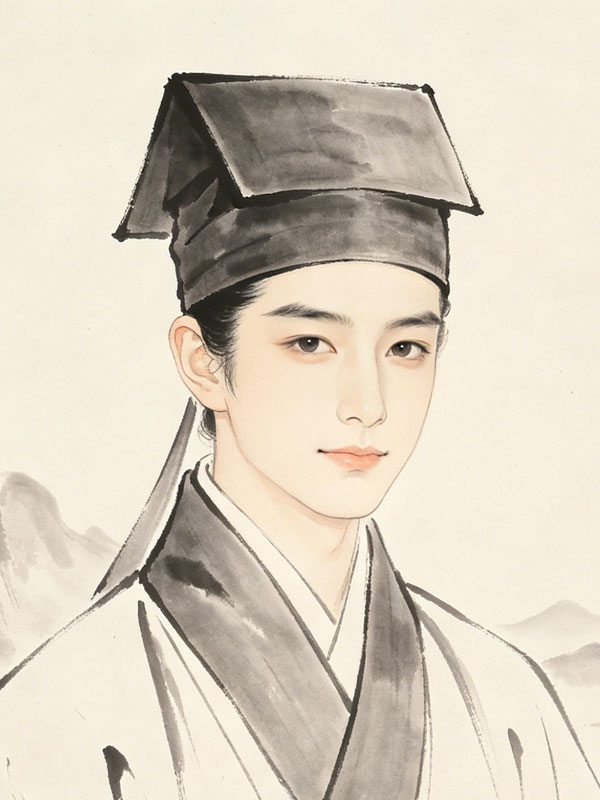
Xie Shichen (谢时臣): The Master of Monumental Vistas and Hybrid Styles
Xie Shichen (1487–after 1567), courtesy name Sizhong (思忠) and pseudonym Lanzhan (樗仙), was a prolific and highly skilled landscape painter of the middle Ming Dynasty. A native of Suzhou, he occupied a fascinating and somewhat controversial position in art history, acting as a stylistic bridge between the elegant Wu School (literati) and the vigorous Zhe School (professional).
1. A Unique Synthesis: Wu School vs. Zhe School
While Xie Shichen lived in the heart of Suzhou—the capital of the Wu School—his work defied strict categorization. He studied under the legendary Shen Zhou, inheriting the scholarly grace of the literati tradition. However, he also incorporated the bold, powerful brushwork and dramatic energy of the Zhe School (represented by artists like Dai Jin). This hybrid style made his work distinctive: it possessed the intellectual depth of a scholar but the technical command and grand scale of a professional master.
2. Mastery of Monumental Landscapes
Xie Shichen was renowned for his ability to handle large-scale compositions. Unlike many Suzhou painters who preferred intimate album leaves or subtle handscrolls, Xie excelled in towering hanging scrolls. His landscapes are characterized by:
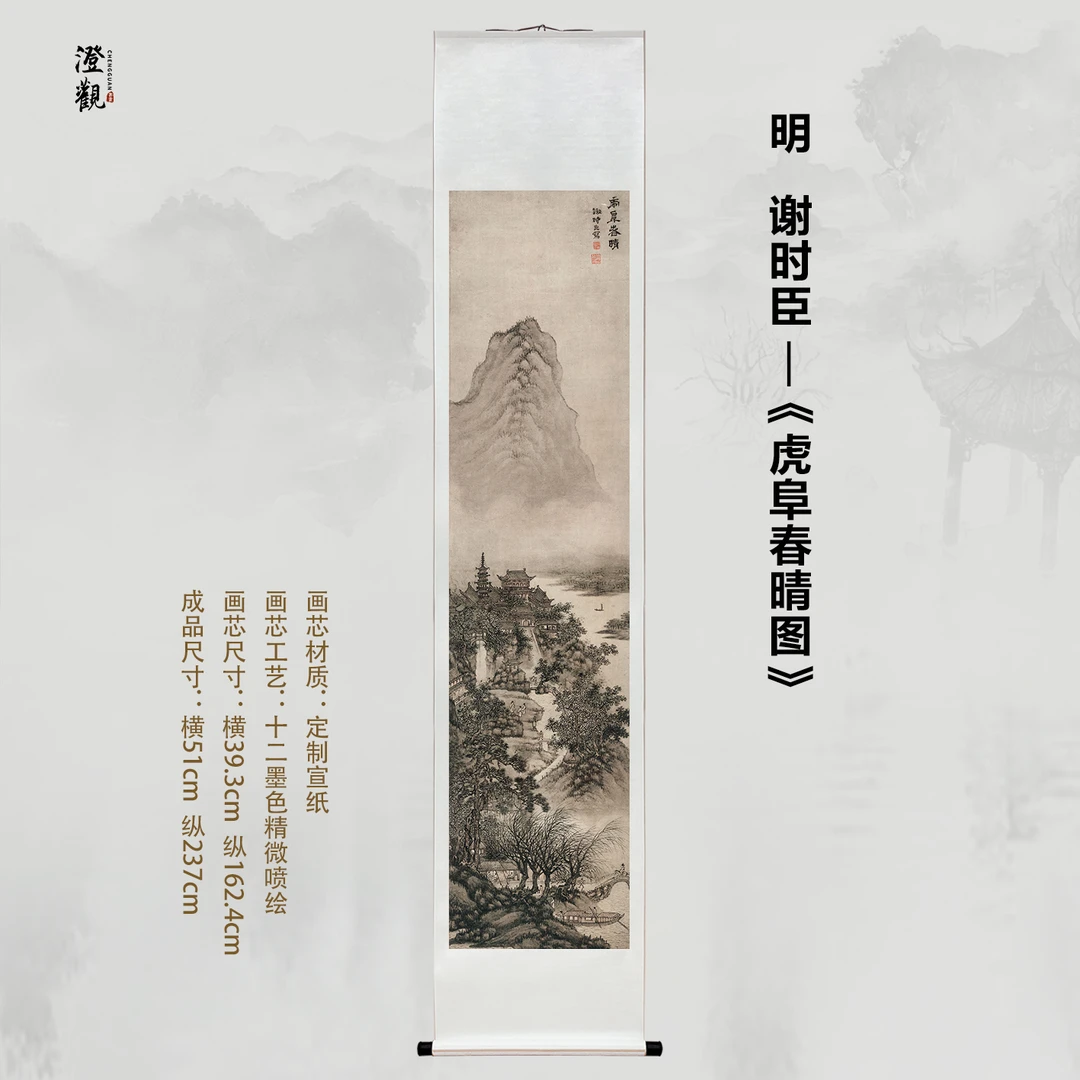
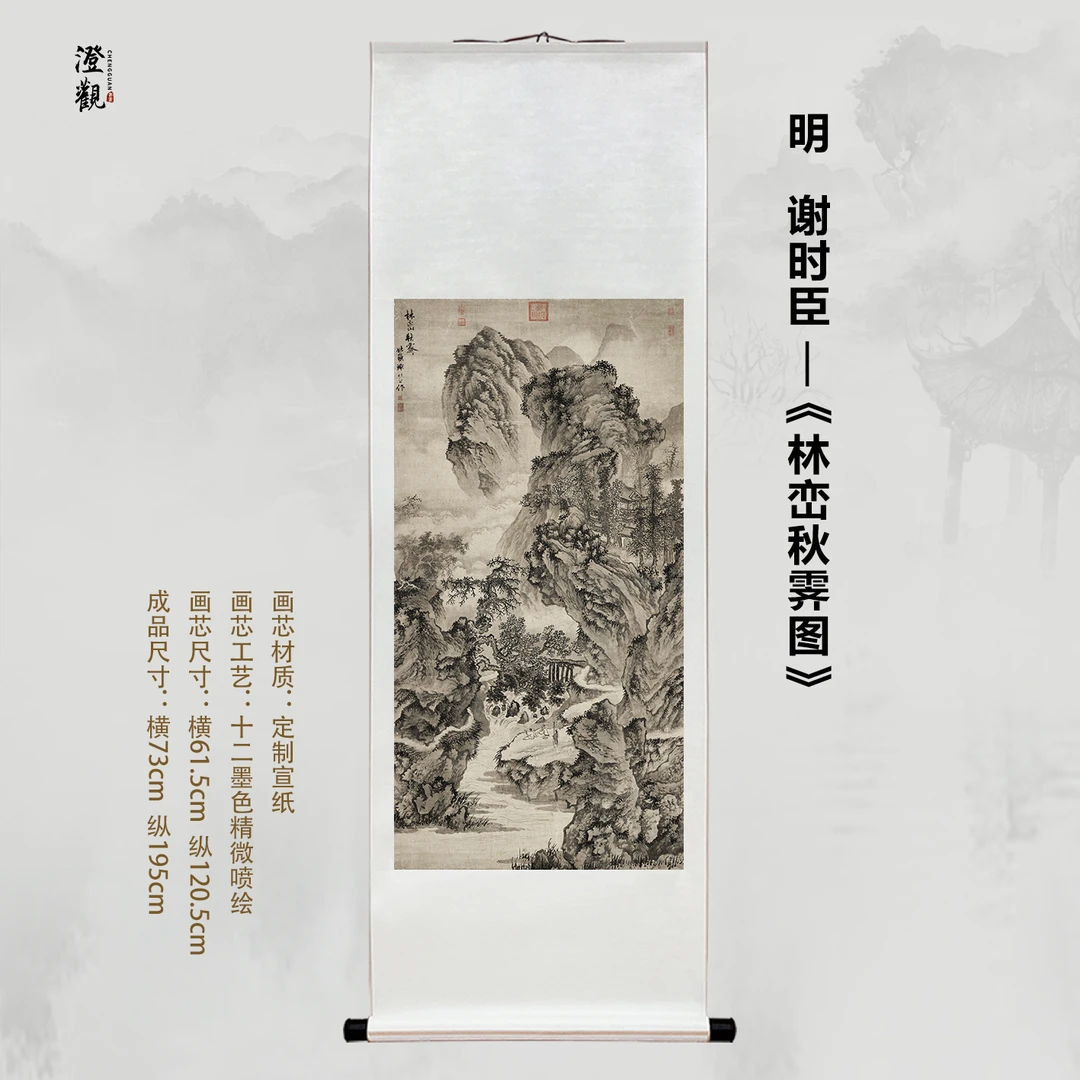
- Structural Grandeur: He often depicted monumental mountain ranges, sheer cliffs, and deep valleys that evoked the "High Distance" (gaoyuan) perspective of the Northern Song masters.
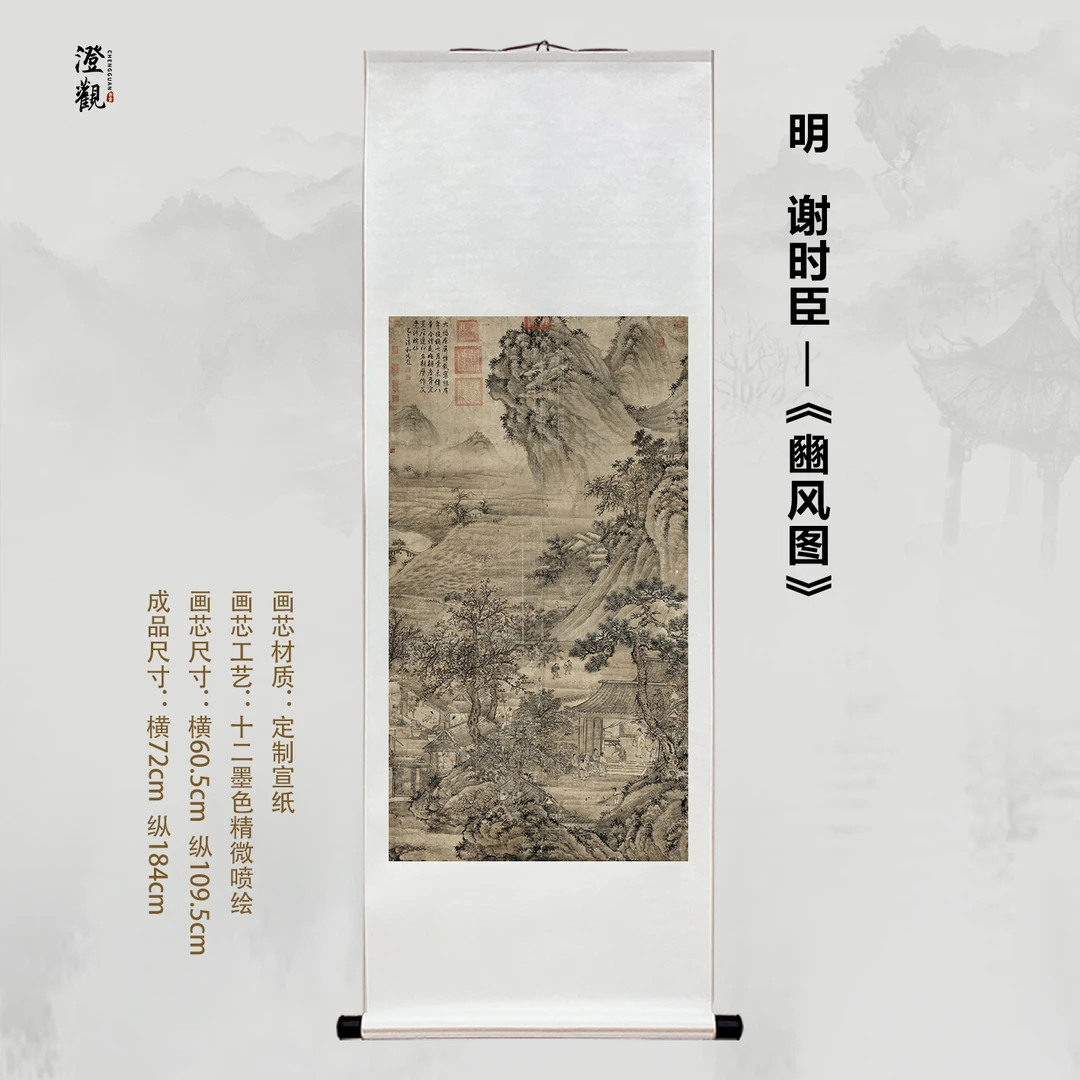
- Intricate Architecture: He was a master of architectural detail, frequently populating his rugged landscapes with precisely rendered temples, pavilions, and bridges, which gave his works a sense of human presence and narrative scale.
- Powerful Brushwork: He utilized strong, rhythmic texture strokes (cun) to give his rock formations a palpable sense of weight and geological reality.
3. Specialist in Water and Waves
A defining feature of Xie Shichen’s oeuvre was his extraordinary skill in depicting moving water. Whether it was the crashing waves of a turbulent sea, the swirling mists of a waterfall, or the gentle ripples of a mountain stream, Xie used fluid, expressive lines to capture the vitality and sound of water. His depictions of tempests and rainstorms were particularly admired for their atmospheric intensity and "dramatic moistness."
4. Critical Reception and Professionalism
Because Xie Shichen was a highly productive artist who occasionally accepted commissions, he was sometimes criticized by later ultra-literati theorists like Dong Qichang. Critics of the "Orthodox" school occasionally labeled his work as too "laborious" or "professional." However, this modern-day "professionalism" is exactly what makes his art so appealing; he was not afraid of technical complexity or visual splendor, making his paintings highly sought after by the upper-middle class and elite collectors of the 16th century.
5. Historical Legacy and Global Collections
Xie Shichen’s influence extended beyond Suzhou, as he traveled extensively across China to observe real mountains and rivers. This firsthand observation gave his work a vitality and realism that set it apart from the purely derivative styles of his contemporaries. Today, his masterpieces are preserved in the world’s most prestigious museums, including:
- The Palace Museum (Beijing)
- The National Palace Museum (Taipei)
- The Metropolitan Museum of Art (New York)
- The Museum of Fine Arts (Boston)
— ALL MASTERPIECES LOADED —