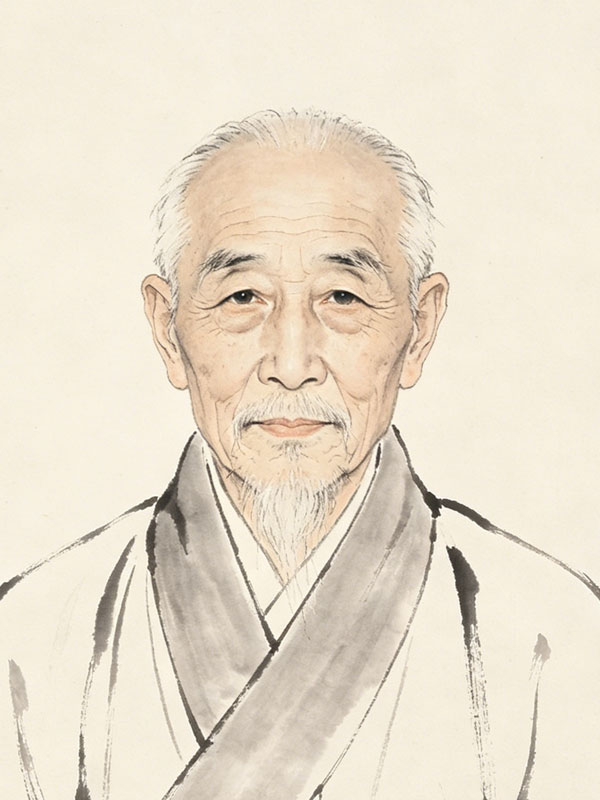
Xia Chang (夏昶): The Supreme Master of Ming Dynasty Ink Bamboo
Xia Chang (1388–1470), courtesy name Zhongzhao (仲昭) and pseudonyms Zizai Jushi (自在居士) and Yufeng (玉峰), was a legendary painter and high-ranking official of the Ming Dynasty. Hailing from Kunshan, near Suzhou, he is historically immortalized as the greatest ink bamboo (Mozhu) specialist of his era, with a reputation so prestigious that it was said, "A single branch of Xia’s bamboo is worth its weight in gold."
1. The Distinguished Scholar-Official
Unlike many professional artists, Xia Chang was a top-tier scholar-official. He passed the Imperial Examinations (Jinshi) in 1415 during the Yongle reign and rose through the ranks to become the Director of the Court of Imperial Sacrifices (Taichang Sicheng). His high political status and Confucian upbringing deeply informed his art, as he viewed bamboo not merely as a botanical subject, but as a symbol of the upright moral character and resilience of a gentleman.
2. Artistic Lineage and the "Bamboo King"
Xia Chang was the premier student of Wang Fu, the early Ming master of bamboo and landscapes. While he inherited Wang Fu’s structural rigor, Xia Chang expanded the genre into monumental scales. He became so famous for this specialty that he was virtually synonymous with the subject during the mid-15th century. His works were highly sought after not only by the Ming elite but also by collectors in Korea, Japan, and Southeast Asia, making him one of the first Chinese artists with a truly international market.
3. Stylistic Characteristics: Movement and Rhythm
Xia Chang’s bamboo paintings are celebrated for their dynamic vitality and technical perfection. His stylistic hallmarks include:
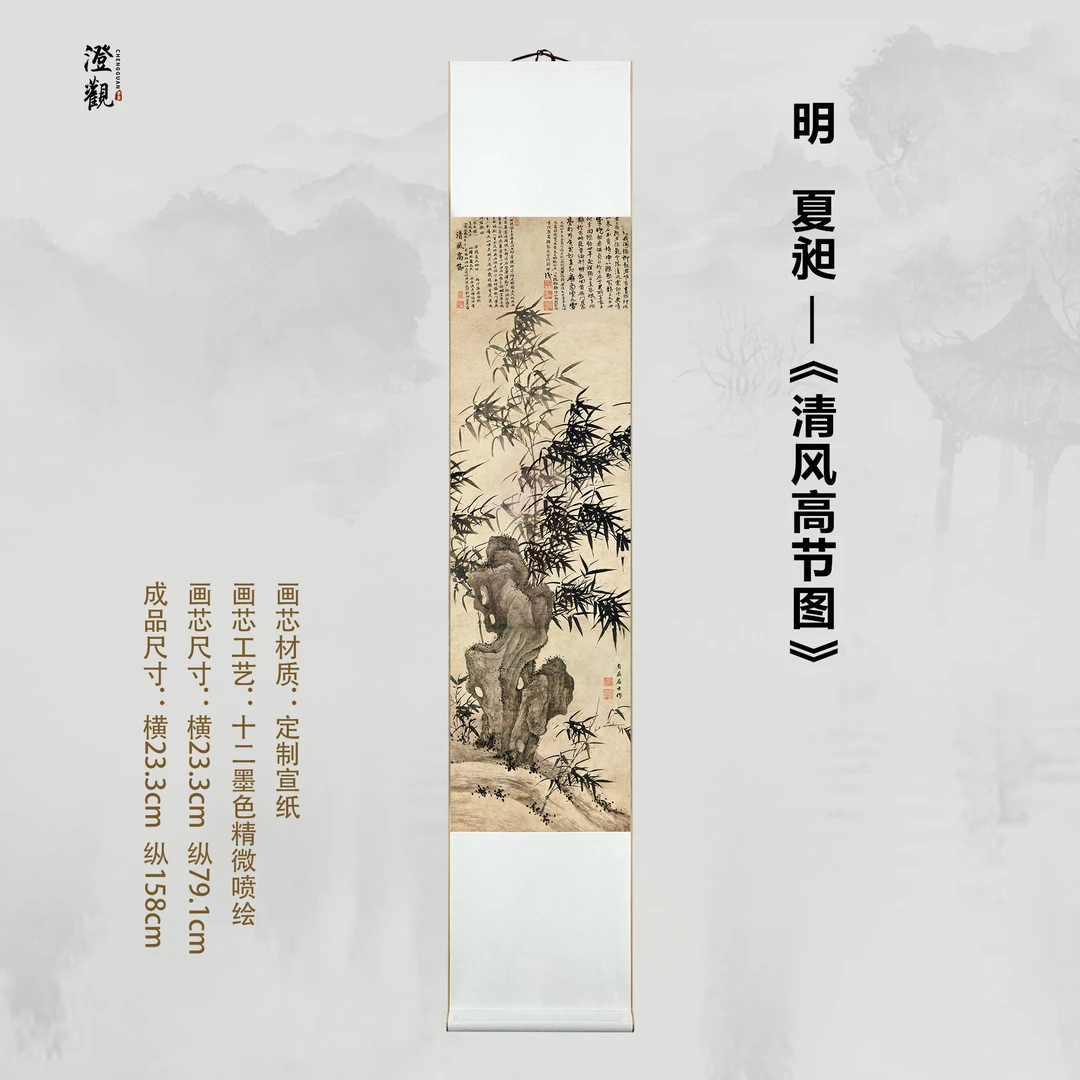
- Long Handscrolls: He specialized in expansive handscrolls that depicted bamboo along winding riverbanks, amidst rugged rocks, and through changing weather conditions.
- Rhythmic Brushwork: His leaves were executed with decisive, calligraphic strokes, capturing the movement of wind (Fengzhu) and the weight of rain (Yuzhu) with extraordinary realism.
- Circular Composition: He often used a "circular" flow in his compositions, leading the viewer’s eye through mist-shrouded valleys and over craggy precipices, integrating the bamboo seamlessly into a larger landscape context.
4. The "Three Perfections" and Calligraphy
As a master of the "Three Perfections" (Sanjue), Xia Chang was also an accomplished calligrapher and poet. His inscriptions were often written in a Regular Script (Kaishu) or Running Script (Xingshu) that possessed a formal elegance and strength. The synergy between his poetic verses and his painted bamboo created a multidimensional experience, allowing the viewer to "hear" the wind rustling through the leaves and "feel" the scholar's solitude.
5. Historical Legacy and Survival
Xia Chang’s influence on later bamboo painting was absolute. He provided the definitive model for the "Orthodox" style of ink bamboo that persisted through the Qing Dynasty. His masterpiece, "Bamboo in Wind and Rain" (Fengyu Zhu), remains a cornerstone of the Palace Museum collection in Beijing. Today, his works are preserved in major global institutions like the Metropolitan Museum of Art and the National Palace Museum, standing as the gold standard for technical virtuosity in Chinese ink wash painting.
— ALL MASTERPIECES LOADED —