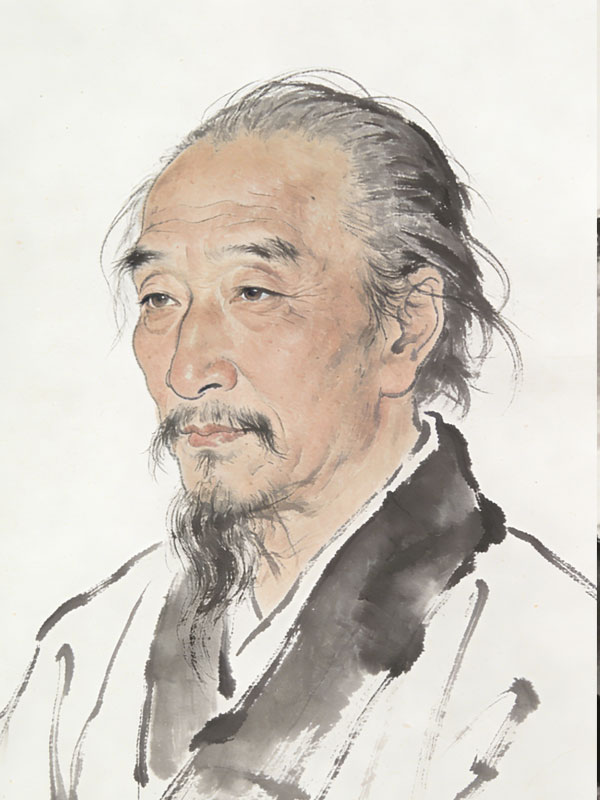
Wu Li (吴历): The Jesuit Priest and Orthodox Master of the Qing Dynasty
Wu Li (1632–1718), courtesy name Mojing (墨井) and pseudonym Yushan (渔山), was a towering figure of the early Qing Dynasty. He is celebrated as one of the "Six Masters of the Early Qing" (清六家)—alongside the "Four Wangs" and Yun Shouping. Wu Li occupies a unique position in Chinese history as both a preeminent Orthodox landscape painter and a devout Jesuit priest, representing a rare intersection of traditional Chinese literati culture and Western religious thought.
1. Orthodox Lineage and Scholarly Roots
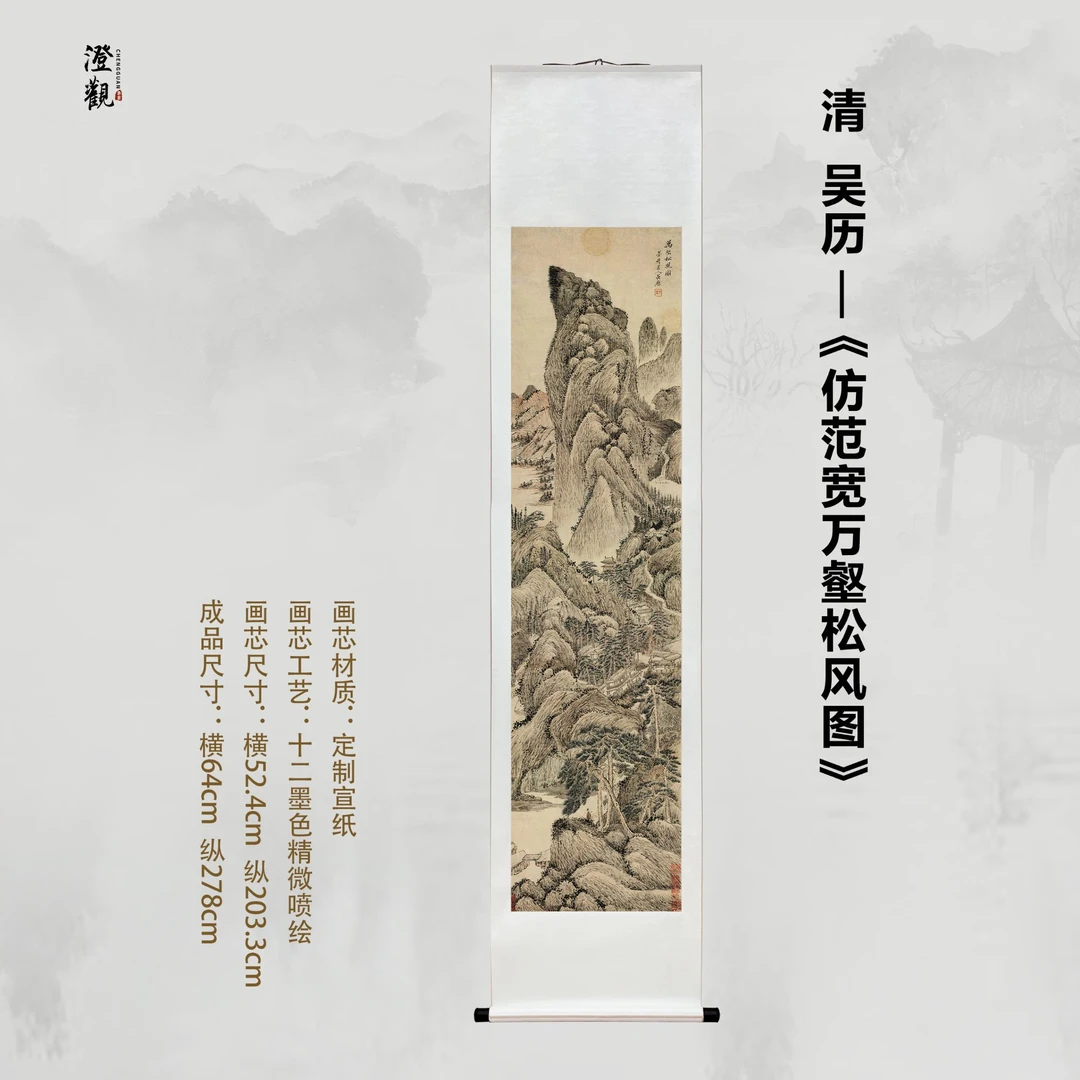
Born in Changshu, Jiangsu, Wu Li was a direct descendant of the Ming Dynasty intellectual elite. He received a classical education and studied painting under the great masters Wang Shimin and Wang Jian. Through them, he became an heir to the "Southern School" theories of Dong Qichang. His early work was deeply rooted in the Song and Yuan traditions, particularly the styles of Huang Gongwang and Wang Meng, characterized by structural clarity and rhythmic brushwork.
2. A Spiritual Transformation: Conversion to Catholicism
What sets Wu Li apart from his contemporaries is his profound religious journey. Following the deaths of his mother and wife, he sought spiritual solace and eventually converted to Catholicism. In 1681, he traveled to Macau with the Jesuit missionary Philippe Couplet and stayed at the St. Paul's College. In 1688, he was ordained as one of the first three Chinese Jesuit priests. He spent the last 30 years of his life as a dedicated missionary in the Shanghai and Jiading areas, often using his art as a bridge for intercultural dialogue.
3. Artistic Style: Depth and Dense Ink
Wu Li’s landscape style is often described as dense, heavy, and profound. While he remained faithful to the literati aesthetic, his work shows subtle innovations:
- Layered Ink (Jimo): He was a master of layering dry and wet ink to create a sense of physical mass and geological depth.
- Western Influence: Scholars debate the extent of Western influence on his art. While he rejected linear perspective, some of his later works show a heightened awareness of light and shade and a more "solid" treatment of space, perhaps influenced by European engravings he saw in Macau.
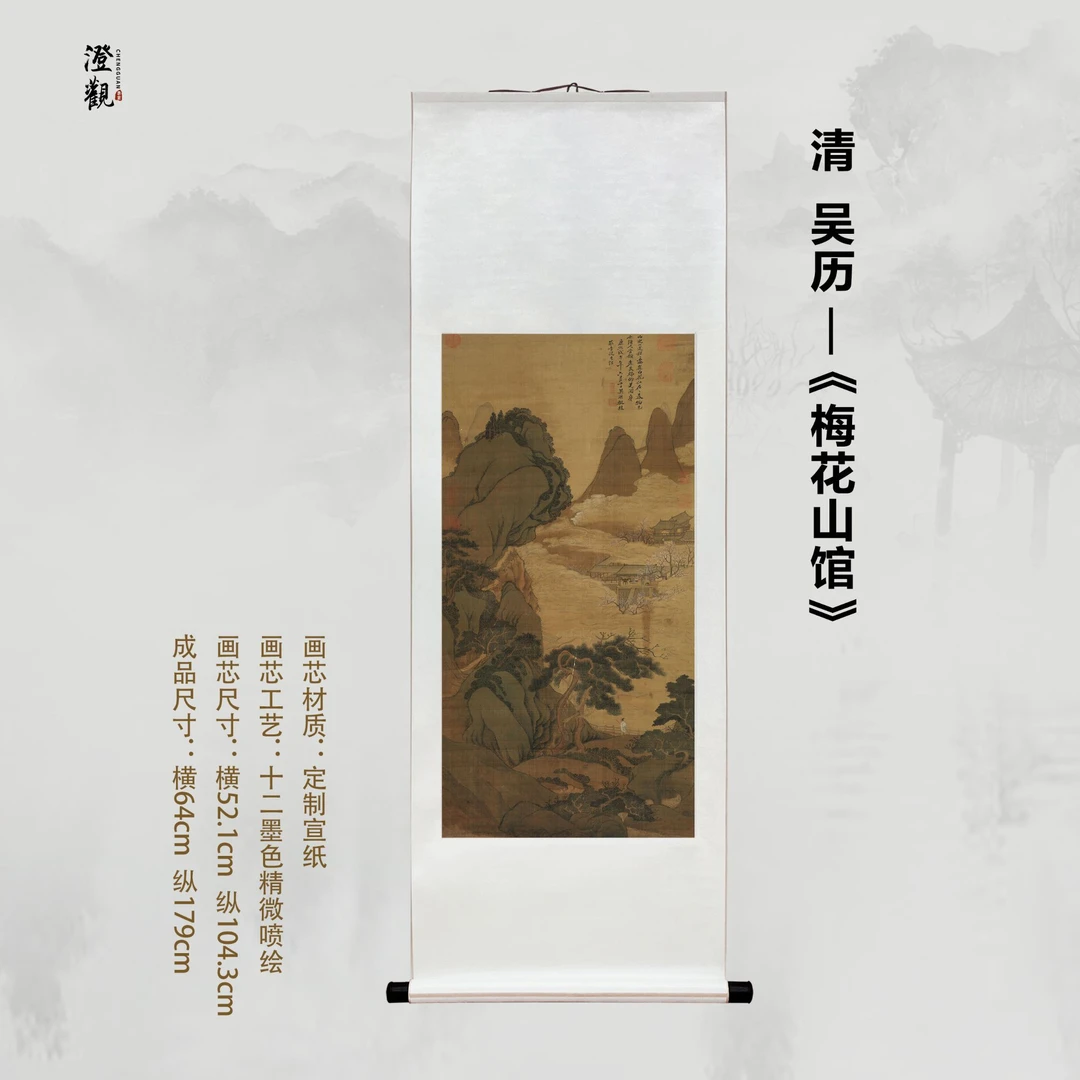
- "Lake and Hill" Mastery: His depictions of the Jiangnan region are noted for their tranquil atmosphere and intricate textures, reflecting his internal peace and spiritual devotion.
4. Poetry and the "Macau Inscriptions"
As a master of the "Three Perfections" (Sanjue), Wu Li was a gifted poet. During his time in Macau, he wrote "Ao-zhong Za-yong" (Miscellaneous Poems of Macau), which provided a rare 17th-century Chinese perspective on Western customs and religious life. His poetic inscriptions on his paintings often blended Christian themes with traditional landscape metaphors, creating a unique syncretic literature.
5. Historical Legacy and Global Collections
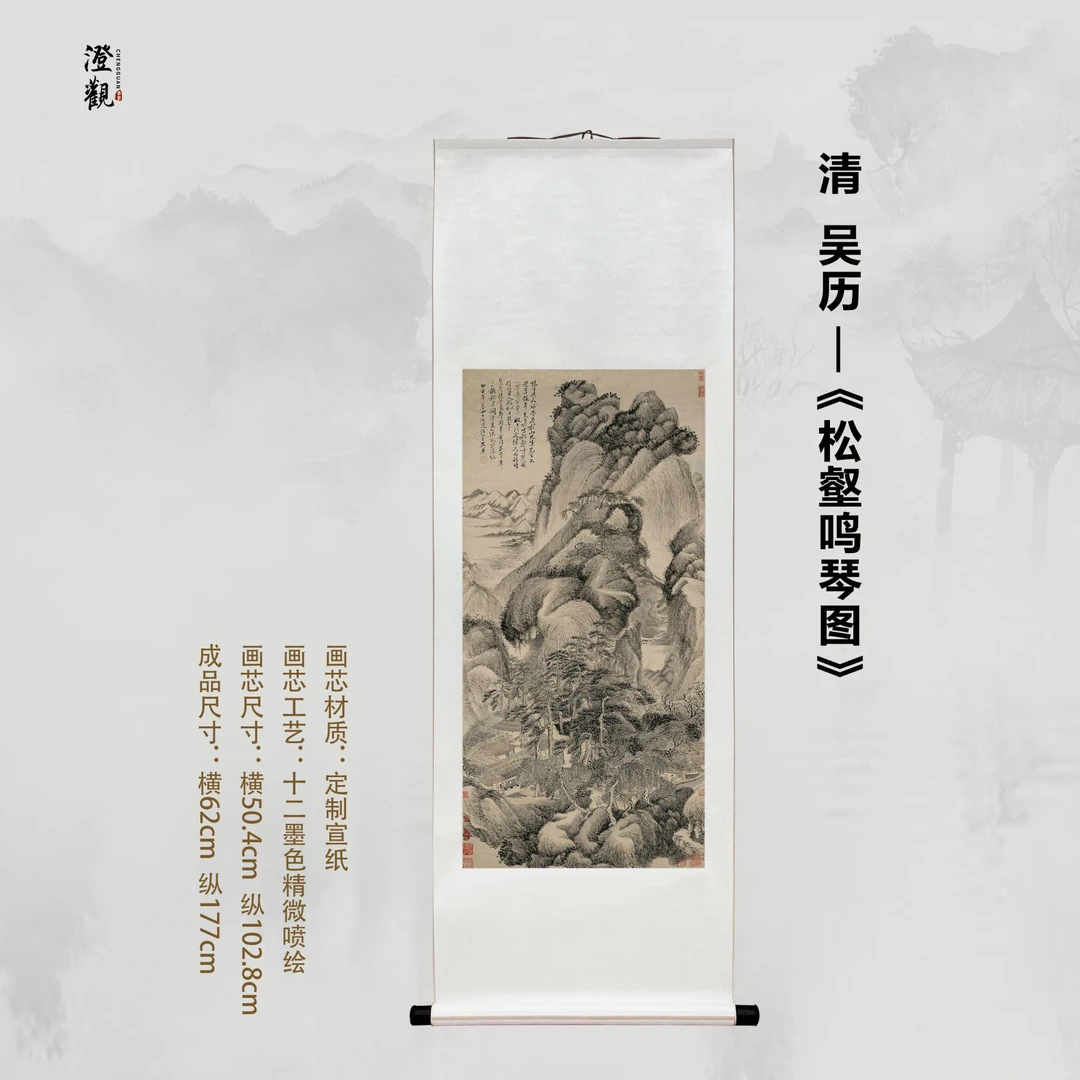
Wu Li’s legacy is that of a cultural bridge. He proved that one could be a master of the Chinese Orthodox canon while embracing a completely different global worldview. Today, he is studied not only by art historians but also by scholars of global Christianity. His masterpieces, such as "Lake in Spring" and "Reading the Book of Changes in a Pine Valley," are preserved in the Palace Museum (Beijing), the Shanghai Museum, and the Metropolitan Museum of Art (New York).
— ALL MASTERPIECES LOADED —