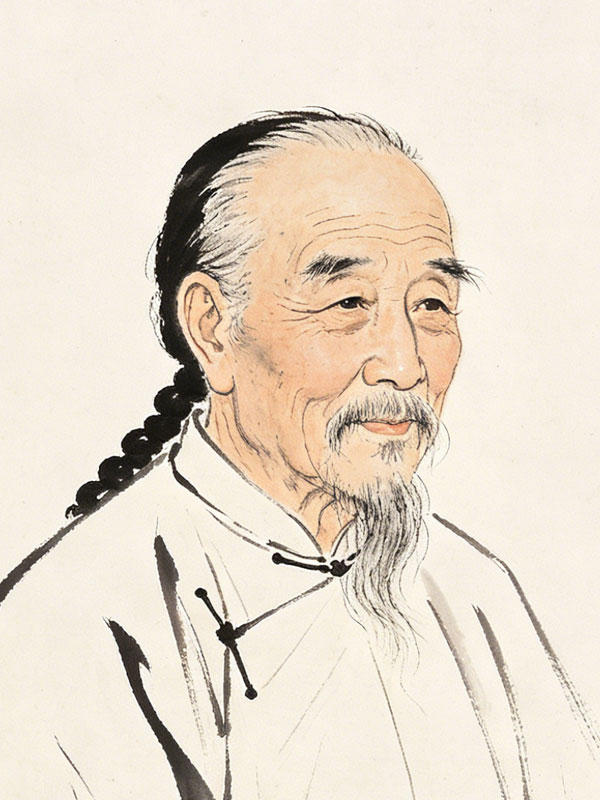
Wang Shimin (王时敏): The Patriarch of the Qing Orthodox School
Wang Shimin (1592–1680), courtesy name Sunzhi (逊之) and pseudonyms Yanke (烟客) and Xilu Laoren (西庐老人), was the foundational figure of the early Qing Dynasty art world. As the eldest of the "Four Wangs" (四王)—alongside Wang Jian, Wang Hui, and Wang Yuanqi—he is revered as the patriarch of the Orthodox School (Zhengton Pai). His life and work represent the critical transition of literati painting theories from the late Ming to the high Qing imperial era.
1. Elite Lineage and the "Loudong" Heritage
Wang Shimin was born into the ultra-elite "Wang family of Taicang." He was the grandson of Wang Xijue, a powerful Grand Secretary during the Ming Dynasty. This high social status granted him access to the finest private art collections in China. He became the leader of the Loudong School (娄东派), named after his hometown in Jiangsu, which emphasized a scholarly return to antiquity and the preservation of classical values over professional decoration.
2. The Direct Heir to Dong Qichang
The most significant influence on Wang Shimin’s life was his personal relationship with Dong Qichang, the greatest art theorist of the late Ming. As Dong’s favorite student, Wang Shimin became the "legal heir" to the "Southern School" (Nanzong) theory. He dedicated his life to codifying Dong’s ideas, advocating that a true painter must first master the brushwork of the ancients—specifically the Four Masters of the Yuan—before seeking individual expression.
3. The Art of "Fang" (Creative Imitation)
Wang Shimin’s artistic output was defined by the concept of Fang (仿), often translated as "creative imitation." For Wang, this was not mere copying, but a deep spiritual reconstruction of the past.
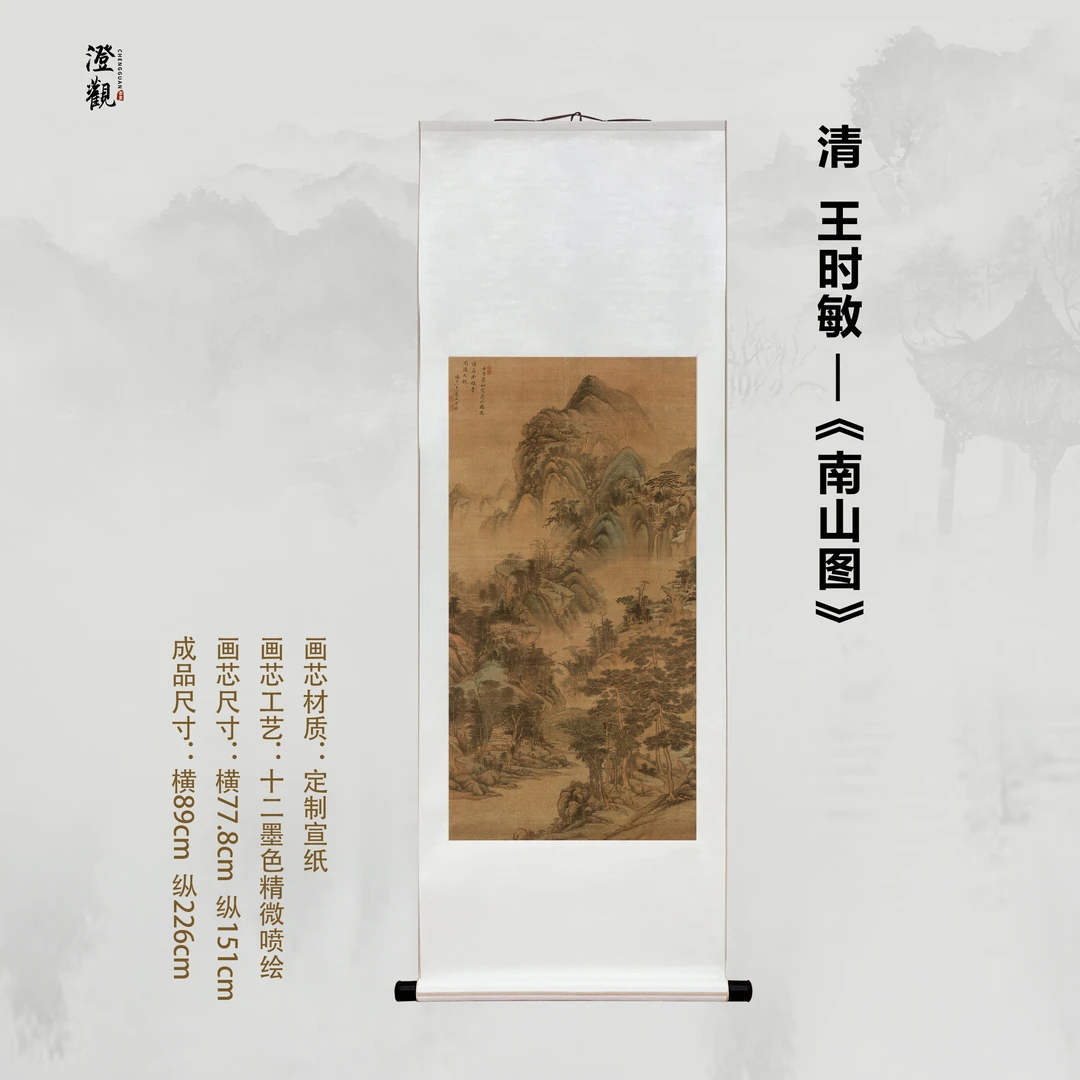
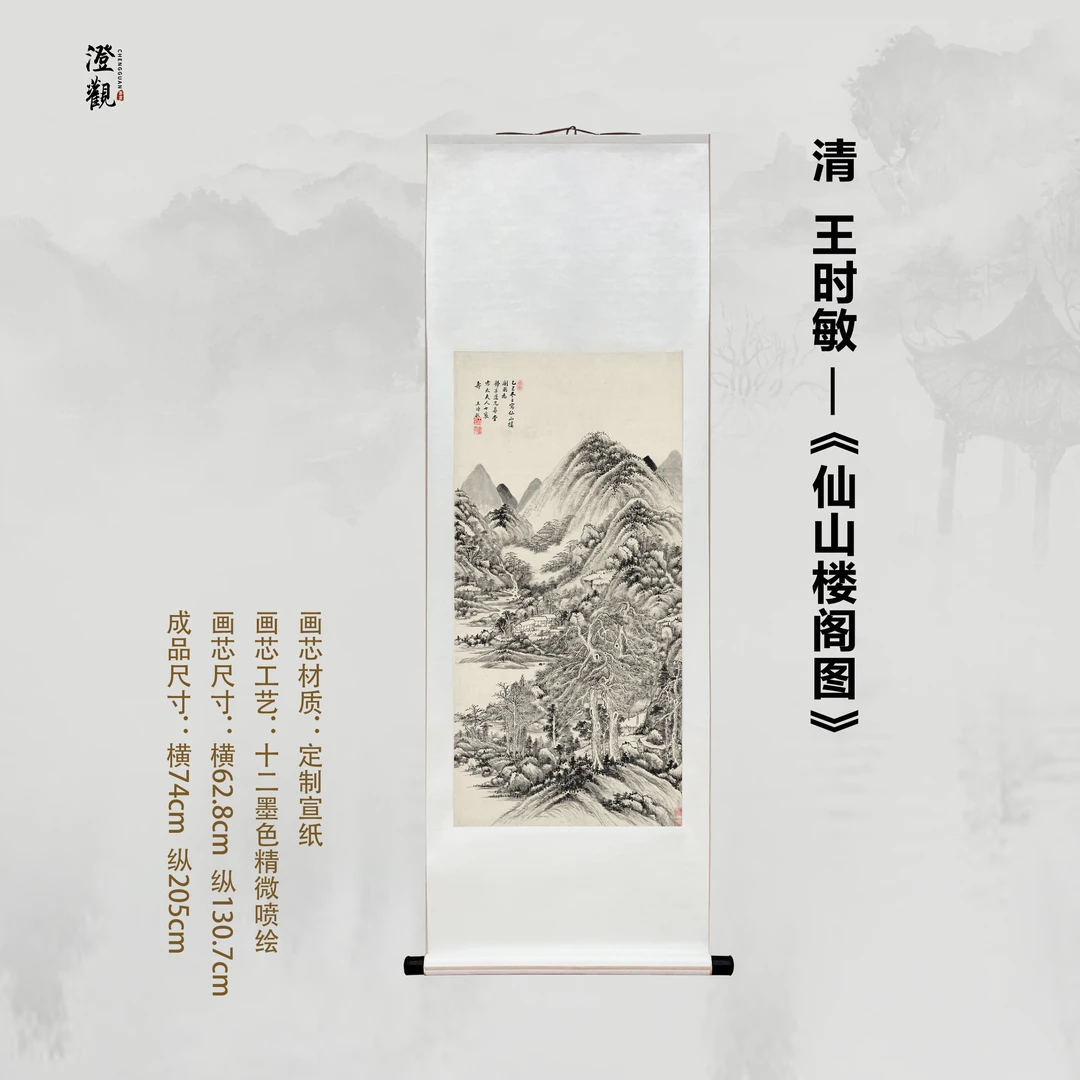
- Huang Gongwang Influence: He was deeply devoted to the style of the Yuan master Huang Gongwang, seeking to capture his "loose and tranquil" atmosphere.
- Brushwork and Texture: His style is characterized by elegant, mild, and balanced brushwork. He utilized dry ink and "hemp-fiber" strokes to create landscapes that felt intellectually pure and structurally harmonious.
- Avoidance of "Vulgarity": He conscientiously avoided the "sweetness" or "sharpness" of professional professional styles, prioritizing a scholarly blandness (pingdan) that was the hallmark of high literati taste.
4. Mentor to a Generation: Discovering Wang Hui
Perhaps Wang Shimin’s greatest contribution to art history was his role as a pedagogue and talent scout. When he encountered the young Wang Hui, he immediately recognized his genius and took him under his wing. He allowed Wang Hui to study his vast family collection and introduced him to the Wang Jian, effectively creating the conditions for the "Great Synthesis" of Qing painting. Without Wang Shimin’s mentorship, the Orthodox School might never have reached its peak of technical brilliance.
5. Historical Legacy and Global Presence
Wang Shimin’s influence lasted for over 250 years, as his Orthodox aesthetic became the mandatory style for court painters and the educated gentry of the Qing Dynasty. While some modern critics once labeled his school as "conservative," he is now viewed as a master of formal language who preserved the "cultural DNA" of Chinese art. His masterpieces are housed in the world's premier museums, including:
- The Palace Museum (Beijing)
- The National Palace Museum (Taipei)
- The Metropolitan Museum of Art (New York)
- The Shanghai Museum
— ALL MASTERPIECES LOADED —