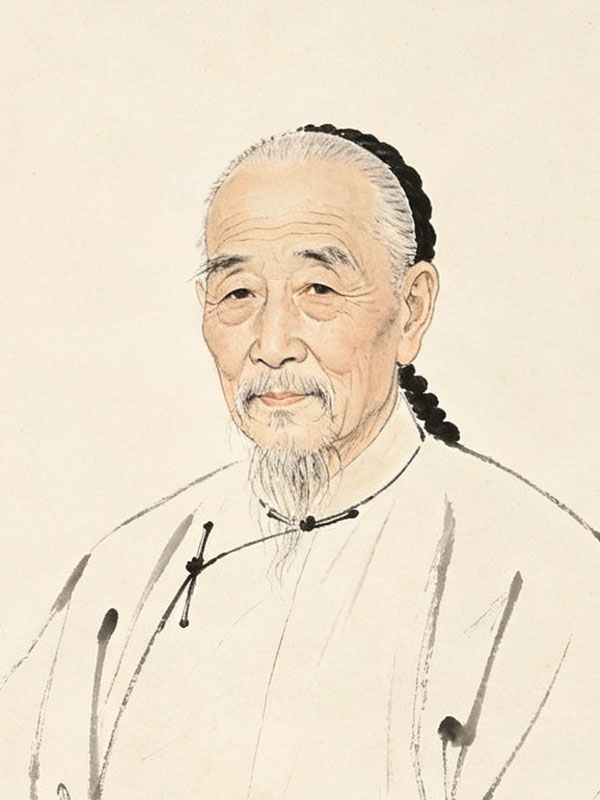
Wang Jian (王鉴): The Versatile Master of the Qing Orthodox School
Wang Jian (1598–1677), courtesy name Xuanzhao (玄照) and pseudonym Xiangbi (湘碧), was a titan of the early Qing Dynasty art world. As one of the celebrated "Four Wangs" (四王)—alongside Wang Shimin, Wang Hui, and Wang Yuanqi—he was a foundational architect of the Orthodox School (Zhengtong Pai). His work represents a sophisticated bridge between the late Ming literati theories and the high Qing imperial aesthetic.
1. Illustrious Heritage and the "Yushan" Connection
Wang Jian was born into a family of immense cultural prestige in Taicang, Jiangsu. He was the grandson of Wang Shizhen, one of the "late Ming's Seven Masters" and a legendary connoisseur. This background granted Wang Jian access to one of the greatest private art collections in China, allowing him to study original masterpieces from the Tang, Song, and Yuan dynasties from a very young age. Like his close friend Wang Shimin, he was a high-ranking official, serving as the Governor of Lianzhou, though he eventually retired to devote himself entirely to painting.
2. Mastery of "Blue-and-Green" (Qinglu) Landscapes
While all of the "Four Wangs" focused on landscape painting, Wang Jian was particularly distinguished for his revival of the Blue-and-Green (Qinglu Shanshui) style.
- Archaic Revival: He drew inspiration from the Tang master Li Sixun and the Yuan master Zhao Mengfu, utilizing vibrant mineral pigments like malachite and azurite.
- Refined Elegance: Unlike the gaudy professional versions of this style, Wang Jian’s Blue-and-Green works maintained a literati restraint, blending decorative brilliance with scholarly "blandness" (pingdan).
- Meticulous Detail: His brushwork was noted for being dense, lush, and refined, often featuring intricate mountain folds and delicate foliage.
3. The Art of "Fang" (Creative Imitation)
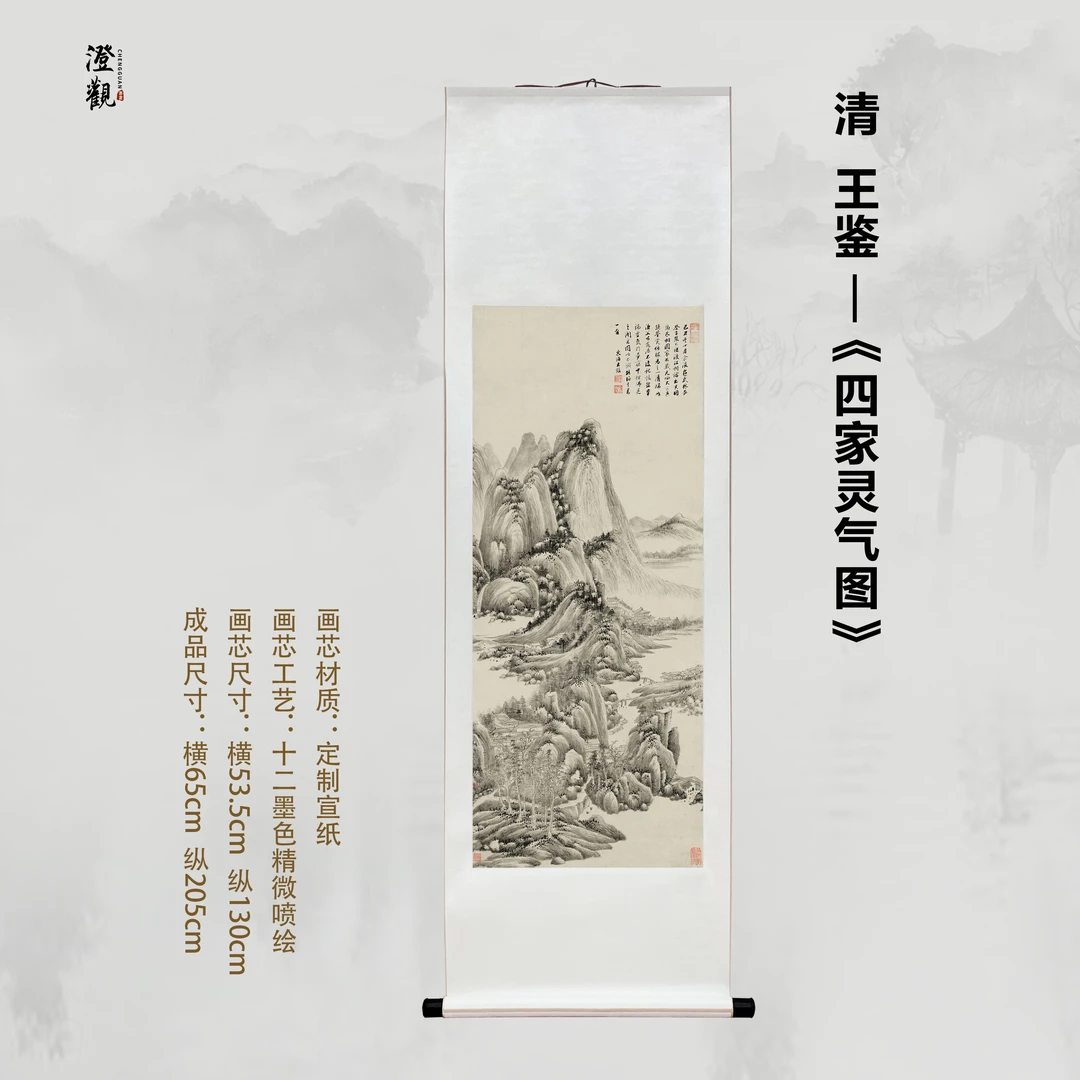
A central tenet of Wang Jian’s philosophy was Fang (仿), or the creative reconstruction of ancient styles. He was an expert at "channeling" the spirits of the Four Masters of the Yuan, particularly Wang Meng and Huang Gongwang.
- Brushwork Synthesis: He was a master of the "hemp-fiber" stroke (pima cun) and the "alum head" rock formation associated with Dong Yuan and Juran.
- Structural Integrity: His compositions were often grand and complex, echoing the monumental landscapes of the Northern Song while retaining the calligraphic intimacy of the Yuan.
4. Mentor and "Co-Discoverer" of Wang Hui
Wang Jian played a pivotal role in the history of the Orthodox School by recognizing and nurturing new talent. Along with Wang Shimin, he was the primary mentor to Wang Hui. He famously recognized that the young Wang Hui possessed a "divine talent" and allowed him to copy the rare masterpieces in his family collection. This mentorship was crucial in forming the "Great Synthesis" (Dacheng) of the Qing style, as Wang Jian provided the technical rigor and historical knowledge that Wang Hui would later perfect.
5. Historical Legacy and Global Impact
Wang Jian’s influence was profound, particularly in his emphasis on technical perfection and the preservation of the literati canon. His style served as the "textbook" for generations of Qing scholar-painters. Today, his works are considered essential cornerstones of Chinese art history and are prominently featured in institutions such as:
- The Palace Museum (Beijing)
- The National Palace Museum (Taipei)
- The Metropolitan Museum of Art (New York)
- The Shanghai Museum
— ALL MASTERPIECES LOADED —