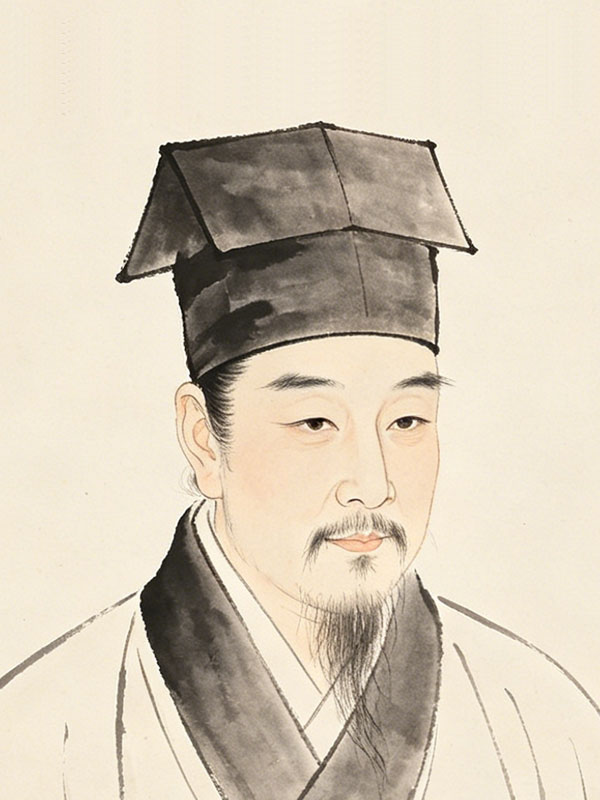
Liu Yu (刘钰): The Precursor to the Wu School and Early Ming Master
Liu Yu (1410–1472), courtesy name Tingmei (廷美) and pseudonym Wan-an (完庵), was an influential landscape painter and scholar-official of the early-to-mid Ming Dynasty. A native of Xiangcheng (near Suzhou), he is historically significant as a transitional figure who preserved the literati (Wenren) traditions of the Yuan Dynasty and passed them on to the founders of the Wu School.
1. A Distinguished Scholar-Official
Liu Yu was a man of high social standing and intellectual merit. He served as a Secretary in the Ministry of Justice (Xingbu Zhushi). Unlike professional artisans, his painting was an extension of his scholarly life. He belonged to the elite cultural circles of Suzhou, where art was viewed as a medium for self-cultivation and social exchange among the "gentleman" class.
2. Artistic Style: Following the Yuan Masters
Liu Yu’s landscape paintings were deeply rooted in the Yuan Dynasty tradition. He sought to distance himself from the rigid academicism of the early Ming court, instead favoring the expressive freedom of the previous era. His stylistic hallmarks include:
- Influence of the Four Masters: He was a devoted follower of Huang Gongwang and Wang Meng. From them, he adopted the dense, textural layering and the use of "hemp-fiber" strokes (pima cun).
- Structural Clarity: While his compositions were often complex, they maintained a rhythmic order and a sense of "archaic simplicity" (guyi), avoiding the flashy technical displays of professional painters.
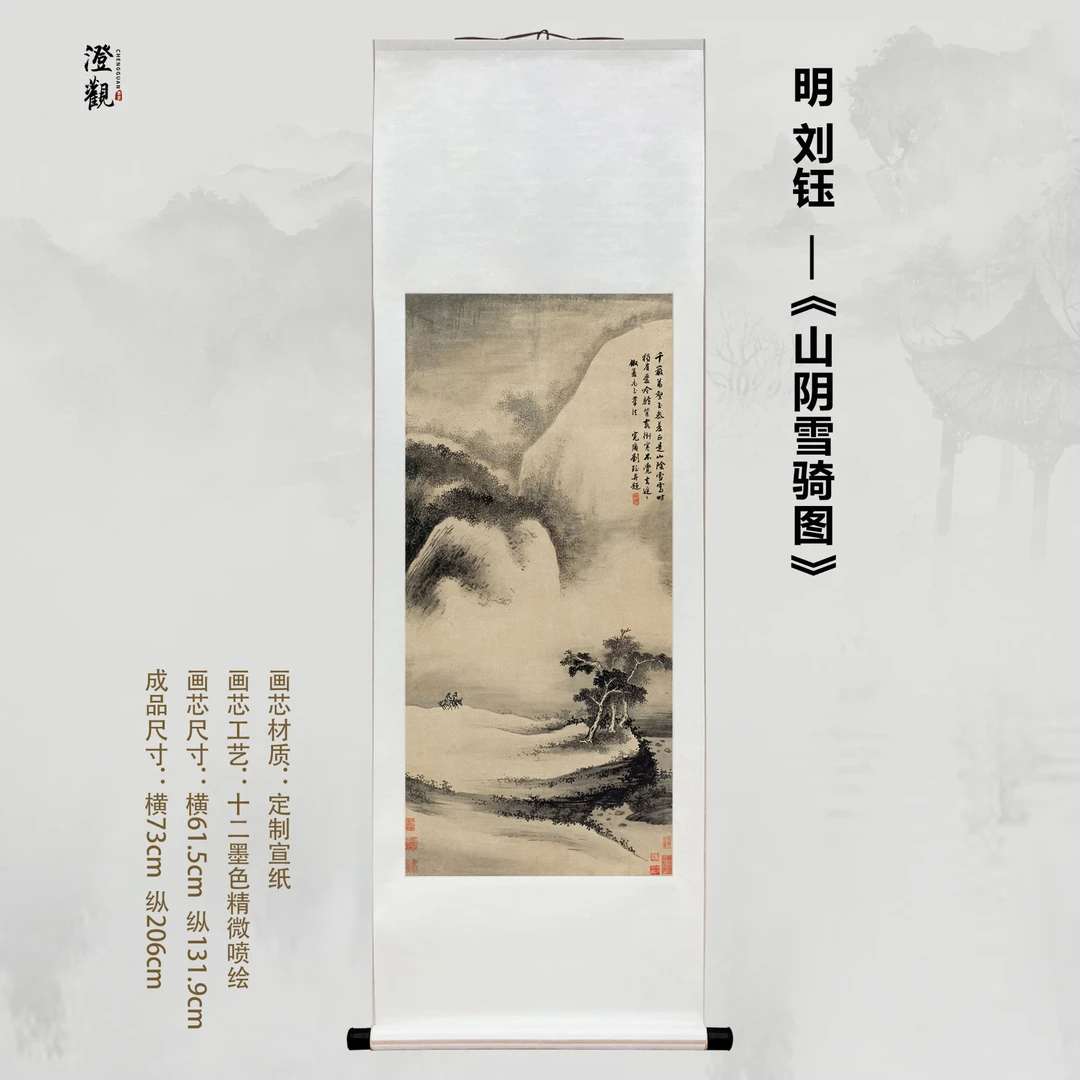
- Ink and Wash Mastery: He utilized subtle ink washes to create atmospheric depth, depicting misty mountains and secluded scholarly retreats with a refined elegance.
3. Connection to Shen Zhou and the Wu School
One of Liu Yu’s most important roles in art history was his influence on Shen Zhou, the patriarch of the Wu School. Liu Yu was a close friend of Shen Zhou’s father, Shen Heng, and his uncle, Shen Zhen. As an elder in the Suzhou art community, Liu Yu acted as a mentor and stylistic bridge. His commitment to the literati aesthetic provided the young Shen Zhou with a direct link to the "orthodox" scholarly traditions of the past, helping to spark the Suzhou Renaissance.
4. Poet and Calligrapher
In keeping with the "Three Perfections" ideal, Liu Yu was also an accomplished poet and calligrapher. His inscriptions were noted for their graceful restraint and intellectual depth. His poetry often reflected the Daoist and Confucian values of reclusion and harmony with nature, themes that were echoed in the quiet, contemplative spaces of his paintings.
5. Historical Legacy and Survival
While Liu Yu’s fame was later partially eclipsed by the immense popularity of the "Four Masters of the Ming," he remains a critically acclaimed figure among connoisseurs of Chinese art. His works are prized for their purity and lack of commercialism. Today, his rare surviving paintings are preserved in major institutions such as the Palace Museum in Beijing and the Suzhou Museum, serving as essential documents of the pre-Wu School era.
— ALL MASTERPIECES LOADED —